Yamanashi Prefecture, home to the iconic Mt. Fuji, was registered as a UNESCO World Cultural Heritage site in 2013 under the title “Mt. Fuji: Sacred Place and Source of Artistic Inspiration.”
But did you know that Yamanashi is also home to many Yuru-Chara (local mascots)? Each city, town, and village has its own character, designed to highlight the unique charm of the community.
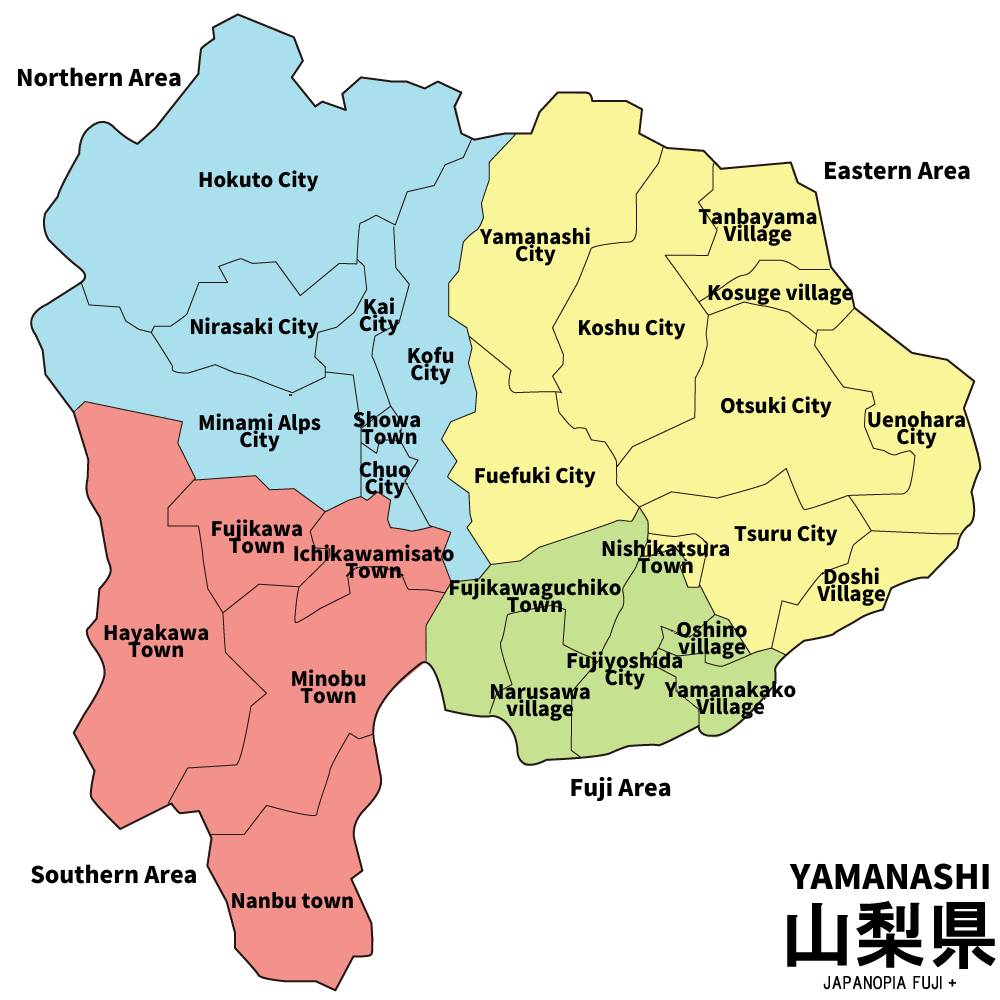
Yamanashi is divided into four regions—Northern Area, Eastern Area, Fuji Area, and Southern Area—and in this article, we’ll focus on the Southern Area, surrounded by the majestic Chichibu and Misaka mountain ranges and known as the prefecture’s leading agricultural zone.
We’ll introduce mascots from Hayakawa Town, Minobu Town, Nanbu Town, Fujikawa Town, and Ichikawamisato Town. Which lovable characters will you discover? Let’s take a look.
Minobu Town | Minowan
Minowan is the official mascot of Minobu Town, a lively Yuru-Chara that frequently appears at the local roadside station Michi-no-Eki Shimobe and at Yuru-Chara events across Japan.
With its adorably cheeky design, featuring the word “Minobu” written on its ears, Minowan easily captures the hearts of those who see it. The mascot is highly active in local events, helping promote the charm of Minobu to a wider audience.
Adding to its popularity, Minowan has also collaborated with the hit anime “Laid-Back Camp (Yuru Camp△)”, which is set in Minobu Town. This crossover has further boosted recognition both locally and nationally.
| Name | Minowan (みのワン) |
|---|---|
| Birthday | March 1 |
| Gender | Secret |
| Favorite Foods | Unknown |
| Website/SNS | https://x.com/minowan_minobu |
READ MORE
-

Mt. Fuji Live Cameras | Lake Kawaguchiko, Lake Yamanaka, Oshino and Fujiyoshida Right Now
-
[2025] Explore Japan’s Timeless Landscapes and Autumn Colors — Fall Foliage Spots in Southern Area in Yamanashi
-
Scenic Views and Local Specialties! Michi-no-Eki – Roadside Stations in Yamanashi’s Southern Area
-
Touring the Southern Area with Yuru-Chara | Meet the Popular Local Mascots!
-
Festivals & Events in Southern Area | Experience the Warmth of Local Culture and Nature All Year Round

Fujikawa Town | Yuzunyan
Yuzunyan is the adorable Yuru-Chara mascot of Fujikawa Town, inspired by the town’s local specialty fruit, yuzu (Japanese citrus).
The design is full of symbolic details:
- Ears shaped like Mimi, a traditional Fujikawa dish.
- Paw pads and belly decorated with cherry blossom petals, representing Oboshi Park, one of Japan’s Top 100 Cherry Blossom Spots.
- Neck ornament featuring a Suzuri (inkstone), a traditional craft of Fujikawa.
Altogether, Yuzunyan’s body showcases Fujikawa’s rich local products and cultural heritage.
The character is loved by both children and adults, and frequently shares updates and videos on X (formerly Twitter), making it easy to enjoy Yuzunyan’s charm online.
What is Mimi?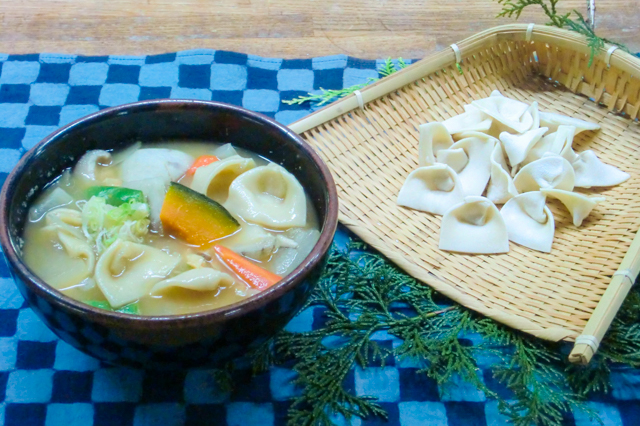
quote:https://www.maff.go.jp/j/keikaku/syokubunka/k_ryouri/search_menu/menu/mimi_yama_nashi.html
Mimi is a traditional local dish made by kneading wheat flour into bite-sized pieces and simmering them with vegetables in a miso-based broth. Common ingredients include burdock root, taro, pumpkin, carrots, and daikon radish. The name Mimi comes from its shape, which resembles a traditional farming tool called a “mi” (winnowing basket).
| Name | Yuzunyan (ゆずにゃん) |
|---|---|
| Birthday | March 8 |
| Gender | Unknown |
| Favorite Foods | Rice balls made with terraced rice fields, Mimi (local dish) |
| Website/SNS | https://x.com/yuzunyan383838 |
READ MORE
-
Mt. Fuji Live Cameras | Lake Kawaguchiko, Lake Yamanaka, Oshino and Fujiyoshida Right Now
-
[2025] Explore Japan’s Timeless Landscapes and Autumn Colors — Fall Foliage Spots in Southern Area in Yamanashi
-
Scenic Views and Local Specialties! Michi-no-Eki – Roadside Stations in Yamanashi’s Southern Area
-
Touring the Southern Area with Yuru-Chara | Meet the Popular Local Mascots!
-
Festivals & Events in Southern Area | Experience the Warmth of Local Culture and Nature All Year Round
Ichikawamisato Town | The “Ichikawamisato Rangers”
The Ichikawamisato Rangers are a trio of local Yuru-Chara mascots named Nin-nin, Don-don, and Pon-pon, each representing a specialty of Ichikawamisato Town. Together, they embody the region’s agricultural, cultural, and artisanal pride.
Nin-nin | Otsuka Carrot
- Motif: Otsuka Ninjin (carrot), a local variety famous for its deep red color, unique flavor, and sweetness.
- These carrots can grow 80–120 cm long and are celebrated annually at the Otsuka Carrot Harvest Festival in early December.
- Nin-nin’s name comes directly from the word “Ninjin” (carrot).
Don-don | Fireworks
- Motif: Fireworks, a local tradition dating back to the Edo period.
- Ichikawa was once counted among Japan’s top three fireworks towns thanks to its high production and launch techniques.
- Today, the Shinmei Fireworks Festival is held every year on August 7 (Fireworks Day), featuring around 20,000 large-scale fireworks, including spectacular starmine displays.
- Don-don’s name comes from the booming sound of fireworks.
Pon-pon | Hanko (Japanese Seal)
- Motif: Hanko (personal seals), as Ichikawamisato—particularly the Rokugo district—is known as “Japan’s No.1 Hanko Village.”
- The town is home to numerous carving studios, material suppliers, and shops, forming the heart of Japan’s traditional seal industry.
- Pon-pon’s name is inspired by the stamping sound of hanko.
| Name | Nin-nin | Don-don | Pon-pon |
|---|---|---|---|
| Birthday | December 2 (linked to the Otsuka Carrot Harvest Festival) | August 7 (Shinmei Fireworks Festival) | October 1 (Seal Day) |
| Gender | Unknown | Unknown | Unknown |
| Favorite Foods | Otsuka carrots, Kankan Musume corn | dried persimmons (Korogaki) | Anbin (a local sweet rice cake) |
| Website/SNS | https://x.com/IchikawaFurunou | ||
READ MORE
-
Mt. Fuji Live Cameras | Lake Kawaguchiko, Lake Yamanaka, Oshino and Fujiyoshida Right Now
-
[2025] Explore Japan’s Timeless Landscapes and Autumn Colors — Fall Foliage Spots in Southern Area in Yamanashi
-
Scenic Views and Local Specialties! Michi-no-Eki – Roadside Stations in Yamanashi’s Southern Area
-
Touring the Southern Area with Yuru-Chara | Meet the Popular Local Mascots!
-
Festivals & Events in Southern Area | Experience the Warmth of Local Culture and Nature All Year Round
Hayakawa Town & Nanbu Town
No Official Mascot
READ MORE
Summary
In this article, we introduced the Yuru-Chara mascots of Yamanashi’s Southern Area.
Many of these mascots are inspired by local specialties, reflecting the strong sense of pride and affection that each community has for its culture and traditions.
Looking for more? We also feature mascots from other cities and towns across Yamanashi Prefecture. Be sure to check them out and share your favorite characters!