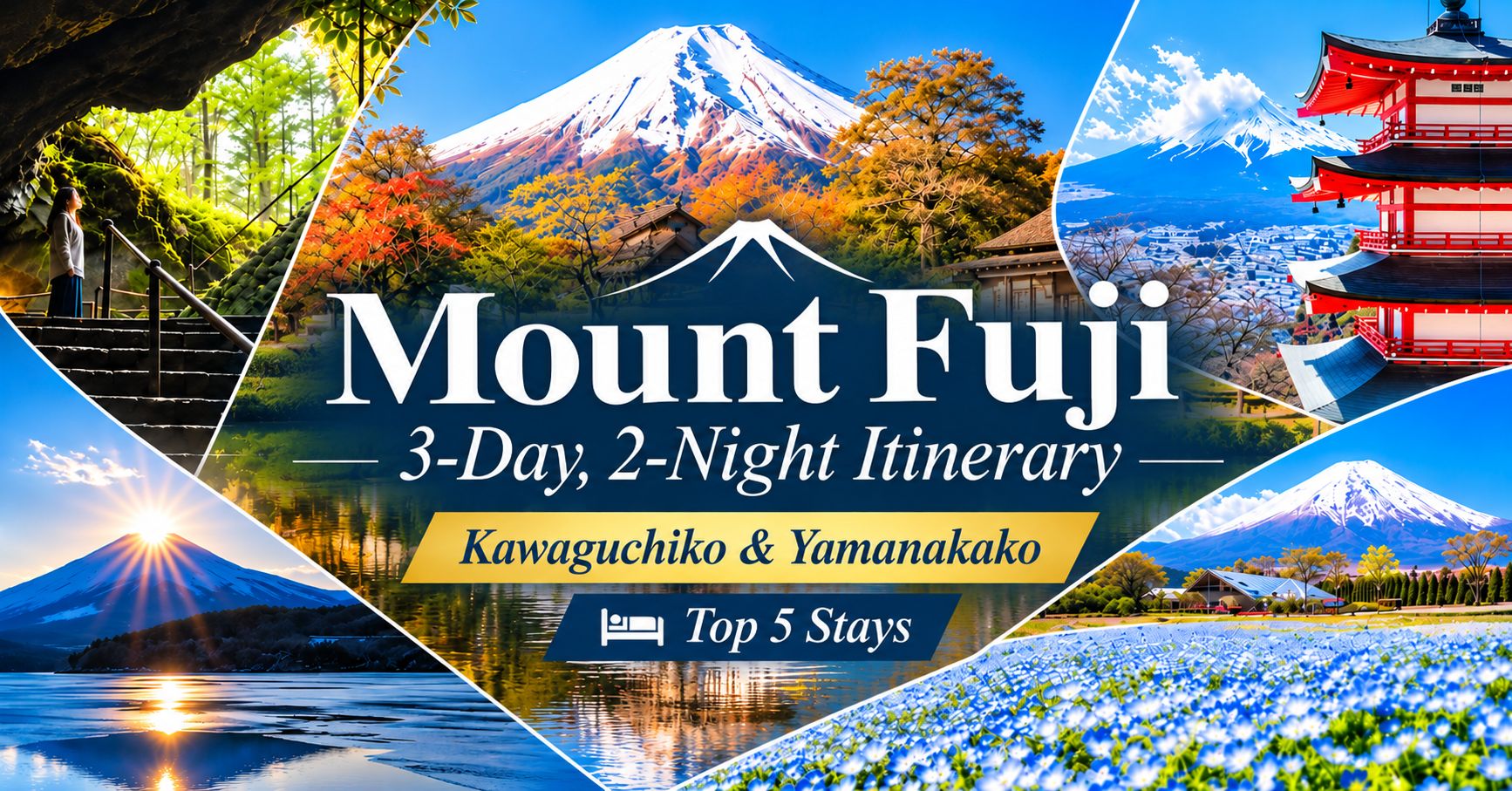
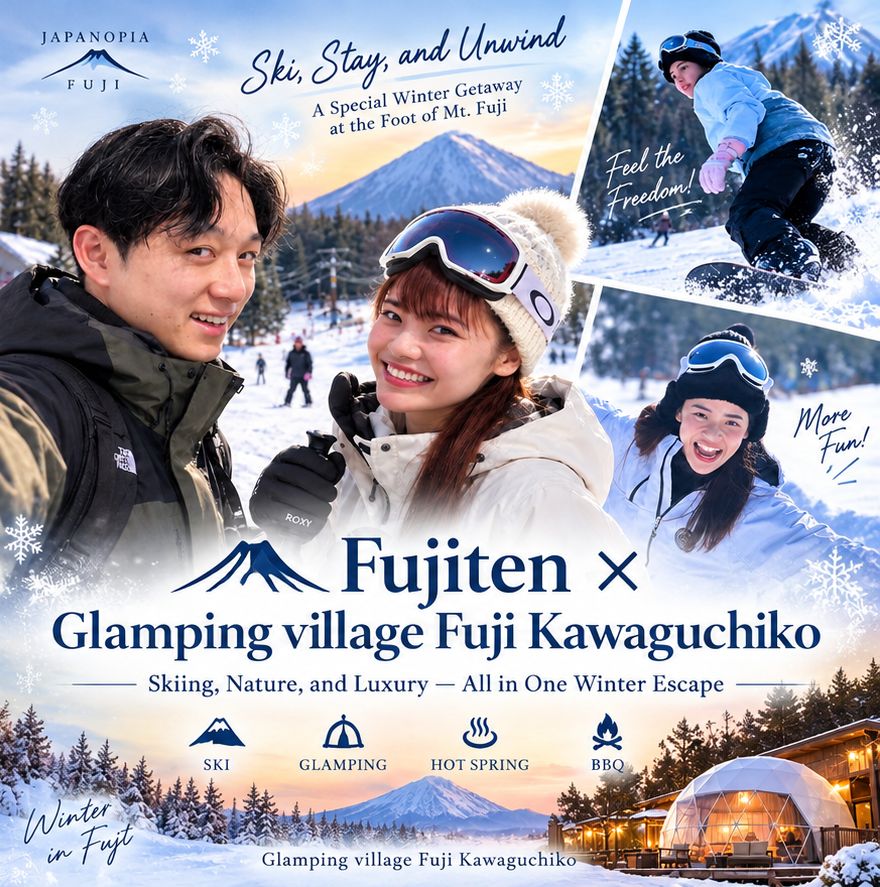
Mt. Fuji, Japan’s highest mountain, looks completely different depending on where you see it from, the time of day, and the season. You can see it reflected in a lake, look out at it from above on a ropeway, enjoy it during an outdoor activity away from the crowds, and watch it from your room window in the morning and evening. When you make the trip, you can plan your days to enjoy as many of these views as possible.
This article introduces a 3-day, 2-night itinerary based around Lake Kawaguchiko for photographing Mt. Fuji, viewing it from above, experiencing it up close, and looking up at it. It also covers the basics of the sightseeing areas around Mt. Fuji, key sightseeing spots, the best time of day to see Mt. Fuji, local food to try, and recommended hotels, so you can use it as a guide when planning your trip.
This itinerary is ideal for
• Families traveling with young children or grandparents who want to enjoy Mt. Fuji at a relaxed pace
• Couples who want to spend special time near Mt. Fuji while taking photos and trying outdoor activities
• First-time visitors who want to know where to go around Mt. Fuji and how to plan their route
Top Sightseeing Spots Around Mt. Fuji
At 3,776 m, Mt. Fuji is Japan’s highest mountain and straddles Yamanashi and Shizuoka prefectures. It is registered as a UNESCO World Cultural Heritage site under the name “Fujisan, sacred place and source of artistic inspiration.” The sightseeing areas at its base are broadly divided into the Yamanashi side and the Shizuoka side.
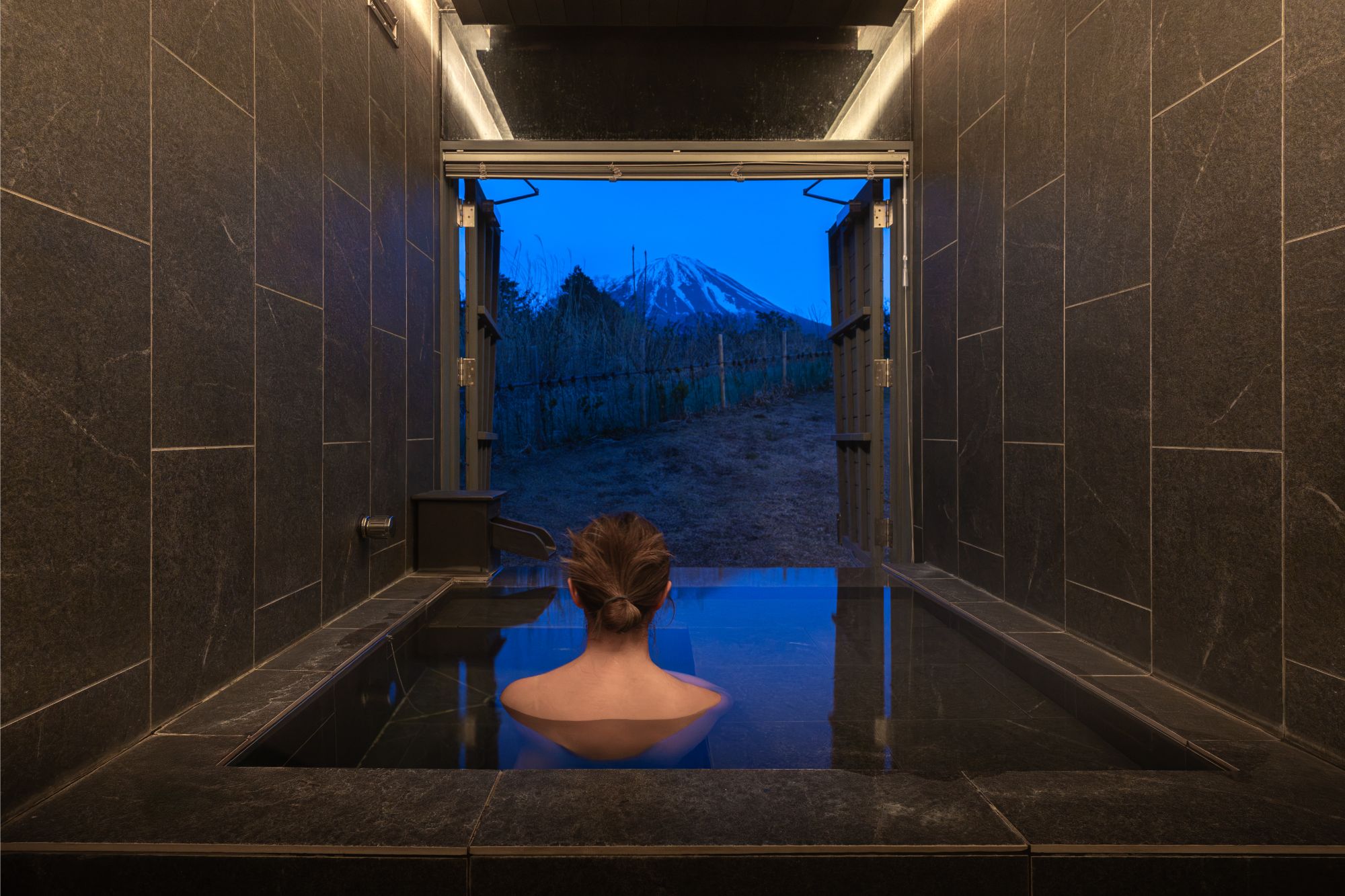
The northern foothills on the Yamanashi side are home to the Fuji Five Lakes, including Lake Kawaguchiko, Lake Yamanakako, and Lake Saiko, as well as Oshino Hakkai and the town of Fujiyoshida. In addition to some of the best spots for photographing Mt. Fuji, the area has plenty of attractions, hotels, and restaurants, so it also suits travelers interested in food and shopping.
The western foothills on the Shizuoka side have attractions such as Shiraito Falls, Fujisan Hongu Sengen Taisha Shrine, the wide grasslands of the Asagiri Highland, and Gotemba Premium Outlets, all of which can be reached by car from the Yamanashi side. Choose the areas that match the purpose of your trip.
The following section introduces the main sightseeing spots in Yamanashi around Mt. Fuji. It is also a useful overview if you simply want to know what there is to see in the area.
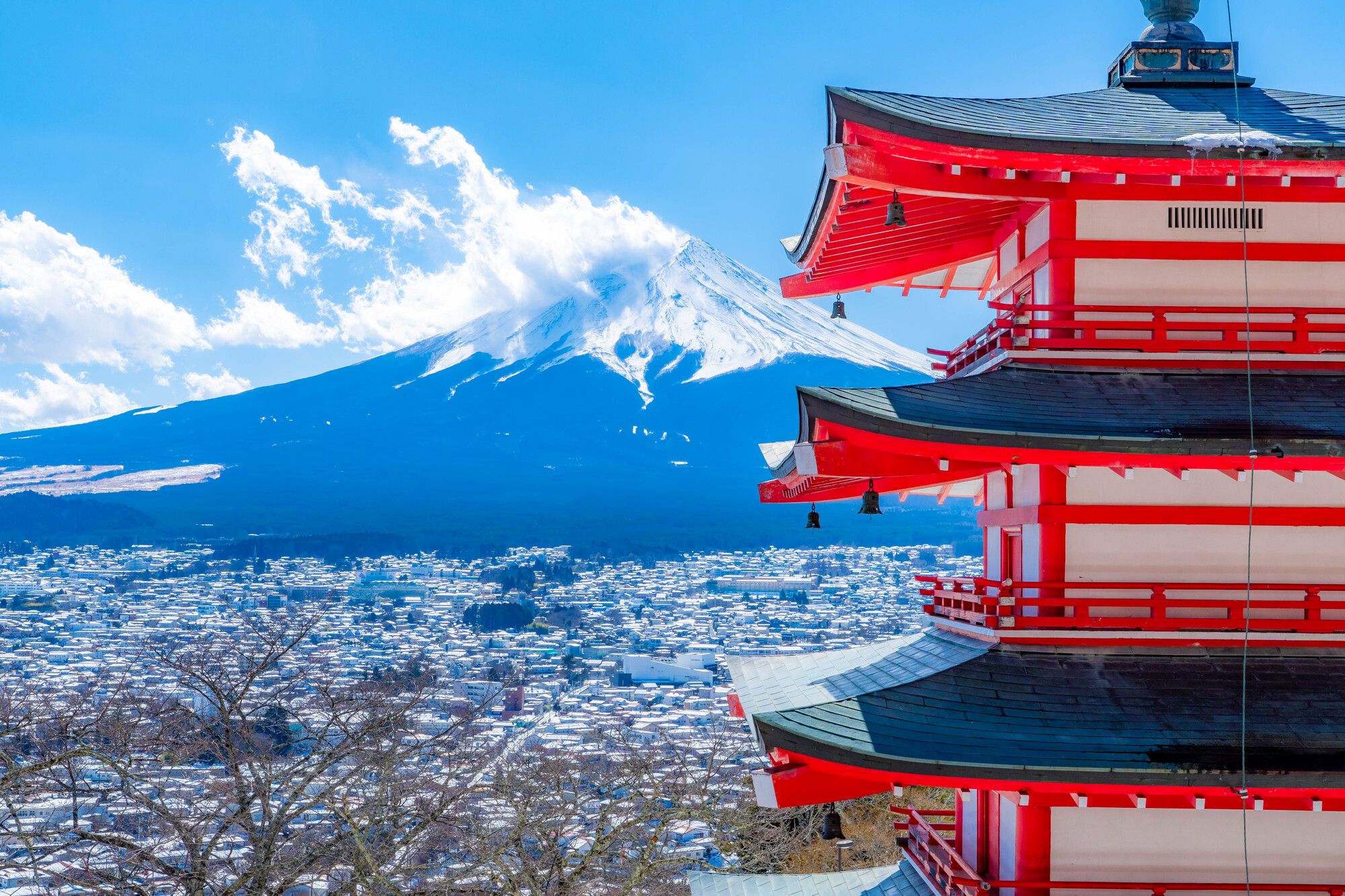
Arakurayama Sengen Park: Mt. Fuji and a Five-Story Pagoda in One Photo

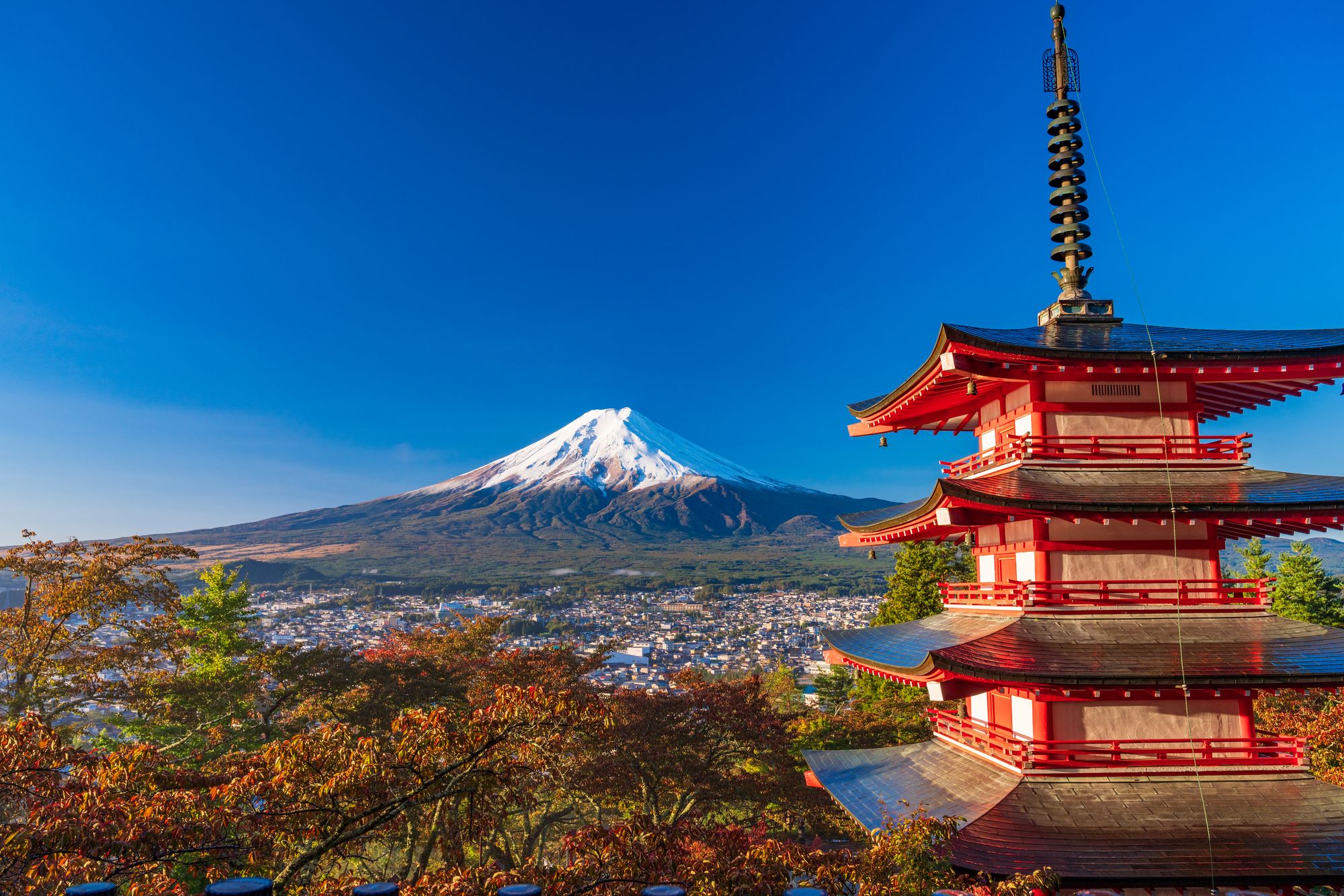
The view of Mt. Fuji rising behind the red five-story Chureito Pagoda has appeared on the covers of overseas guidebooks and is one of the most iconic views of Japan. A long flight of stairs leads up to the observation deck, so wear comfortable walking shoes. The scenery changes with the seasons, with cherry blossoms in spring and colorful leaves in fall.
| Name | Arakurayama Sengen Park (Arakura Fuji Sengen Shrine) |
| Address | 2-4-1 Asama, Fujiyoshida, Yamanashi Prefecture 403-0011 |
| Phone | 0555-23-2697 |
| Access | 5-minute walk from Shimoyoshida Station on the Fujikyu Railway / About 10 minutes by car from Kawaguchiko IC on the Chuo Expressway |
| Official website | https://www.arakurafujisengen.com/ (Arakura Fuji Sengen Shrine, in Japanese) |

Kawaguchiko Mt. Fuji Panoramic Ropeway: View Mt. Fuji from Above

Lake Kawaguchiko has the most attractions of the Fuji Five Lakes and is the center of Mt. Fuji sightseeing. The Mt. Fuji Panoramic Ropeway takes you from the lakeshore to an observation deck at 1,075 m in about three minutes, where you can look down on Lake Kawaguchiko and Mt. Fuji at the same time.
Mt. Tenjo Park at the top is known as the setting of the Japanese folktale “Kachi Kachi Yama.” Rabbit and raccoon dog figures are placed around the park, along with the “Bell of Tenjo,” which faces Mt. Fuji; “kawarake throwing,” in which you make a wish and throw small unglazed clay plates at a target; and the “Kachi Kachi Yama Scenic Swing,” which swings out toward the lake. Both children and adults can enjoy these spots.
Because you can reach the view from 1,075 m without climbing stairs, the ropeway is also a good choice for families traveling with young children or grandparents. On the way back, you can also walk down a hiking trail that takes about 40 minutes.
| Name | Kawaguchiko Mt. Fuji Panoramic Ropeway |
| Address | 1163-1 Azagawa, Fujikawaguchiko-machi, Minamitsuru-gun, Yamanashi Prefecture |
| Phone | 0555-72-0363 |
| Fees | Round trip: Adults 1,200 yen / Children 600 yen |
| Hours | Varies by season (check the official website) |
| Closed | Service is suspended for maintenance during part of the winter |
| Parking | No dedicated parking lot; use the free prefectural parking lot by the lake |
| Official website | https://www.mtfujiropeway.jp/en/ |

Oishi Park

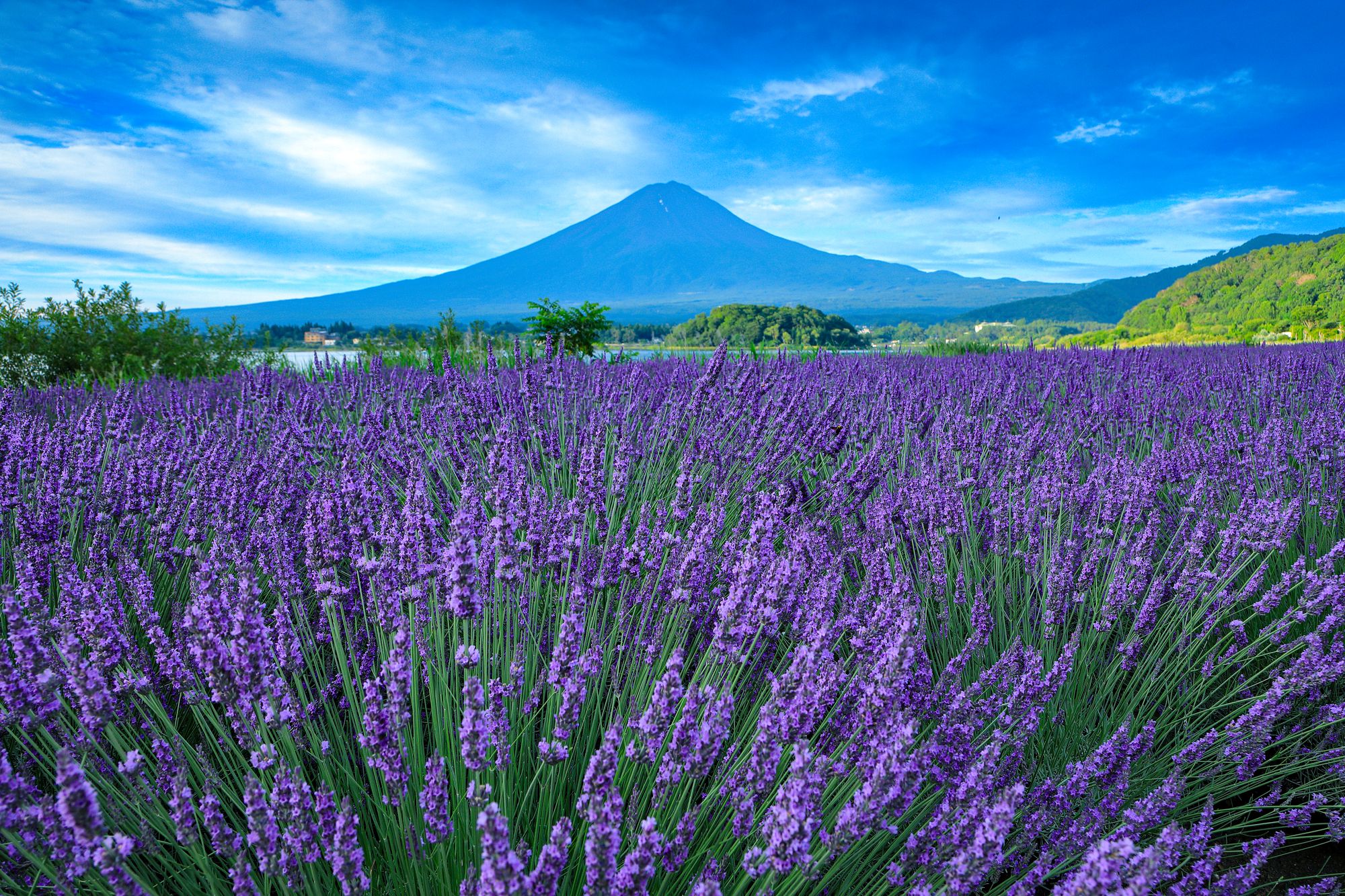
Oishi Park, on the north shore of the lake, is a popular photo spot where you can capture seasonal flowers, the lake, and Mt. Fuji together.
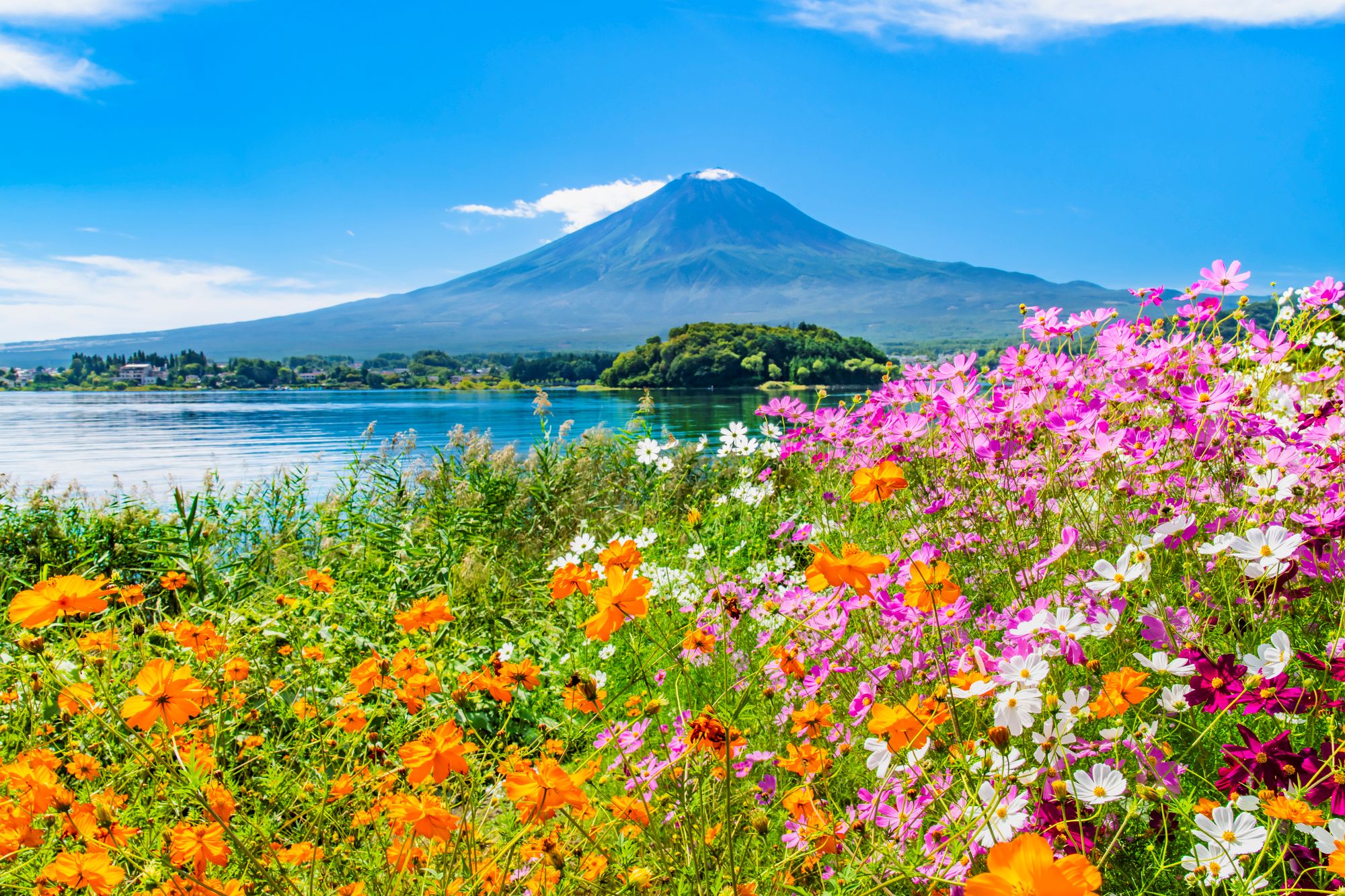
Oishi Park offers a head-on view of Mt. Fuji across Lake Kawaguchiko from the north shore. Along the flower path, which stretches for about 350 m, more than 90 varieties bloom through the seasons, including tulips in spring, lavender in early summer, and kochia in fall, so you can fit flowers, the lake, and Mt. Fuji into one photo.
Lavender is at its best from late June to mid-July, when the park serves as the main venue for the Kawaguchiko Herb Festival. In fall, red kochia and snowcapped Mt. Fuji appear together, making the park a popular spot for fall colors. Oishi-ya, the shop in the park, sells local vegetables and seasonal fruit, so you can stop by during your walk.
| Name | Oishi Park |
| Address | 2525-11 Oishi, Fujikawaguchiko-machi, Minamitsuru-gun, Yamanashi Prefecture |
| Fees | Free |
| Parking | More than 100 spaces for standard vehicles (free) |
| Sightseeing bus | Red Line, right by the “Kawaguchiko Natural Living Center” stop |
| Reference | Fujikawaguchiko Tourism Federation page (in Japanese) |
Fujiyoshida: Kitaguchi Hongu Fuji Sengen Shrine and a Retro Town with Views of Mt. Fuji

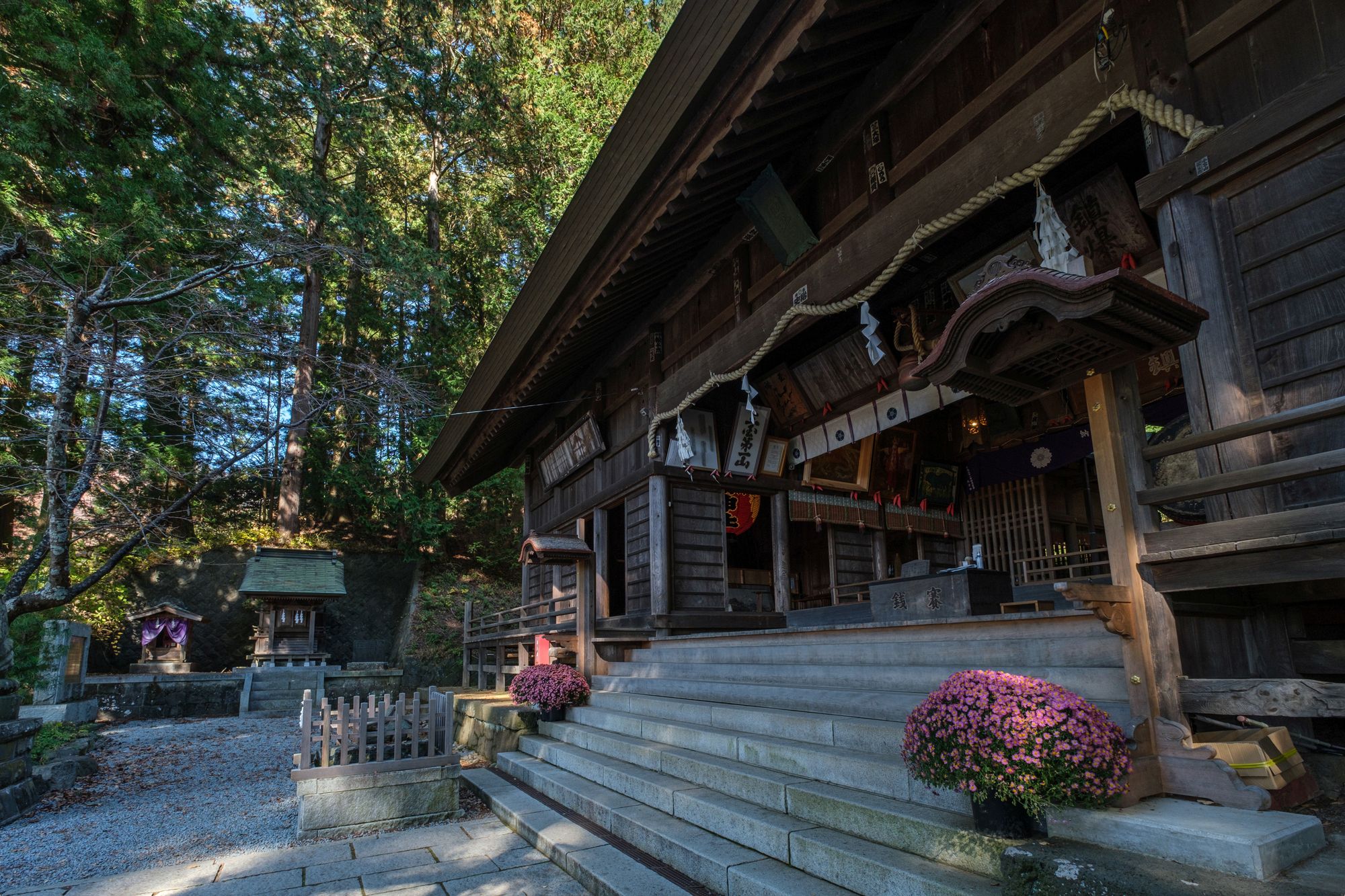
Fujiyoshida has prospered since ancient times as a starting point for pilgrimages up Mt. Fuji. Kitaguchi Hongu Fuji Sengen Shrine, which enshrines the deity of Mt. Fuji, is known for its solemn grounds surrounded by large cedar trees. On Honcho-dori Street in the center of town, you can photograph Mt. Fuji rising at the end of the street. The area also has many restaurants serving the local specialty Yoshida udon.
| Name | Kitaguchi Hongu Fuji Sengen Shrine |
| Address | 5558 Kamiyoshida, Fujiyoshida, Yamanashi Prefecture 403-0005 |
| Phone | 0555-22-0221 |
| Official website | https://www.sengenjinja.jp/english/ |

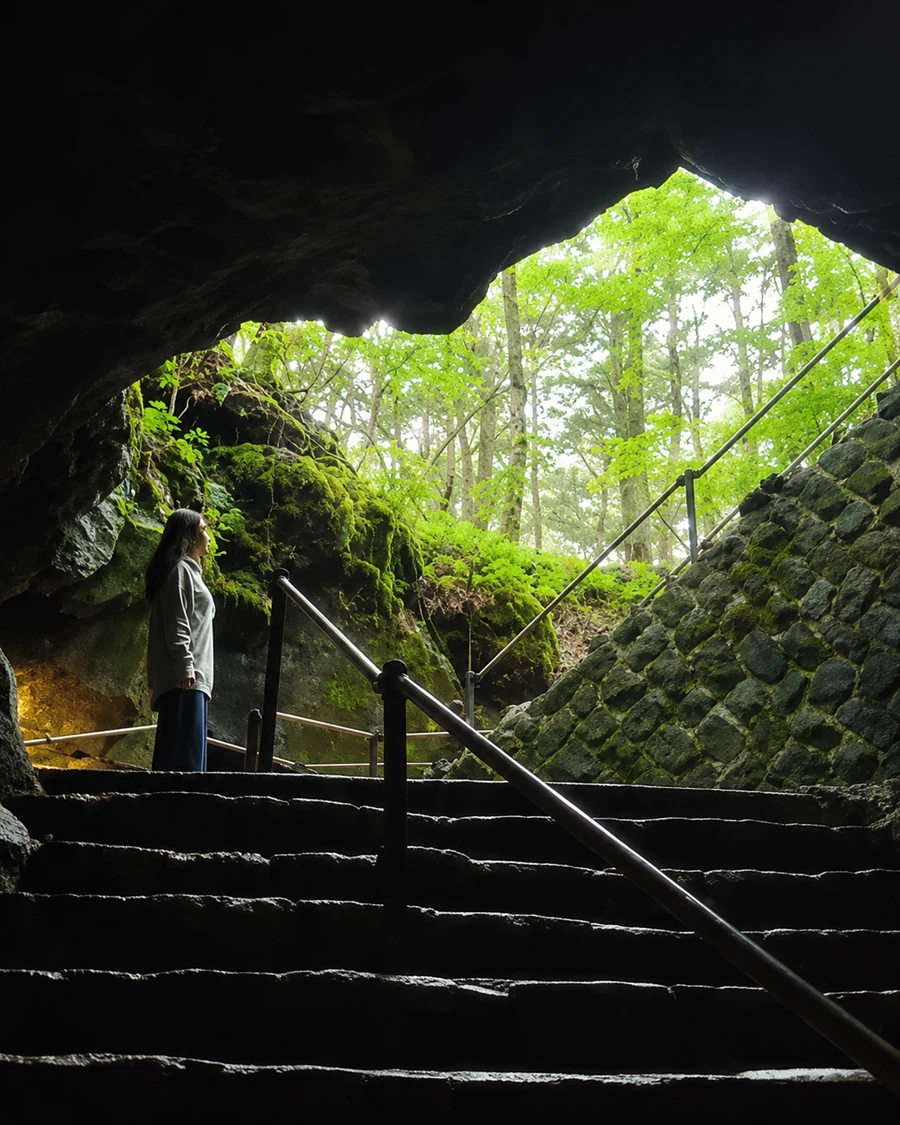
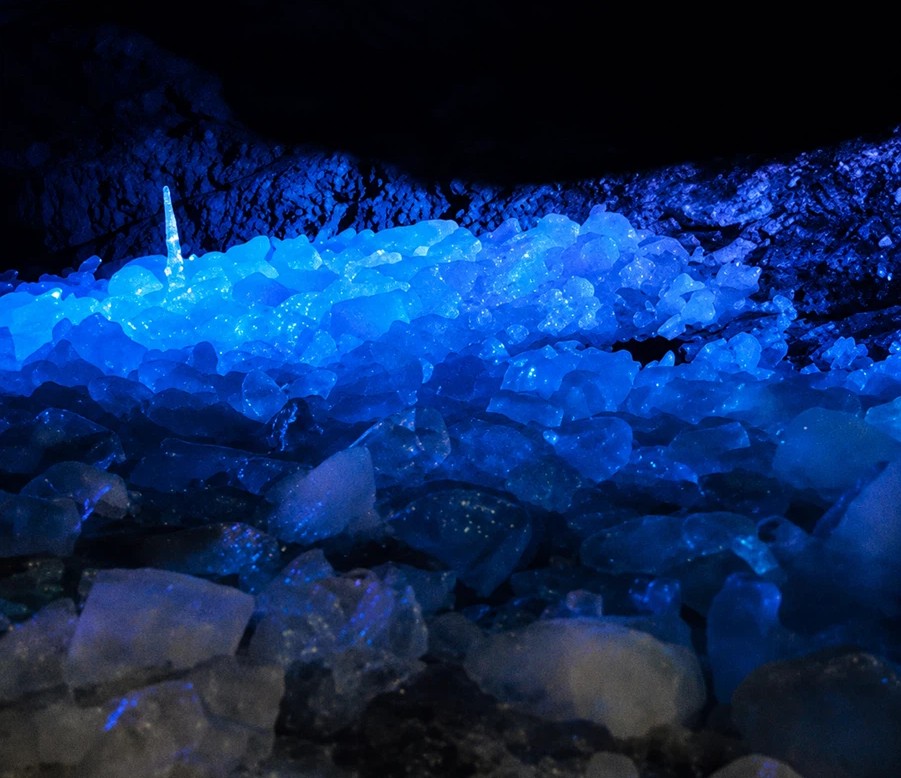
Fugaku Wind Cave and Narusawa Ice Cave: Lava Caves That Stay Cool Even in Midsummer


Aokigahara Forest, which spreads over lava from eruptions of Mt. Fuji, has lava caves known as natural refrigerators. The two best known are Fugaku Wind Cave and Narusawa Ice Cave. Both stay cool inside throughout the year, and the average temperature in Narusawa Ice Cave is about 3°C.
Fugaku Wind Cave is almost flat and easy to walk, so it is easy to visit with young children or older family members. Narusawa Ice Cave has many stairs and some sections where you need to crouch, so it suits visitors looking for a sense of exploration.
| Fugaku Wind Cave | Narusawa Ice Cave | |
| Type | Horizontal cave, almost flat | Vertical cave, many stairs |
| Visit time | About 15 minutes | About 6–7 minutes |
| Location | 2068-1 Saiko Aokigahara, Fujikawaguchiko-machi, Minamitsuru-gun, Yamanashi Prefecture | 8533 Narusawa-mura, Minamitsuru-gun, Yamanashi Prefecture |
| Official website | https://www.mtfuji-cave.com/en/ | https://www.mtfuji-cave.com/en/ |

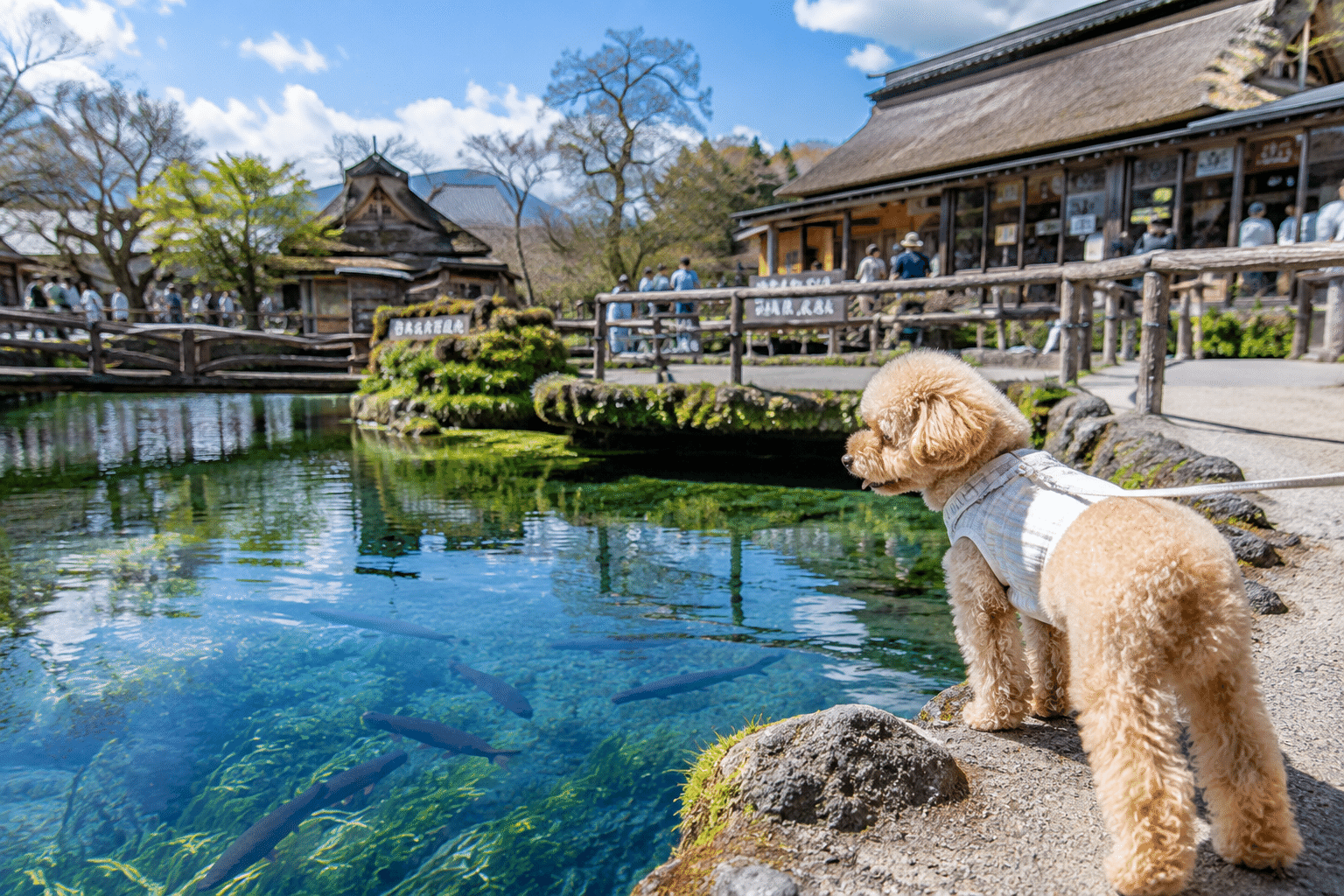
Oshino Hakkai: Eight Ponds Fed by Mt. Fuji’s Spring Water

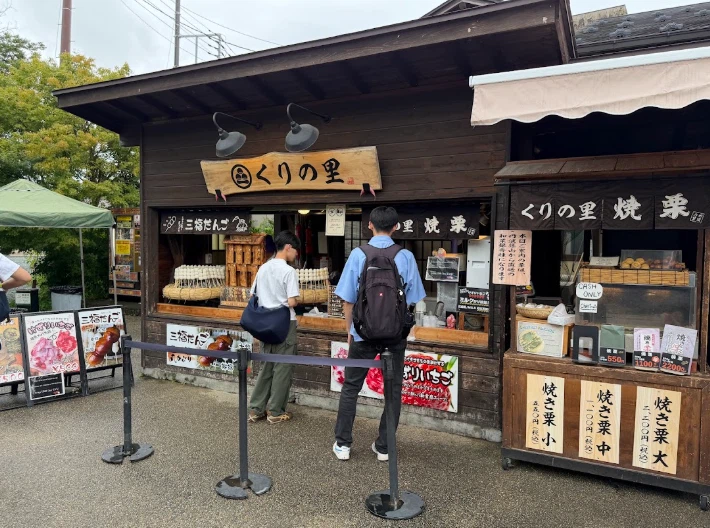
Oshino Hakkai is a group of eight ponds formed by snow and rain that fell on Mt. Fuji, flowed underground over many years, and then emerged as springs. It is one of the component parts of the World Heritage site, and the crystal-clear ponds, thatched-roof houses, and Mt. Fuji rising behind them create a scene of traditional rural Japan. Around the ponds, you can also enjoy street food such as kusamochi (mugwort rice cakes) made with the spring water.
| Name | Oshino Hakkai |
| Location | Shibokusa, Oshino-mura, Minamitsuru-gun, Yamanashi Prefecture |
| Fees | Free (admission to the Hannoki Bayashi Shiryokan is required only to see Sokonuke Pond) |
| Inquiries | Oshino Village Tourist Association 0555-84-4222 |
| Parking | Private parking lots nearby (around 300 yen for a standard vehicle) |
| Access | About 20 minutes from Kawaguchiko IC on the Chuo Expressway / About 10 minutes from Yamanakako IC on the Higashi-Fujigoko Road |
| Reference | Oshino Village official website (in Japanese) |

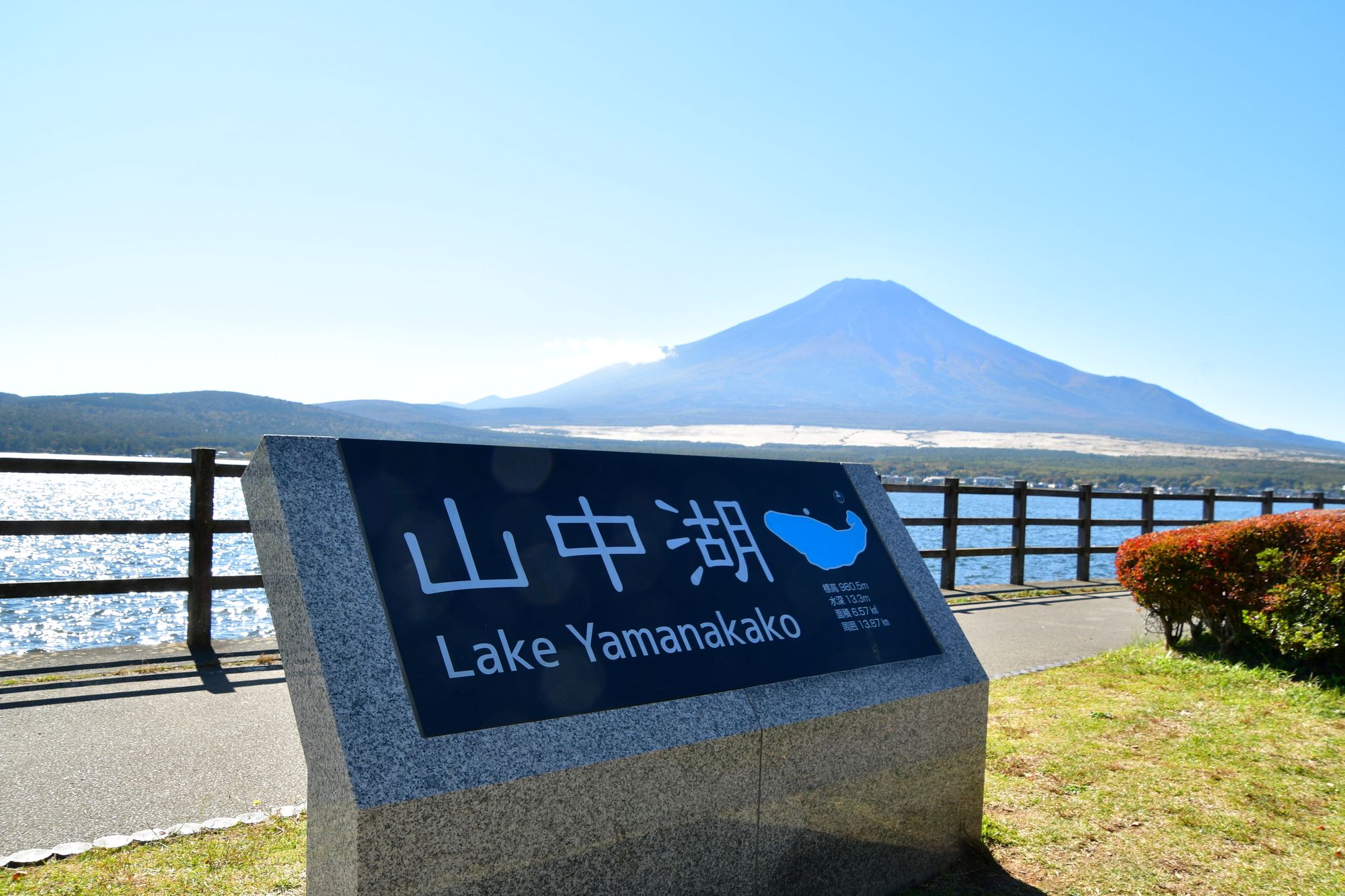
Lake Yamanakako: The Closest Lake to Mt. Fuji and Nagaike Shinsui Park, a Diamond Fuji Viewing Spot

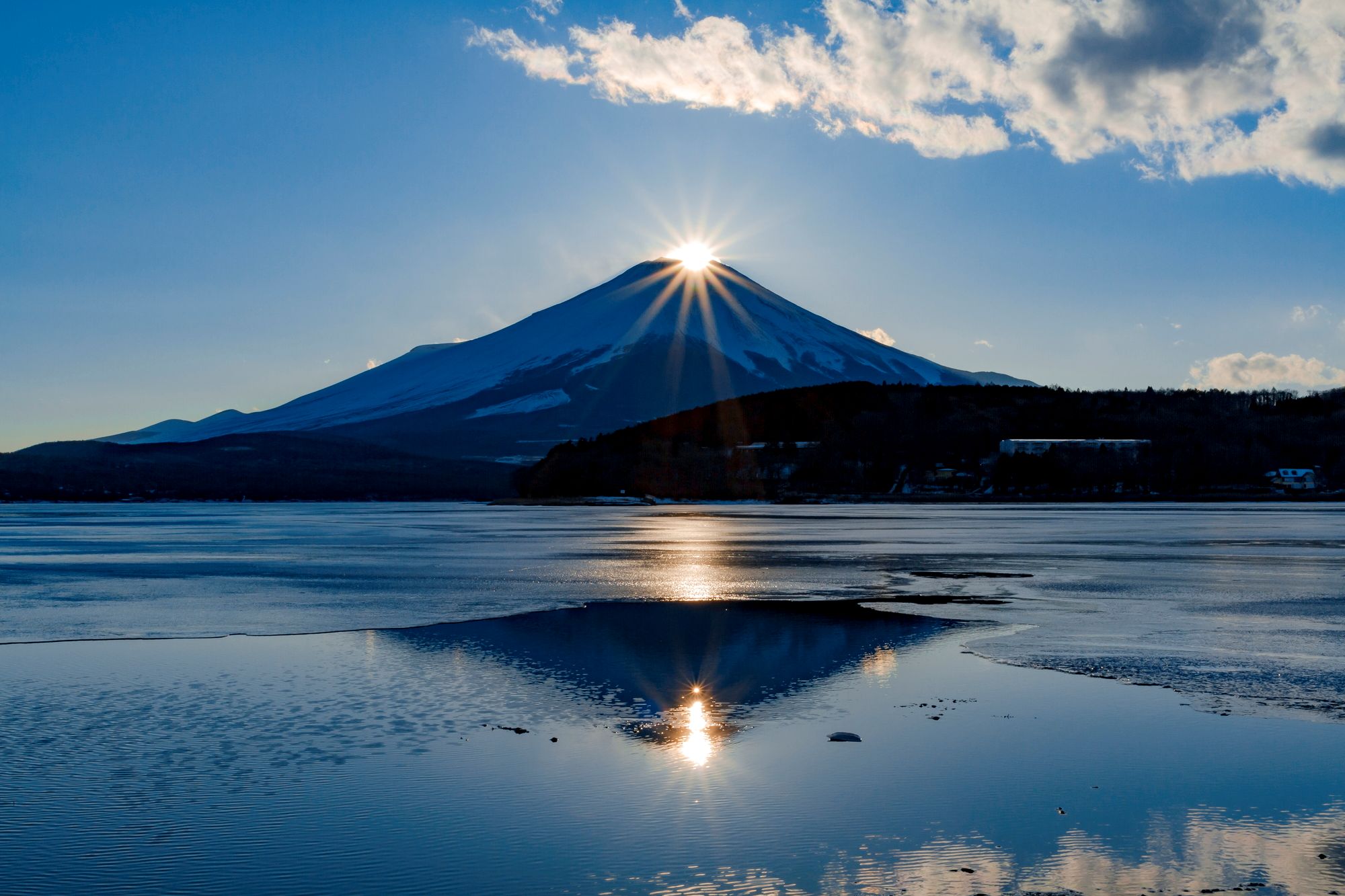
Lake Yamanakako is the largest of the Fuji Five Lakes and sits at the highest elevation. As the lake closest to Mt. Fuji, it offers a powerful view of the mountain towering above you. Nagaike Shinsui Park, which looks across the lake to Mt. Fuji, is a spot for photographing “upside-down Fuji” reflected on the water. From fall through winter, it is also well known as a place to see Diamond Fuji, when the sun lines up with the summit.
| Name | Yamanakako Shinsui Park (Nagaike Shinsui Park) |
| Location | Hirano, Yamanakako-mura, Minamitsuru-gun, Yamanashi Prefecture |
| Admission | Free |
| Parking | Free; about 80 spaces |
| Access | About 15 minutes by car from Yamanakako IC on the Higashi-Fujigoko Road |
| Reference | https://www.yamanakako.gr.jp/ |

The Best Time of Day to See Mt. Fuji, and How It Looks in Each Season
Mt. Fuji is not always visible just because you are there. Days when you can see all the way to the summit are limited, and the view changes greatly depending on the time of day and the season. Before deciding on your travel dates, it helps to know the conditions for seeing Mt. Fuji and the highlights of each season.
Early Morning Is the Best Time to See Mt. Fuji
A time-lapse of Mt. Fuji from the previous day, recorded by the live camera at Glamping Village Fuji Kawaguchiko (updated around 6 a.m. each day). It shows how the clouds around the summit change from morning to evening.
Note: the video may stop updating for a while depending on local signal conditions.
Mt. Fuji is easiest to see from sunrise until about 9 a.m. As temperatures rise from midday into the afternoon, clouds tend to form, and it is common for a summit that was clearly visible in the morning to be hidden by clouds by noon.
If you want to photograph a clear view of Mt. Fuji, try to schedule it for the morning.
Three tips for improving your chances of seeing Mt. Fuji
• Aim for early morning, from sunrise until about 9 a.m. (clouds tend to form in the afternoon)
• In winter (November–February), when the air is clear, Mt. Fuji is visible on more days
• Check a live camera before you head out to see the conditions that day

How Mt. Fuji Looks and What to Enjoy in Each Season
Mt. Fuji looks completely different from one season to the next. Before your trip, check how it appears and how to enjoy it at that time of year.
Spring (March–May)

In spring, snow still covers the summit of Mt. Fuji, and you can enjoy it together with the cherry blossoms at its base. Spots where you can capture Mt. Fuji and cherry blossoms in one photo are found throughout the area, such as the five-story pagoda at Arakurayama Sengen Park and the rows of cherry trees along Lake Kawaguchiko. In late spring, you can also see moss phlox (shibazakura) in bloom with Mt. Fuji in the background.
On some spring days, however, haze makes Mt. Fuji look faint. For a clearer view, it is best to go out in the morning while the air is still cool.
Summer (June–August)

In summer, the snow melts and Mt. Fuji shows its bold, bluish slopes. The Mt. Fuji climbing season runs from July to early September. The Fuji Five Lakes area sits at a high elevation and is cooler than central Tokyo, so highland activities such as horseback riding and paragliding are comfortable.
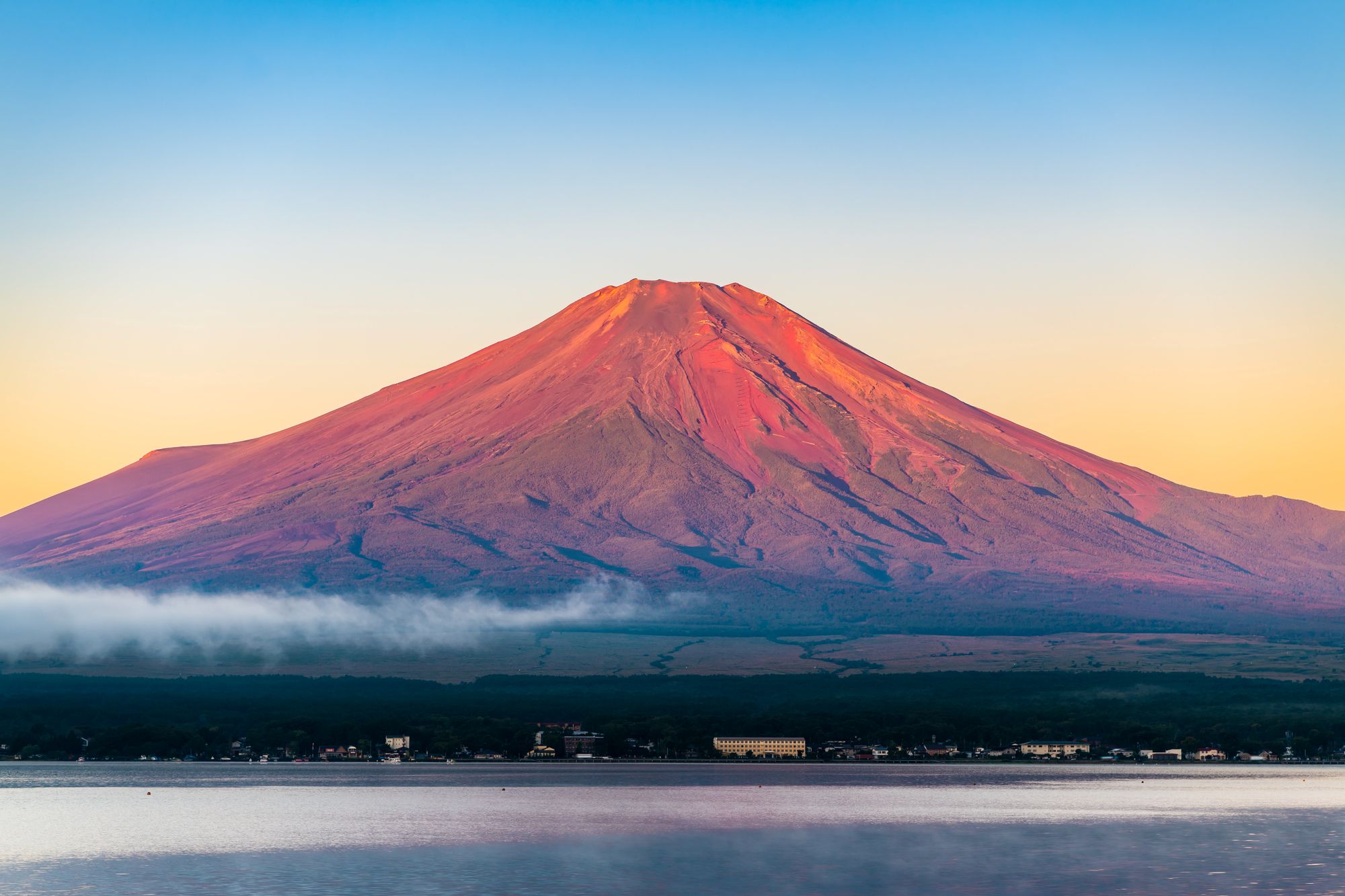
Haze and clouds form easily in summer, and Mt. Fuji is hidden on many days. On late-summer mornings, however, you may see “Aka Fuji,” when the slopes turn red in the morning sun, which makes the sight all the more memorable.
Fall (September–November)

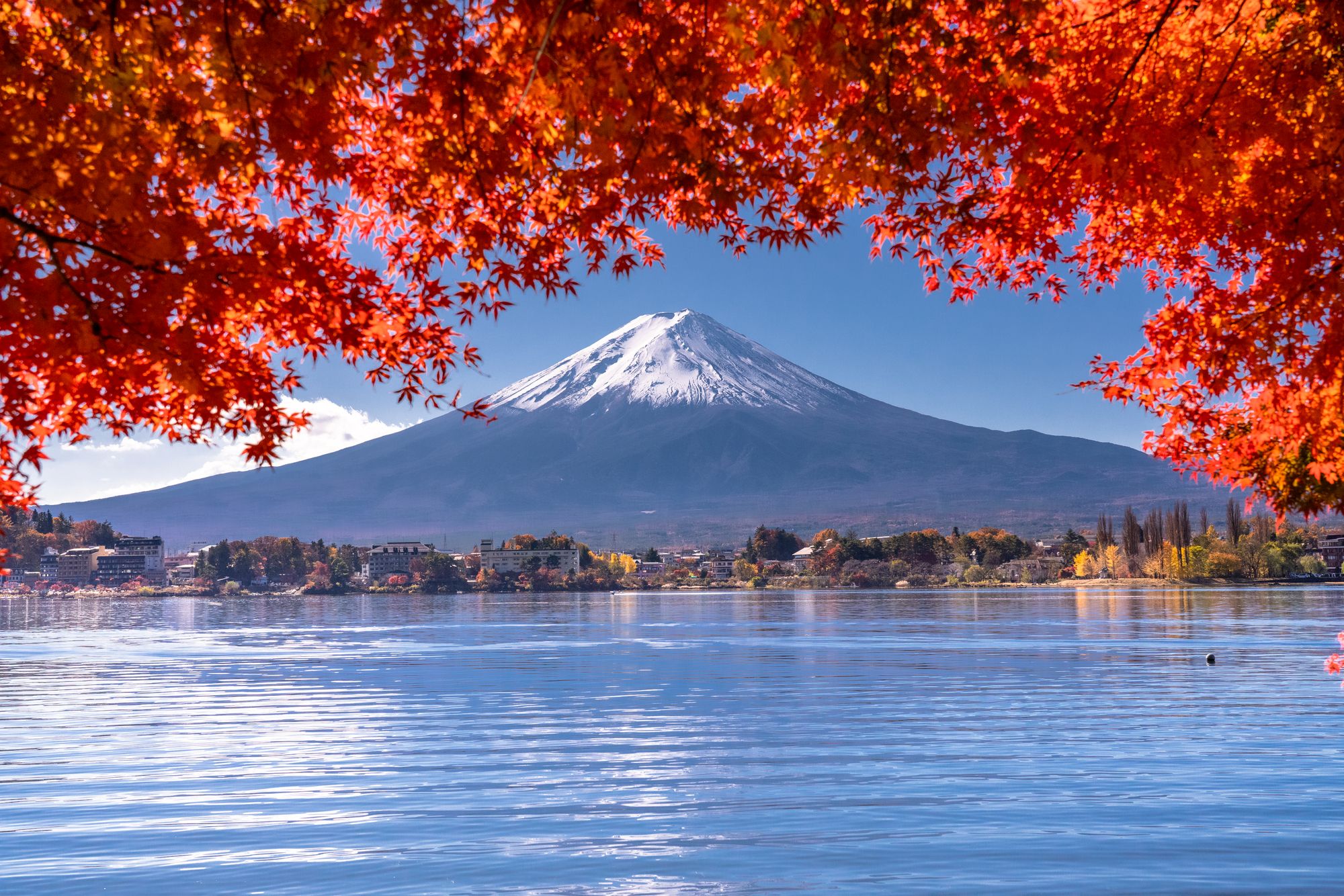
In fall, Mt. Fuji receives its first snow of the season and the air gradually becomes clearer. Around November, you can see the autumn leaves at the Momiji Corridor on Lake Kawaguchiko and around Lake Yamanakako together with snowcapped Mt. Fuji.
Both Lake Kawaguchiko and Lake Yamanakako get crowded during the fall foliage season, so plan to start early in the morning.

Winter (December–February)

For the clearest views of Mt. Fuji, November to February is recommended, when the air is clear. The contrast between the snow-covered summit and the blue sky is striking, and your chances of seeing Mt. Fuji increase significantly.
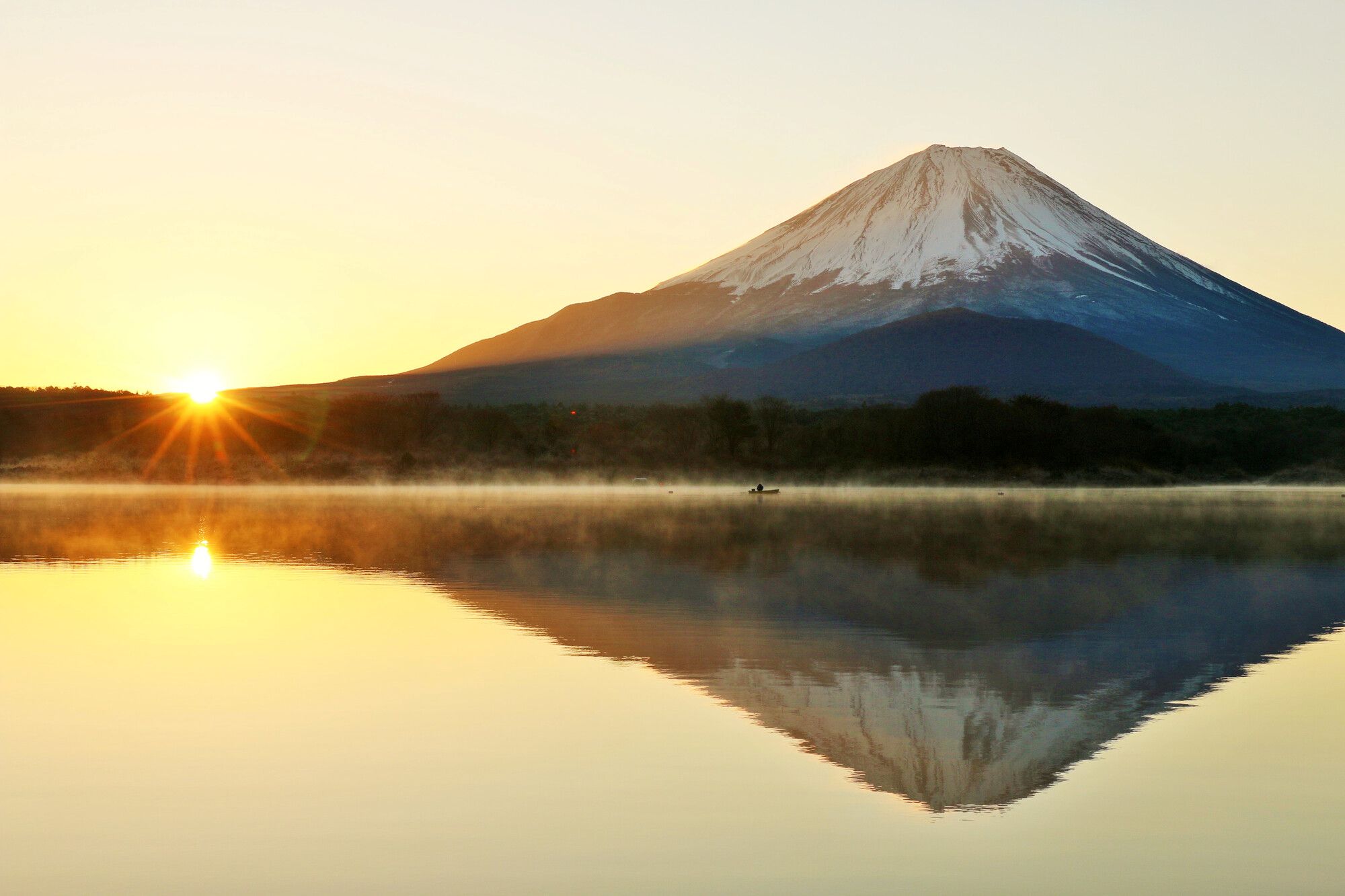
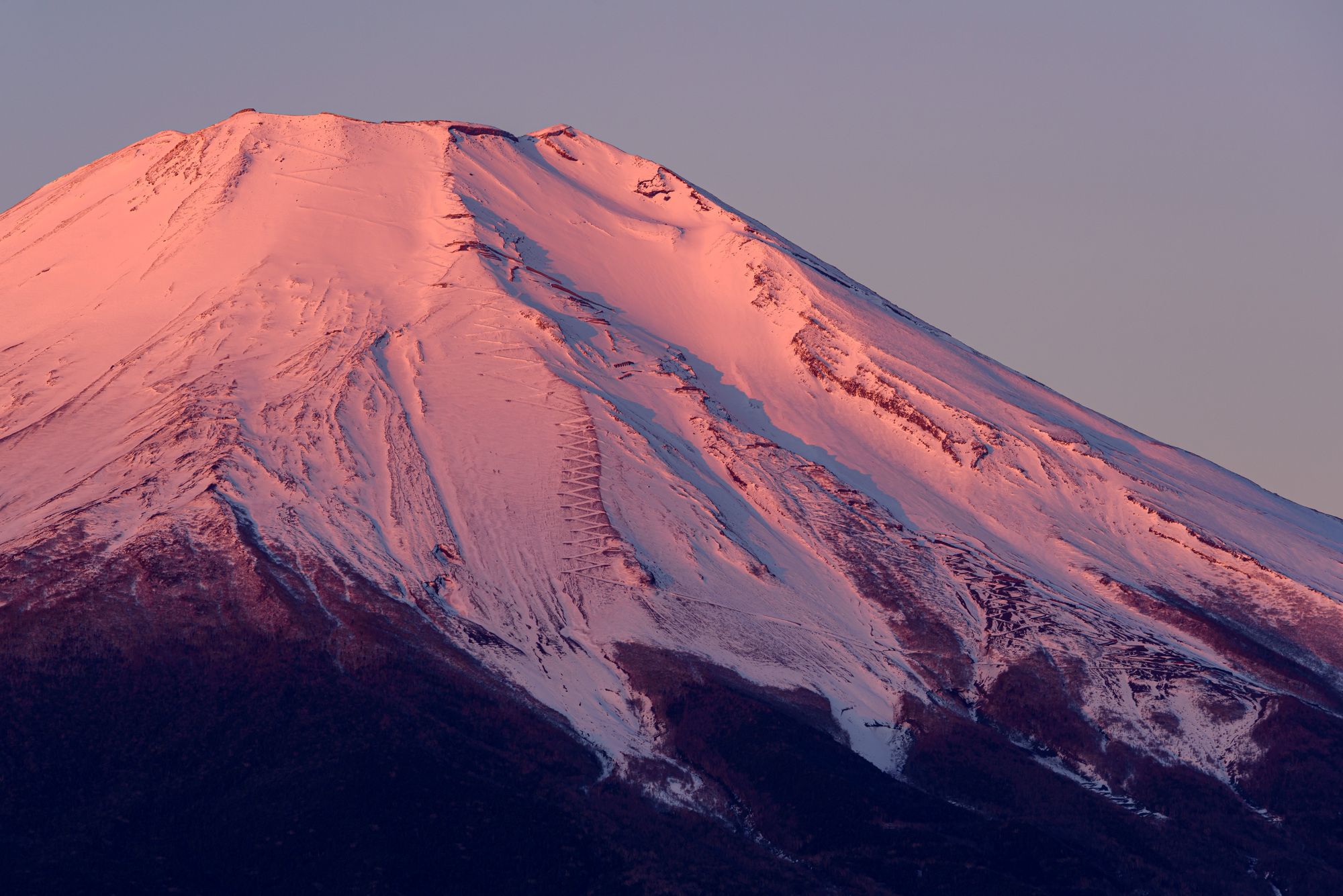
On calm mornings, you are more likely to see upside-down Fuji reflected on the lakes, and just after sunrise you may see “Beni Fuji,” when the summit turns crimson. At Lake Yamanakako, Diamond Fuji, when the sun lines up with the summit, can also be seen during certain periods. It gets very cold, so dress warmly when you go out.
Must-See Views: Upside-Down Fuji, Diamond Fuji, and Beni Fuji


Mt. Fuji has some special appearances that can be seen only when the time and weather conditions are right.
Upside-down Fuji (Sakasa Fuji) is the reflection of Mt. Fuji on the surface of a lake on a calm, windless day. It can be seen from the north shore of Lake Kawaguchiko and at Lake Yamanakako, and the chances are especially good on clear winter mornings.
Diamond Fuji is the moment when the sun lines up with the summit of Mt. Fuji and sparkles like a diamond. At Lake Yamanakako, it can be seen over a long period from mid-October to around the end of February, which is why the lake is known as a “sacred site for Diamond Fuji.”
Beni Fuji is the sight of the snow-covered slopes turning crimson in the morning or evening sun in midwinter. Aka Fuji is the sight of the snow-free slopes turning red in the morning sun from late summer to early fall, a scene also depicted in Katsushika Hokusai’s “Thirty-six Views of Mount Fuji.” Both can be seen around Lake Yamanakako.
The following article explains when and where to see Diamond Fuji, along with the many other faces of Mt. Fuji.


Getting from Tokyo to Mt. Fuji: Why Lake Kawaguchiko Is the Best Base for Sightseeing
Lake Kawaguchiko is the recommended base for exploring the Mt. Fuji area. It is home to Kawaguchiko Station, the last stop on the Fujikyu Railway, and can be reached from Tokyo without transferring by either train or highway bus, making it the most accessible area around Mt. Fuji.
The lakeshore has attractions such as the ropeway and museums, along with restaurants serving hoto and other local dishes, and hotels. Fujiyoshida, Oshino Hakkai, Lake Yamanakako, and Aokigahara Forest are all about 20 to 40 minutes away by car, so it is a convenient base wherever you plan to go around Mt. Fuji.
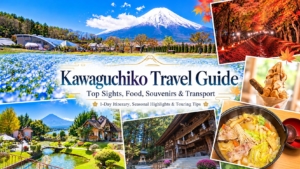
The following article covers sightseeing spots, food, and souvenirs around Lake Kawaguchiko in detail.

By Train: The Fuji Excursion Limited Express from Shinjuku with No Transfers

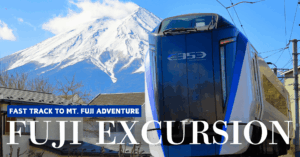
The Fuji Excursion limited express takes you from Shinjuku Station to Kawaguchiko Station in about two hours without transferring. You can also transfer to the Fujikyu Railway at Otsuki Station, where sightseeing trains such as the “Fujisan View Express” and the “Fujisan Limited Express” let you see Mt. Fuji from the window. Watching Mt. Fuji grow closer during the journey is one of the pleasures of traveling by train.


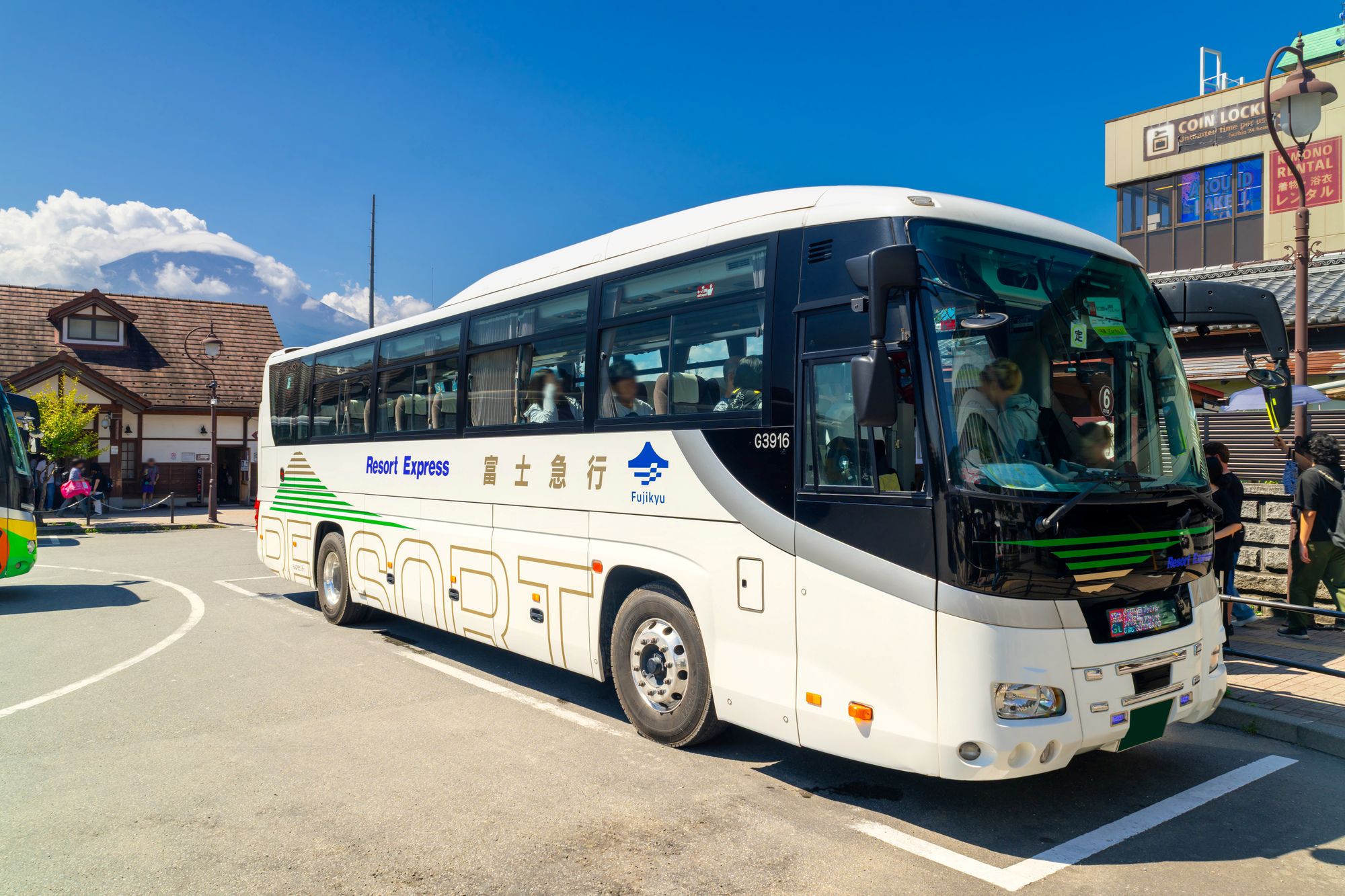
By Highway Bus: Direct from Busta Shinjuku and the Airports

By highway bus, it takes about 1 hour 45 minutes from Busta Shinjuku to Kawaguchiko Station. Buses run frequently and fares are reasonable, making them an easy option.
In addition to Shinjuku, buses depart from many stations in Tokyo, including Tokyo, Ueno, Akihabara, and Ikebukuro stations, so it is easy to fit a trip to Mt. Fuji before or after sightseeing in Tokyo. There are also direct buses to Lake Kawaguchiko from Narita Airport and Haneda Airport, so you can travel there without going through central Tokyo.
By Car: Kawaguchiko IC on the Chuo Expressway Is Just Minutes from the Lake

If you are driving, the lakeshore is just a short drive after exiting at Kawaguchiko IC on the Chuo Expressway. This itinerary assumes travel by car, since it visits spots scattered around the lakes and highlands.
If you arrive by train or bus, several rental car companies have offices near Kawaguchiko Station, so renting a car at the station is efficient. Roads can freeze in winter (December–March), so make sure your car has studless winter tires.

By Bus: The Sightseeing Bus Free Coupon Is Convenient

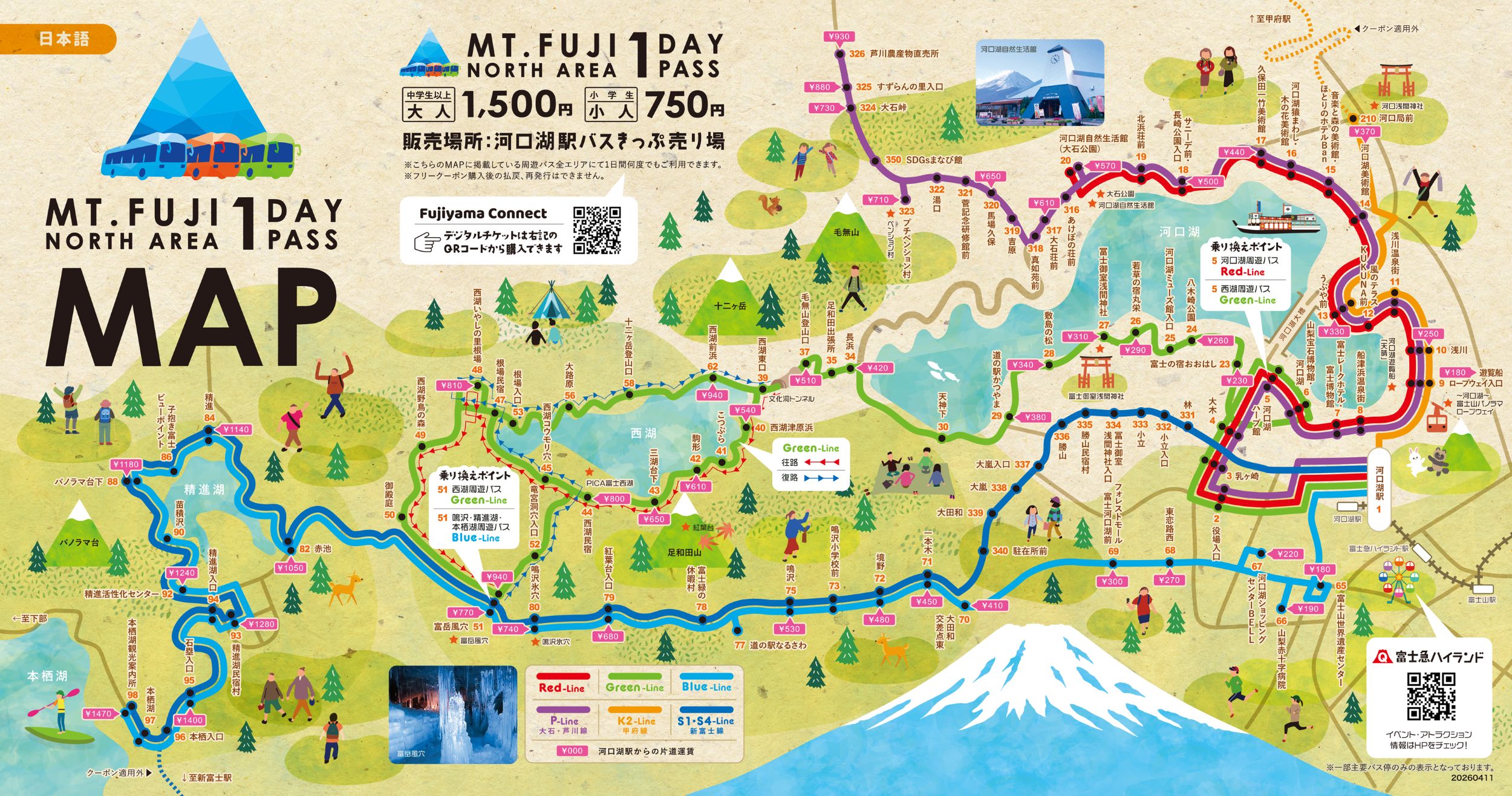
If you are only exploring the Lake Kawaguchiko area, the sightseeing buses departing from Kawaguchiko Station are convenient. There are three routes, covering Lake Kawaguchiko, Lake Saiko, and Narusawa as well as the Lake Motosuko area, and a one-day free coupon valid on all three routes costs 1,500 yen for adults. You can visit the main spots around the lakes without a car.
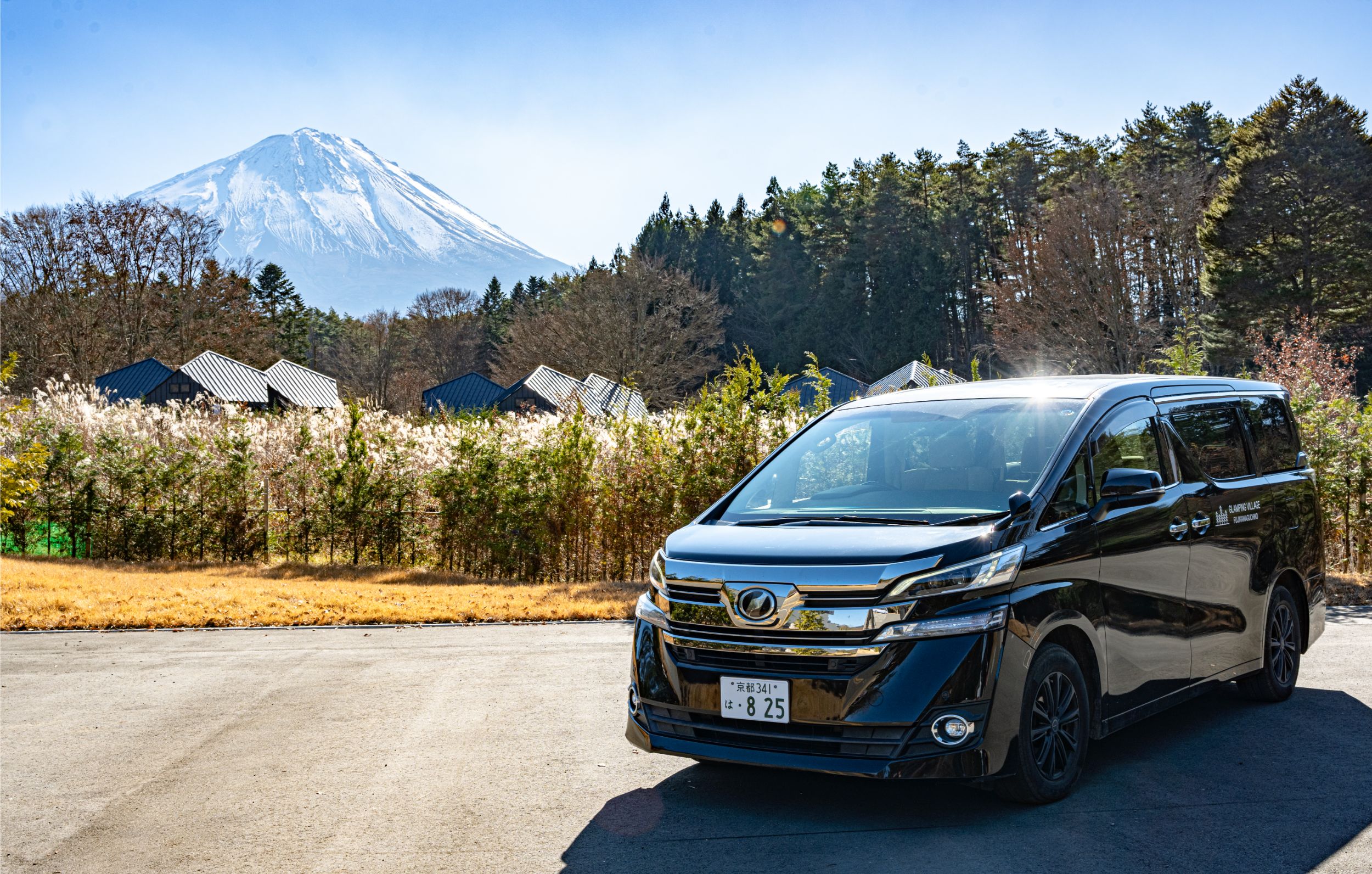
To travel farther to Oshino Hakkai, Lake Yamanakako, or the sites for activities such as horseback riding and paragliding, a rental car makes getting around much easier. Some hotels also offer pick-up service, so you can check with your hotel.
A 3-Day, 2-Night Mt. Fuji Itinerary for Families and Couples
Although Lake Kawaguchiko and Lake Yamanakako are both among the Fuji Five Lakes, they offer completely different ways to enjoy Mt. Fuji. At Lake Kawaguchiko, you photograph picturesque views of Mt. Fuji together with the lake, flowers, and townscapes, and look down on it from the ropeway.
At Lake Yamanakako, the closest of the Fuji Five Lakes to Mt. Fuji, you stand on the lakeshore and look up at the towering mountain. In this itinerary, you stay in the Lake Kawaguchiko area on the first night and in the Lake Yamanakako area on the second night, enjoying the different sides of Mt. Fuji at the two lakes over three days.
On the second day in between, you can choose experiences that let you feel Mt. Fuji’s nature firsthand, such as horseback riding or paragliding. The hotels in this article were selected for their views of Mt. Fuji, so the itinerary also suits travelers who enjoy scenic spots and outdoor activities.
How families and couples can enjoy this itinerary
• For families: Focus on spots with few stairs or long slopes, and take frequent breaks. On day 2, the horseback riding experience, which children can join, is recommended.
• For couples: Photograph scenic spots in the morning and evening light, and on day 2, try paragliding while looking out at Mt. Fuji.
If you are driving from Tokyo on the Higashi-Fujigoko Road, you can also follow the itinerary in reverse, starting at Lake Yamanakako and ending at Lake Kawaguchiko.
Day 1: Photograph Mt. Fuji and View It from Above in Kawaguchiko and Fujiyoshida

Arakurayama Sengen Park is about 20 minutes by car from Kawaguchiko Station. Mt. Fuji tends to be clearly visible in the morning, so start by photographing the classic view of the five-story pagoda and Mt. Fuji.
For families: A long flight of stairs leads up to the observation deck. If you are with young children or grandparents, take breaks along the way and climb at a comfortable pace.

*Image for illustration purposes only
Honcho-dori Street is about 10 minutes by car from Arakurayama Sengen Park. If you park at the city-run Honcho-dori parking lot, you can walk to both the spot for photographing Mt. Fuji at the end of the street and the udon restaurants.
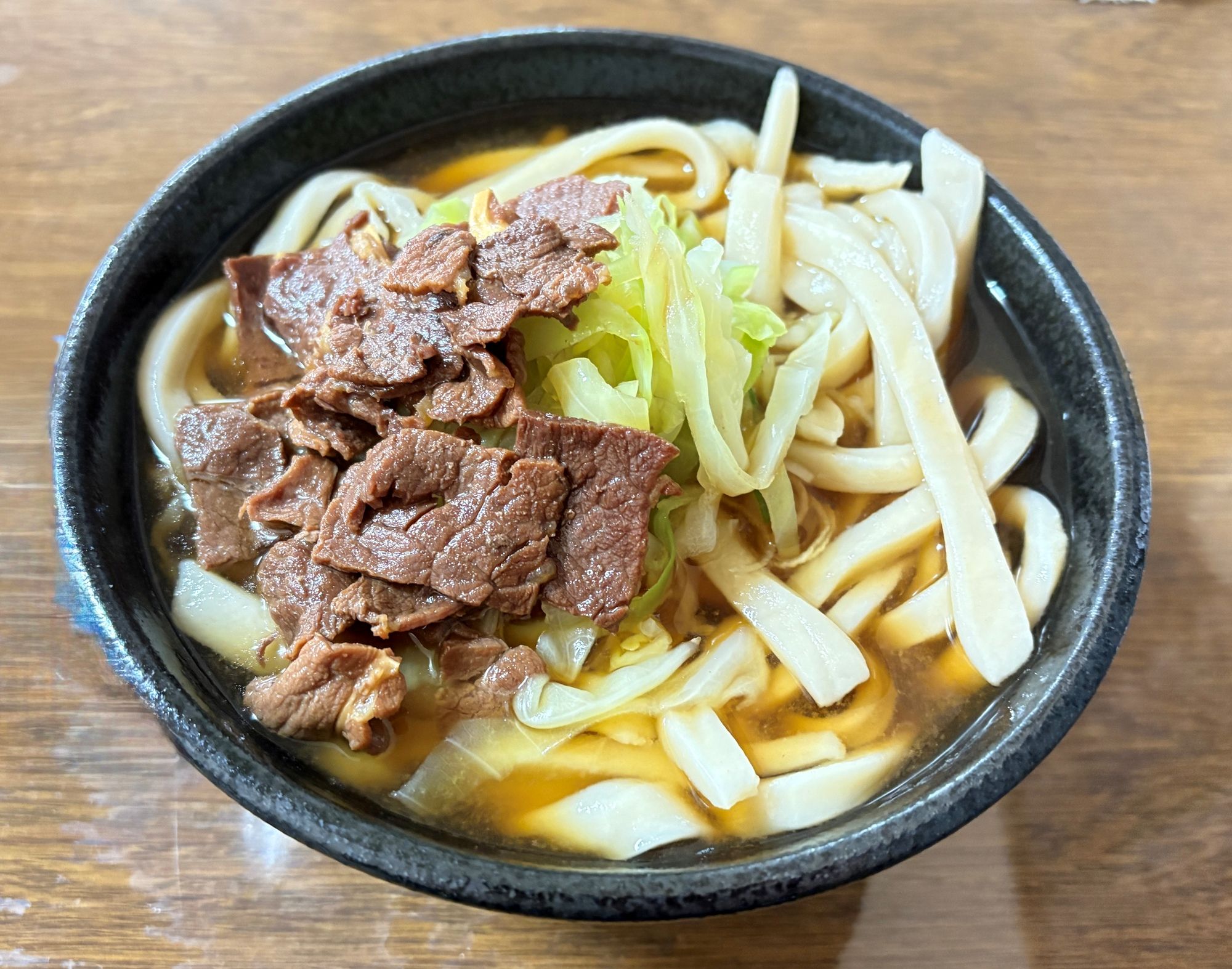
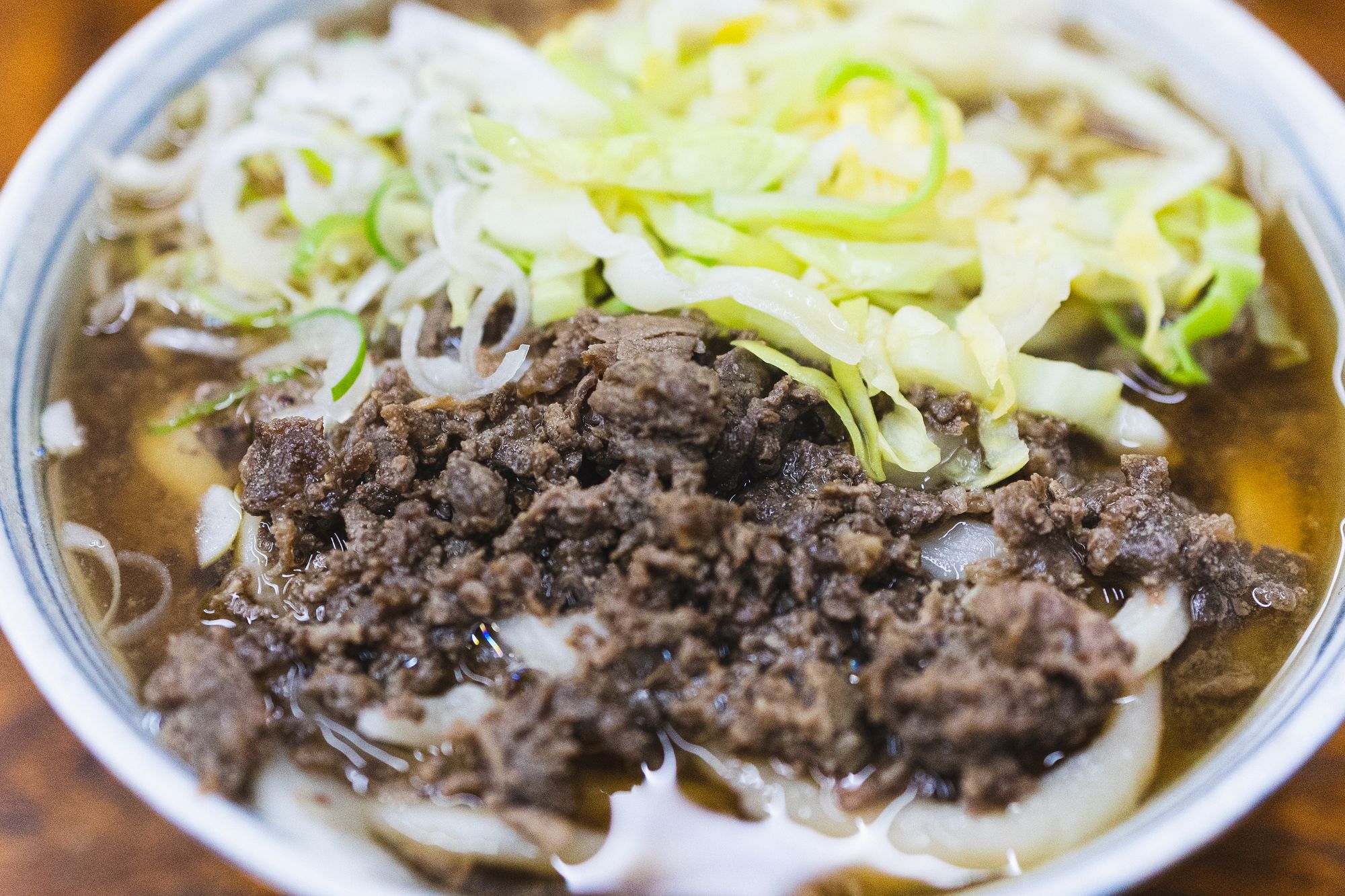
For lunch, head to Sakurai Udon, a long-established restaurant regarded as the birthplace of Yoshida udon. The toppings are simply cabbage and fried tofu, letting you taste the firm, chewy noodles that Yoshida udon is known for. It is about a 7-minute walk from the parking lot.
If you visit on a Sunday, go to Benkei, about a 5-minute walk from the parking lot. Founded in 1953, this long-established restaurant serves softer noodles in a light broth that first-timers will find easy to enjoy. Its handmade inari sushi is also popular.
| Restaurant | Address | Hours | Closed |
| Sakurai Udon | 5-1-33 Shimoyoshida, Fujiyoshida, Yamanashi Prefecture | 10:00~14:30 | Sundays |
| Benkei | 3-21-11 Shimoyoshida, Fujiyoshida, Yamanashi Prefecture | 10:00~17:00 | Irregular |
Both restaurants get busy at lunchtime, so it is best to arrive early. Hours and closing days may change, so check before you go.

The ropeway station on the shore of Lake Kawaguchiko is about 15 to 20 minutes by car from Fujiyoshida. A ride of about three minutes takes you up to the observation deck at 1,075 m. Because you can enjoy the view without climbing stairs, it is also recommended for families traveling with grandparents.

Oishi Park is about 20 minutes by car from the ropeway station. Located on the north shore of the lake, it is a spot where you can photograph Mt. Fuji beyond the seasonal flowers.
For couples: Photos of Mt. Fuji taken in the soft evening light make a lovely keepsake of your trip together.

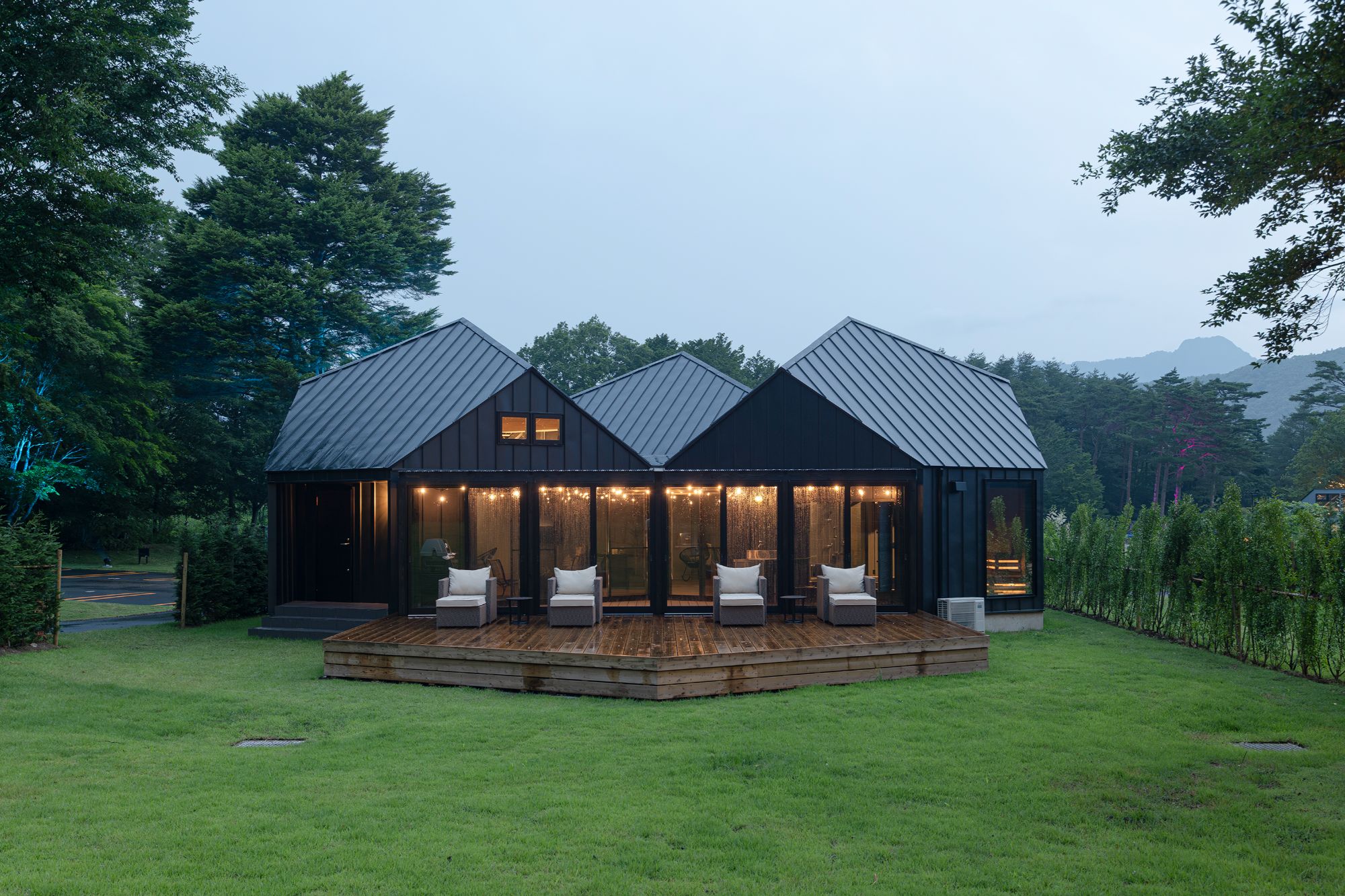
Your first night is in the Lake Kawaguchiko area. Choose KOS HOTEL & RESTAURANT for a wood-fired dinner, Residence Villa Kawaguchiko Lago for a relaxing stay in a private villa facing Mt. Fuji, or Glamping Village Fuji Kawaguchiko for glamping with a hot spring in every unit and an evening around the campfire, depending on your travel style.
Day 2: Experience Mt. Fuji in the Highlands and the Forest, Then Head to Lake Yamanakako

Mt. Fuji is easiest to see in the early morning. On a calm, windless morning, you may see upside-down Fuji reflected on the lake. Take a walk along the lakeshore before breakfast.
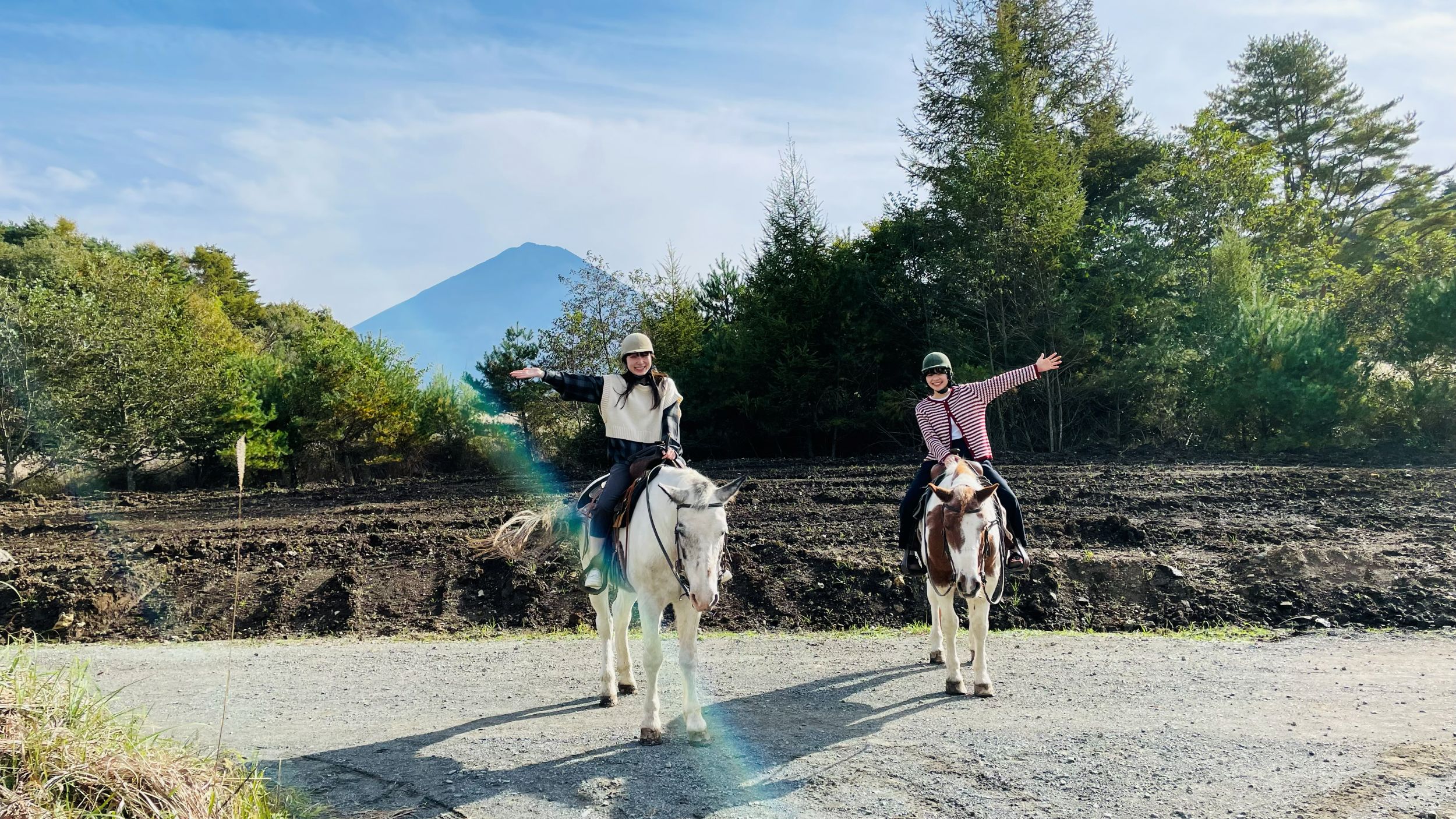
For families: Horseback riding (Paddy Field, Narusawa Village)
The trail riding course, in which a staff member leads the horse, is open to children aged 6 and up, so first-time riders can join with confidence. You can ride at a relaxed pace for about 30 minutes while looking out at Mt. Fuji. Note that it is closed on Mondays (or the following day if Monday is a national holiday). For details, see the horseback riding page.
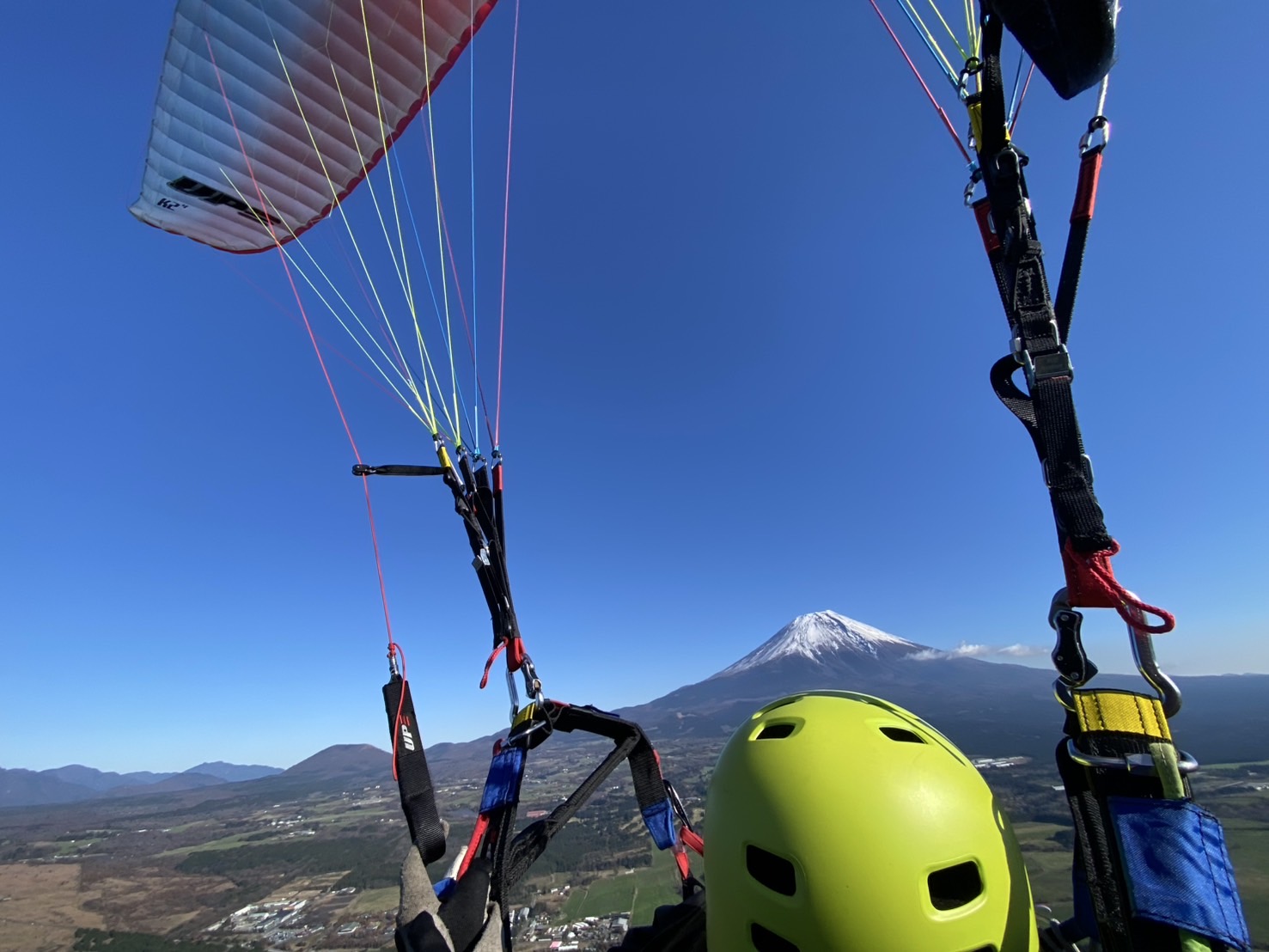
For couples: Paragliding (Asagiri Highland)
On a course where you fly together with an instructor, even first-timers can enjoy a flight with a head-on view of Mt. Fuji. Courses and requirements are listed on the paragliding page.

The lava caves give you a sense of the power of Mt. Fuji. Families can choose Fugaku Wind Cave, which is almost flat and easy to walk, while couples can head down the stairs into the icy world of Narusawa Ice Cave for a sense of exploration. Both caves stay cool even in summer, so bring an extra layer.

Oshino Hakkai is about 40 minutes by car from Narusawa Ice Cave or Fugaku Wind Cave. Stroll around the clear ponds and try street food such as kusamochi made with the spring water. Coffee made with the spring water is also available. For lunch, you can also stop at a restaurant serving hoto or soba.

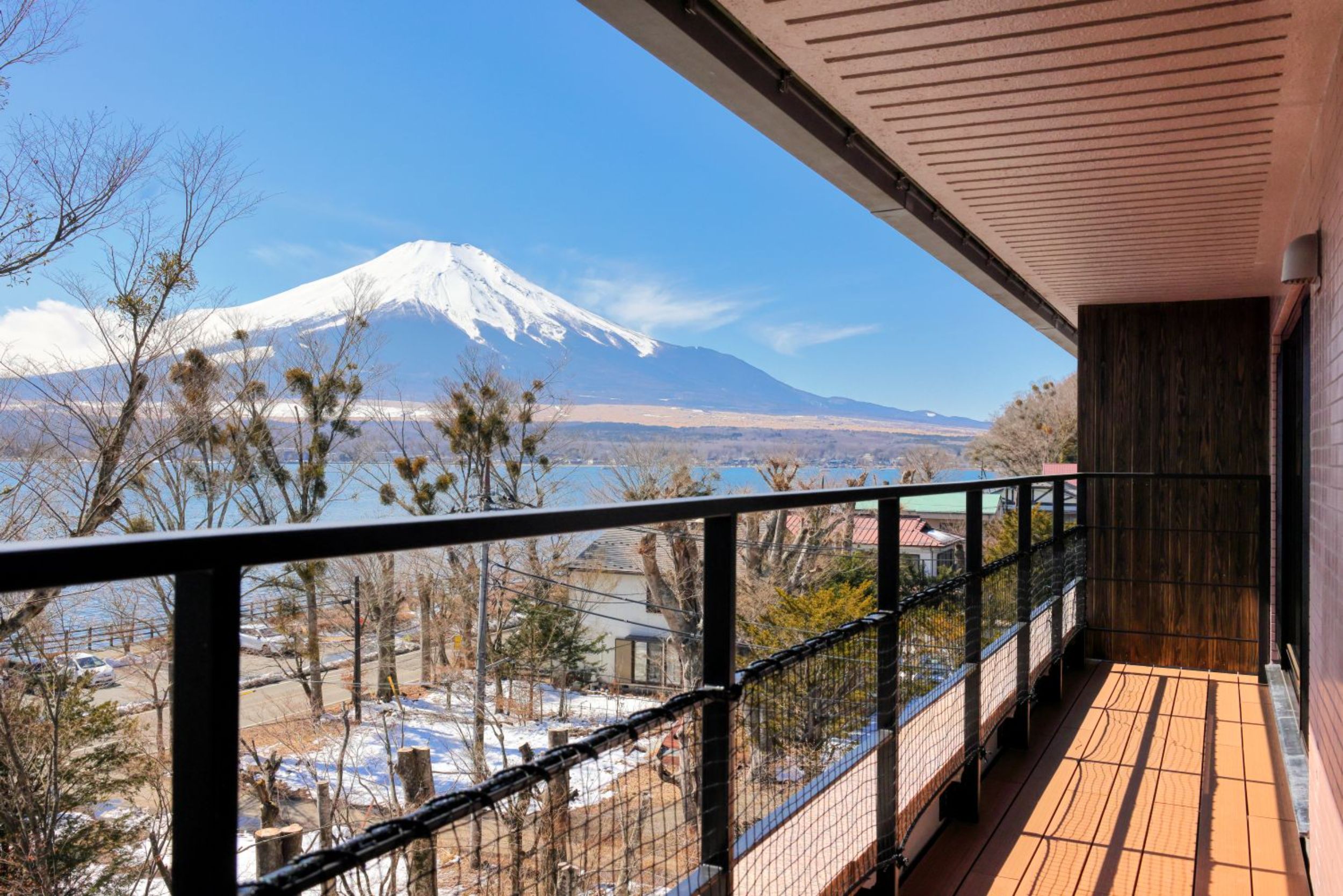
Your hotel on Lake Yamanakako is about 15 minutes by car from Oshino Hakkai. At Private Villa Glamping Fuji Yamanakako, you can spend a quiet night in a villa with a private hot spring, private pool, and barrel sauna, gazing at the stars around a campfire. At HAKU FUJI YAMANAKAKO, you can take your time over a kaiseki dinner made with Yamanashi ingredients or conveyor-belt sushi served in your room, which occupies an entire floor.
Day 3: Look Up at Mt. Fuji Across Lake Yamanakako

At Lake Yamanakako, the closest lake to Mt. Fuji, the mountain rises large across the water. On winter mornings, you may see Beni Fuji, when the snow-covered mountain turns crimson in the morning sun. From fall into winter, many people also come to photograph Diamond Fuji.

After checking out, head to Nagaike Shinsui Park, which offers a head-on view of Mt. Fuji across the lake. The park has a large lawn where children can run around freely.

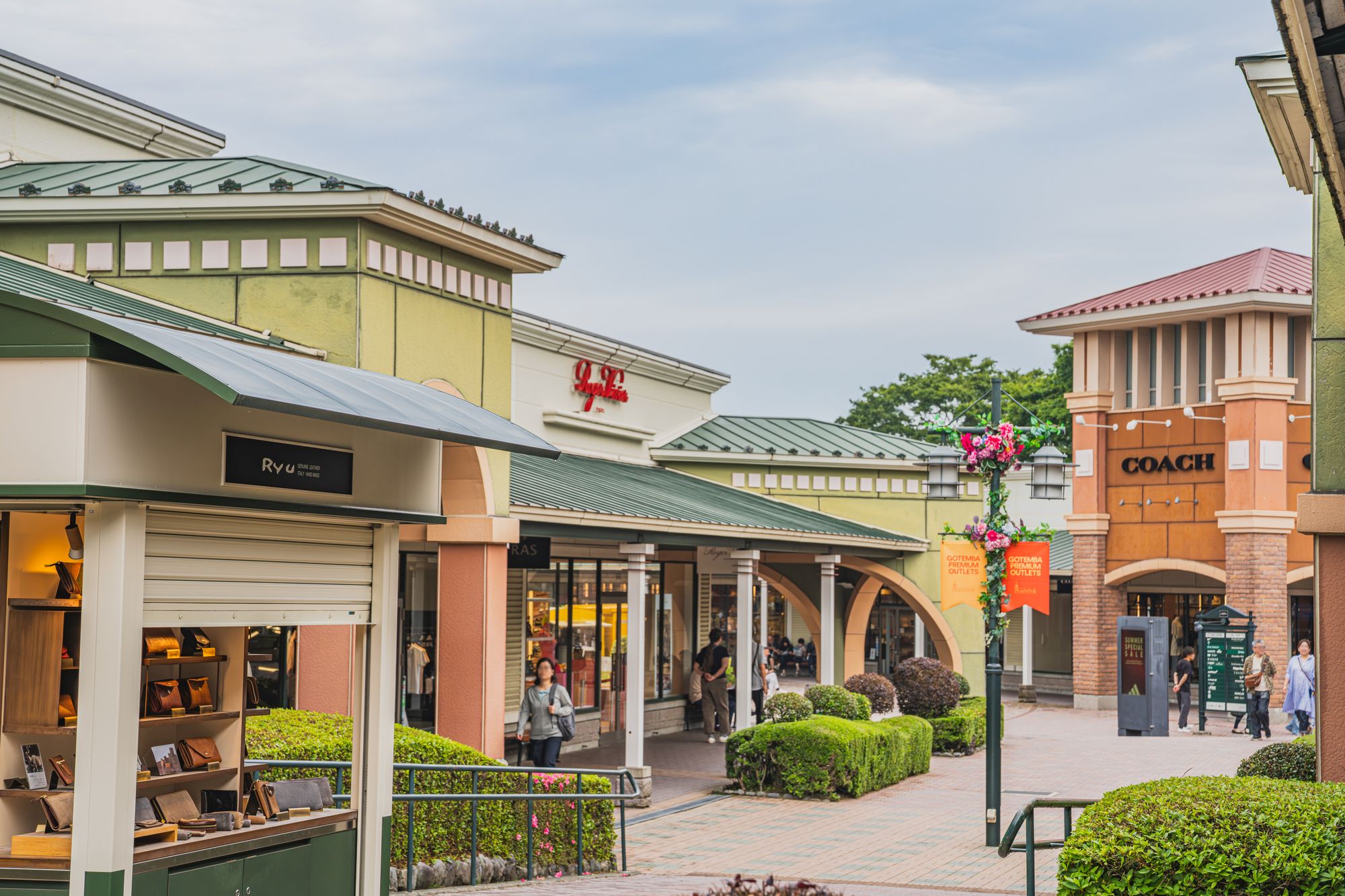
Gotemba Premium Outlets is about 30 minutes by car from Lake Yamanakako. Here in Shizuoka, which offers a different experience from Yamanashi, you can enjoy shopping and dining.
Hotels for This Itinerary: 5 Options in the Lake Kawaguchiko and Lake Yamanakako Areas
In this itinerary, you stay in the Lake Kawaguchiko area on the first night and in the Lake Yamanakako area on the second night. All of the hotels are located at the foot of Mt. Fuji, where you can relax after a day of travel with hot springs, saunas, and private spaces.
Comparison of 5 recommended hotels
| Hotel | Area | Features | Recommended for |
| KOS HOTEL & RESTAURANT | Lake Kawaguchiko | Restaurant serving wood-fired cuisine; lakeside tent sauna | Couples and families who want to stay for the food |
| Residence Villa Kawaguchiko Lago | Lake Kawaguchiko | Private villa facing Mt. Fuji with a hot spring, sauna, and pool; up to 8 guests | Three-generation trips or two families traveling together |
| Glamping Village Fuji Kawaguchiko | Lake Kawaguchiko | Glamping domes and villas with hot springs and fire pits | Families with children and travelers who enjoy the outdoors |
| Private Villa Glamping Fuji Yamanakako | Lake Yamanakako | Hot spring, private pool, and barrel sauna in every unit | Couples and families who want a quiet night |
| HAKU FUJI YAMANAKAKO | Lake Yamanakako | Rooms that each occupy an entire floor; a tea room and private conveyor-belt sushi; kaiseki cuisine made with Yamanashi ingredients | Three-generation trips and couples who want to enjoy the food |
KOS HOTEL & RESTAURANT: A Gourmet Hotel Built Around Wood-Fired Cuisine

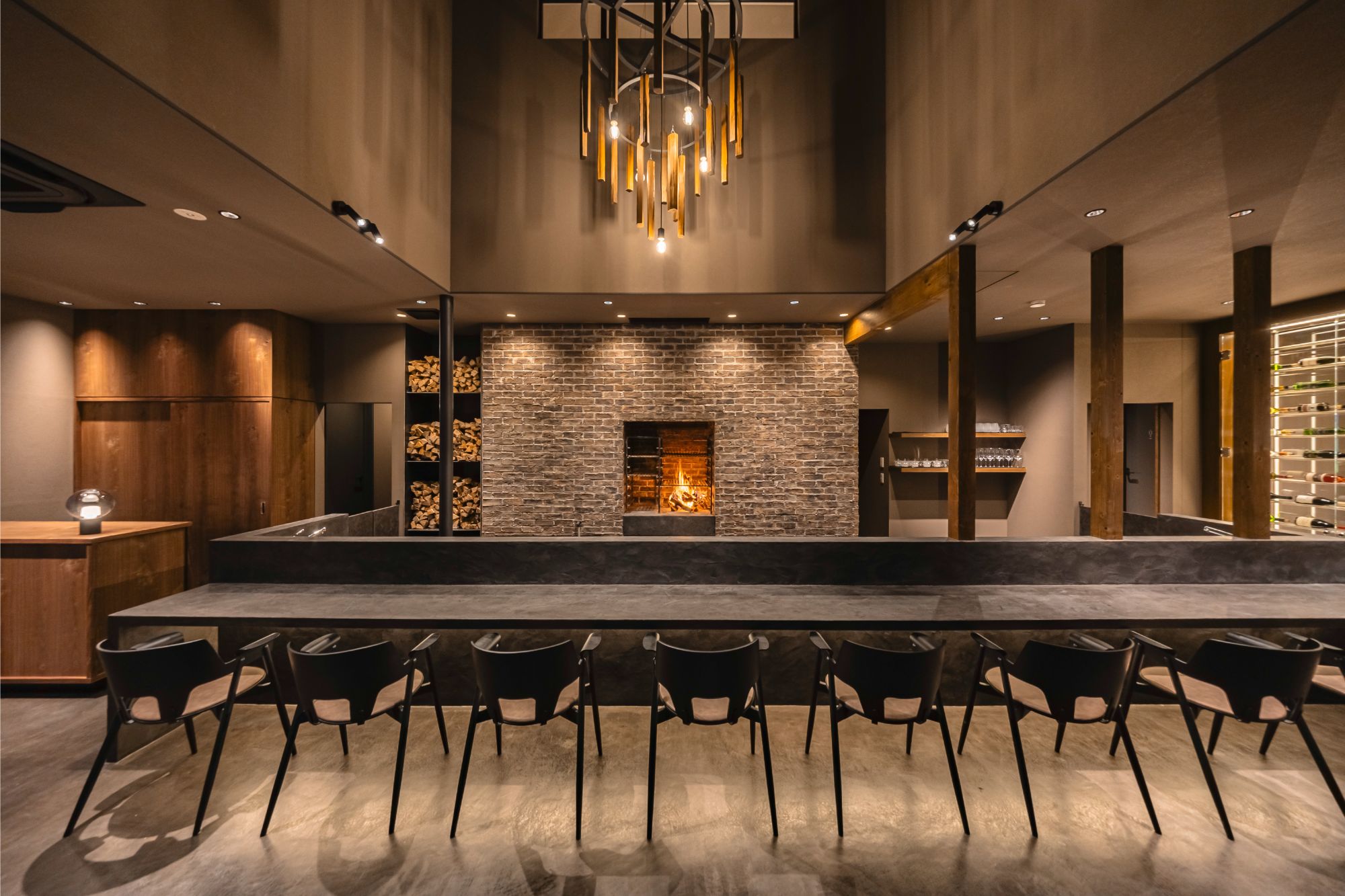
Located in Nagahama on the west shore of Lake Kawaguchiko, KOS is a gourmet hotel with its own restaurant that hosts one group per day. Each Japanese-modern guest room occupies an entire floor, so you can relax without worrying about other guests. The restaurant serves course meals of Yamanashi ingredients cooked over a wood fire, such as Koshu Wine Beef and Fuji no Suke, a Yamanashi brand of salmon. Guests can also relax in the tent sauna right in front of the lake.
| Name | KOS HOTEL & RESTAURANT |
| Address | 1911 Nagahama, Fujikawaguchiko-machi, Minamitsuru-gun, Yamanashi Prefecture 401-0331 |
| Phone | 0555-75-0437 |
| Access | About 15 minutes by Fujikyu bus from Kawaguchiko Station; right by the “Hirahama” stop |
| Official website | https://en.kos-hotel-restaurant.com/ |

Residence Villa Kawaguchiko Lago: A Private Villa Facing Mt. Fuji with a Hot Spring, Sauna, and Pool

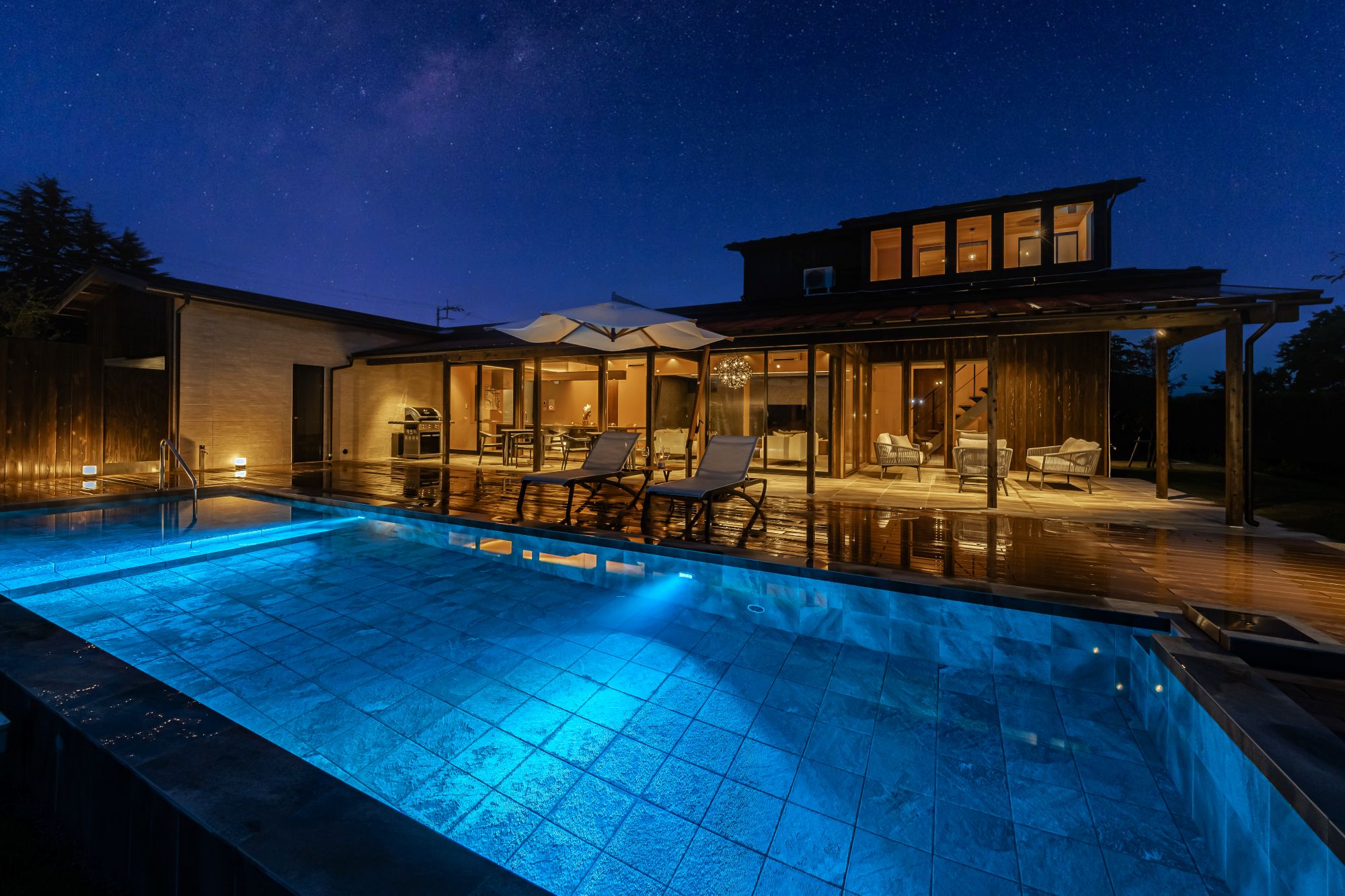
This private villa of more than 260 m² stands on the shore of Lake Kawaguchiko. In addition to a private hot spring bath and sauna, a private pool overlooking the lake, and a theater room, it even has a study facing Mt. Fuji. With three bedrooms and space for up to eight guests, it is well suited to three-generation trips or two families traveling together. For meals, you can choose glamping-style BBQ or catering, and you are also free to bring your own food.
| Name | Residence Villa Kawaguchiko Lago |
| Address | 3100-4 Funatsu, Fujikawaguchiko-machi, Minamitsuru-gun, Yamanashi Prefecture 401-0301 |
| Phone | 0555-72-9239 |
| Access | 8-minute walk from Kawaguchiko Station on the Fujikyu Railway / 3 minutes from Kawaguchiko IC on the Chuo Expressway |
| Official website | https://en.rv-kawaguchiko-lago.com/ |

Glamping Village Fuji Kawaguchiko: A Glamping Resort with a Hot Spring in Every Unit

This villa and glamping resort has 30 units on a highland more than 1,000 m above sea level at the foot of Mt. Fuji. Every unit has a natural hot spring bath and its own fire pit, so you can sit around a campfire under the stars.
The units are equipped with a kitchen, cookware, and tableware, so you can also buy local ingredients and cook for yourself. The resort is close to Paddy Field, the venue for the horseback riding on day 2, and to Narusawa Ice Cave and Fugaku Wind Cave, making it a convenient place to stay before or after activities.
| Name | Glamping Village Fuji Kawaguchiko |
| Address | 7430 Narusawa, Narusawa-mura, Minamitsuru-gun, Yamanashi Prefecture 401-0320 |
| Phone | 050-3174-7256 |
| Official website | https://en.nature-glamping.com/ |

Private Villa Glamping Fuji Yamanakako: Private Villas with a Hot Spring, Pool, and Sauna

This facility on the shore of Lake Yamanakako has seven units in total, including villa-type and glamping-type units. Each unit has its own natural hot spring, private pool, full-size barrel sauna, and fire pit area.
In summer, you can feel the highland breeze by the pool, and in winter you can warm up in the hot spring while looking out at Mt. Fuji. Families and couples can spend a quiet evening typical of Lake Yamanakako at their own pace.
| Name | Private Villa Glamping Fuji Yamanakako |
| Address | 262-5 Yamanaka, Yamanakako-mura, Minamitsuru-gun, Yamanashi Prefecture 401-0501 |
| Phone | 050-3174-7255 |
| Official website | https://en.fuji-suitevilla.com/ |

HAKU FUJI YAMANAKAKO: A Gourmet Hotel on Lake Yamanakako with a Tea Room and Conveyor-Belt Sushi

This gourmet hotel stands on the east side of Lake Yamanakako, near Nagaike Shinsui Park, which you visit on day 3. Each guest room is about 200 m² and occupies an entire floor, and there are three types to choose from: Fuji Sokan, which overlooks Mt. Fuji and Lake Yamanakako from the top floor; Yamanakako Soan, which has its own tea room; and Yamanakako Enyu, where you can enjoy private conveyor-belt sushi in your room.
Dinner is a kaiseki meal prepared by a chef who previously served as head chef at a well-known ryokan in Hakone, featuring Yamanashi ingredients such as Koshu beef and Fuji no Suke, a Yamanashi brand of salmon. Yamanakako Enyu, which accommodates up to nine guests, offers a free children’s menu for children of elementary school age and younger, making it well suited to three-generation trips with grandparents.
| Name | HAKU FUJI YAMANAKAKO |
| Address | 3241 Hirano, Yamanakako-mura, Minamitsuru-gun, Yamanashi Prefecture 401-0502 |
| Phone | 0555-72-9630 |
| Access | About 10 minutes from Yamanakako IC on the Higashi-Fujigoko Road / Free shuttle from the “Fujisan Yamanakako (Hotel Mount Fuji Iriguchi)” highway bus stop (request when booking) |
| Official website | https://en.haku-fuji-yamanakako.com/ |

Local Food to Try Around Mt. Fuji
The Mt. Fuji area is known for local dishes suited to its high, cold climate and for specialties made with Mt. Fuji’s spring water. Here are some local foods to enjoy along the itinerary.
Hoto: A Warming Yamanashi Noodle Dish

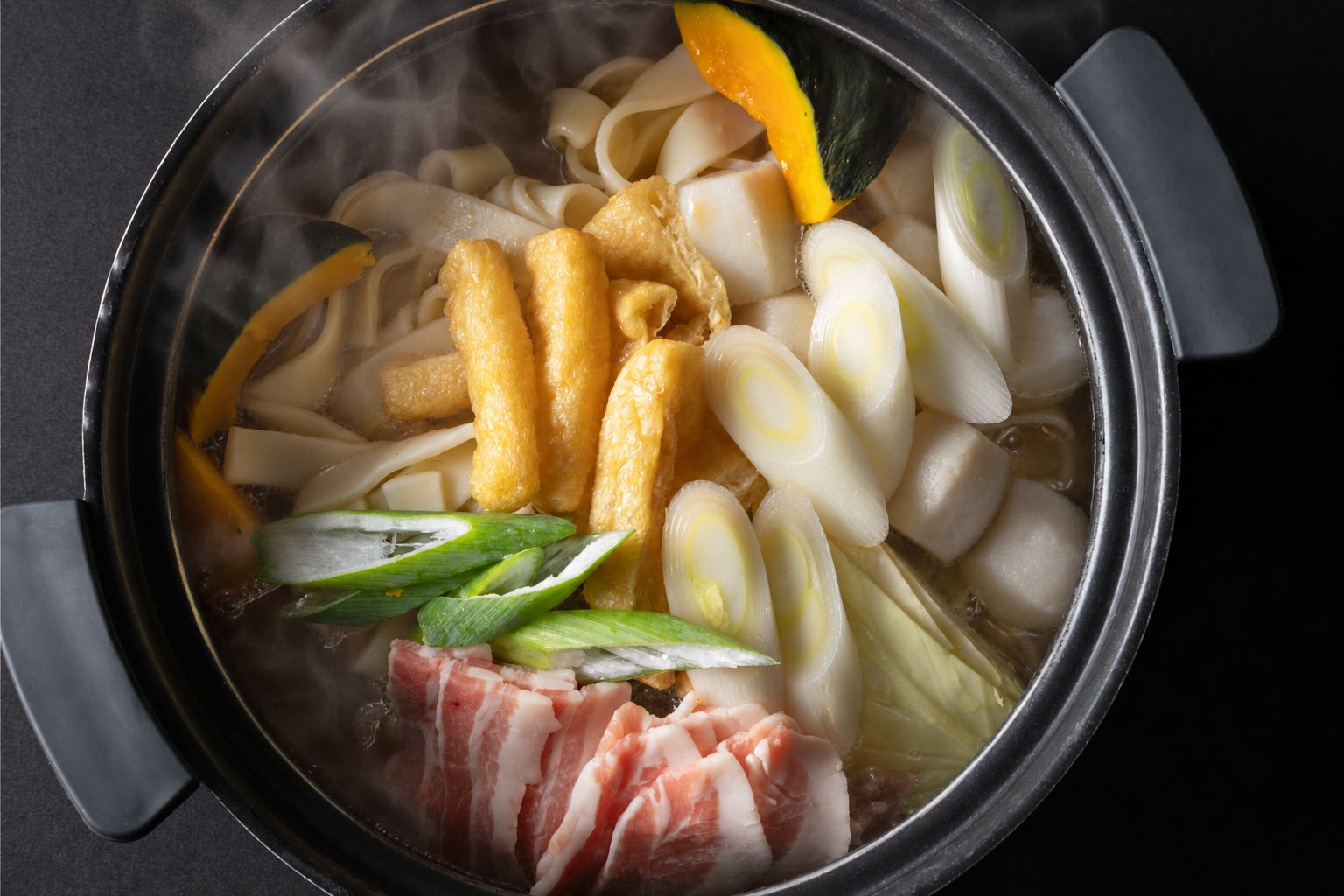
Hoto is a Yamanashi local dish of thick, flat noodles simmered with pumpkin and other vegetables in a miso-based broth. The Sengoku-period warlord Takeda Shingen is said to have enjoyed it. There are many specialty restaurants around Lake Kawaguchiko, including distinctive ones such as Hoto Fudo, known for its white building designed to look like a cloud.

Yoshida Udon: Fujiyoshida’s Signature Dish with Firm, Chewy Noodles

Yoshida udon is a very thick udon popular around Fujiyoshida City and known for its firm, chewy texture. It is a familiar lunch for local residents, and many restaurants are open only around midday, so plan to visit at lunchtime. On day 1 of the itinerary, you can stop for it after strolling Honcho-dori Street in Fujiyoshida.

Street Food at Oshino Hakkai: Kusamochi Made with Mt. Fuji’s Spring Water

Around the ponds of Oshino Hakkai, shops sell street food such as kusamochi made with Mt. Fuji’s spring water and wagyu skewers. Part of the fun is sampling a little at a time as you walk around the ponds.

Lake Yamanakako Specialties: Pumpkin Pudding, Fujizakura Trout Sushi, and Yamanakako Ham
Lake Yamanakako has several shops and restaurants with local specialties that people travel specifically to try.
- Pumpkin pudding (PAPER MOON): The signature dessert of this café, founded in 1985 and surrounded by forest. Many people travel from far away to try it. *Children under 10 are not permitted.
- Fujizakura trout sushi and shio hoto (お食事処 大豊): This local restaurant is known for sushi made with Fujizakura trout and for hoto seasoned with salt instead of miso. It is a good option for those who have already tried regular hoto.
- Kamo seiro soba (Teuchi Soba Yamasato): A handmade soba restaurant that grinds buckwheat in a stone mill and makes its noodles with Mt. Fuji’s spring water. Its aromatic soba and kamo seiro, chilled soba served with a warm duck broth, are the signature dishes.
- Ham and sausages from Yamanakako Ham (Maruichi Takamura Honten): The shop’s signature products are hams and sausages that won gold awards at a meat competition in Germany. It is also a convenient place to buy food for a BBQ at your villa.
PAPER MOON is in the same Hirano area as Nagaike Shinsui Park, which you visit on day 3, so you can stop by on your way back.

For Those Interested in Climbing Mt. Fuji
Climbing to the summit of Mt. Fuji is possible only in summer, generally from early July to early September. There are four climbing routes, and the Yoshida Trail on the Yamanashi side is popular with first-time climbers. The following article explains gear, altitude sickness prevention, and how to choose a route.

If you go up to the Fuji Subaru Line 5th Station by car or bus, you can easily enjoy views looking down on the clouds.

FAQ
- Can I follow this itinerary without a car?
Sightseeing buses cover the main spots around Lake Kawaguchiko, but the horseback riding and paragliding sites and the spots around Lake Yamanakako are spread out, so a rental car is recommended. Several rental car companies have offices near Kawaguchiko Station.
- Can young children and older family members enjoy this itinerary?
Yes. By choosing spots with few stairs, such as the flat Fugaku Wind Cave for the caves and the ropeway for the views, you can follow the itinerary comfortably. For your hotel, a spacious private villa such as Residence Villa Kawaguchiko Lago, where your family can relax without worrying about others, is a good choice.
- What can I do on days when Mt. Fuji is not visible?
Fugaku Wind Cave, Narusawa Ice Cave, and the museums around Lake Kawaguchiko are good options because they are less affected by the weather. Relaxing in your hotel’s hot spring or sauna and hoping for a view of Mt. Fuji the next morning is also part of the trip.
- When is the best time to see Mt. Fuji clearly?
November to February, when the air is clear, is the season with the most days of clear views of Mt. Fuji. As for the time of day, early morning to late morning is recommended, when clouds are less likely to form.
- How do I book horseback riding or paragliding?
Details of each experience, including requirements and how to book, are listed on the activity pages of Glamping Village Fuji Kawaguchiko. Check them before you go.
Summary
This article introduced a 3-day, 2-night itinerary based around Lake Kawaguchiko for photographing Mt. Fuji, viewing it from above, experiencing it up close, and looking up at it. The itinerary lets you enjoy Mt. Fuji in many ways, from the classic view of the five-story pagoda and Mt. Fuji and the panorama from the ropeway to horseback riding or paragliding, the spring-fed ponds of Oshino Hakkai, and the view of Mt. Fuji rising above Lake Yamanakako.
By staying in the Lake Kawaguchiko area on the first night and in the Lake Yamanakako area on the second, you can also enjoy views of Mt. Fuji from your hotel in the morning and evening. Whether you are traveling as a family or as a couple, enjoy Mt. Fuji at your own pace.
Recommended Reading: More Featured Articles on the Fuji Area
-

Achieve Beautiful Skin with the Power of Peaches! 4 Peach Cosmetics from Yamanashi
-


Packed with Local Gourmet & Souvenirs! Complete Guide to Yamanashi’s Roadside Stations
-


Kawaguchiko Car and Motorbike Rental Guide: Rental Companies, Booking Sites, Prices, and International Driving Permits
-


The Ultimate Guide to Mt. Fuji: From Essential Facts to the Best Viewing Spots
-


[2025] Complete Guide to the Yoshida Trail on Mt. Fuji|Mountain Huts, Trail Details, and Access
-


Mt. Fuji Panoramic Ropeway – The Ultimate Spot for Stunning Views of Mt. Fuji & Lake Kawaguchiko