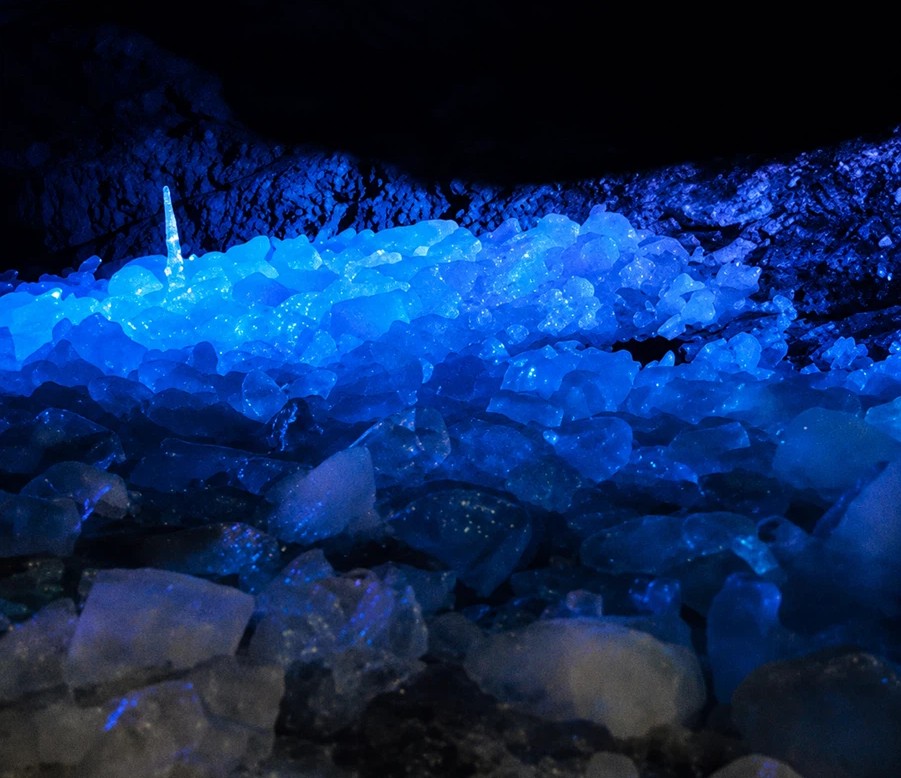
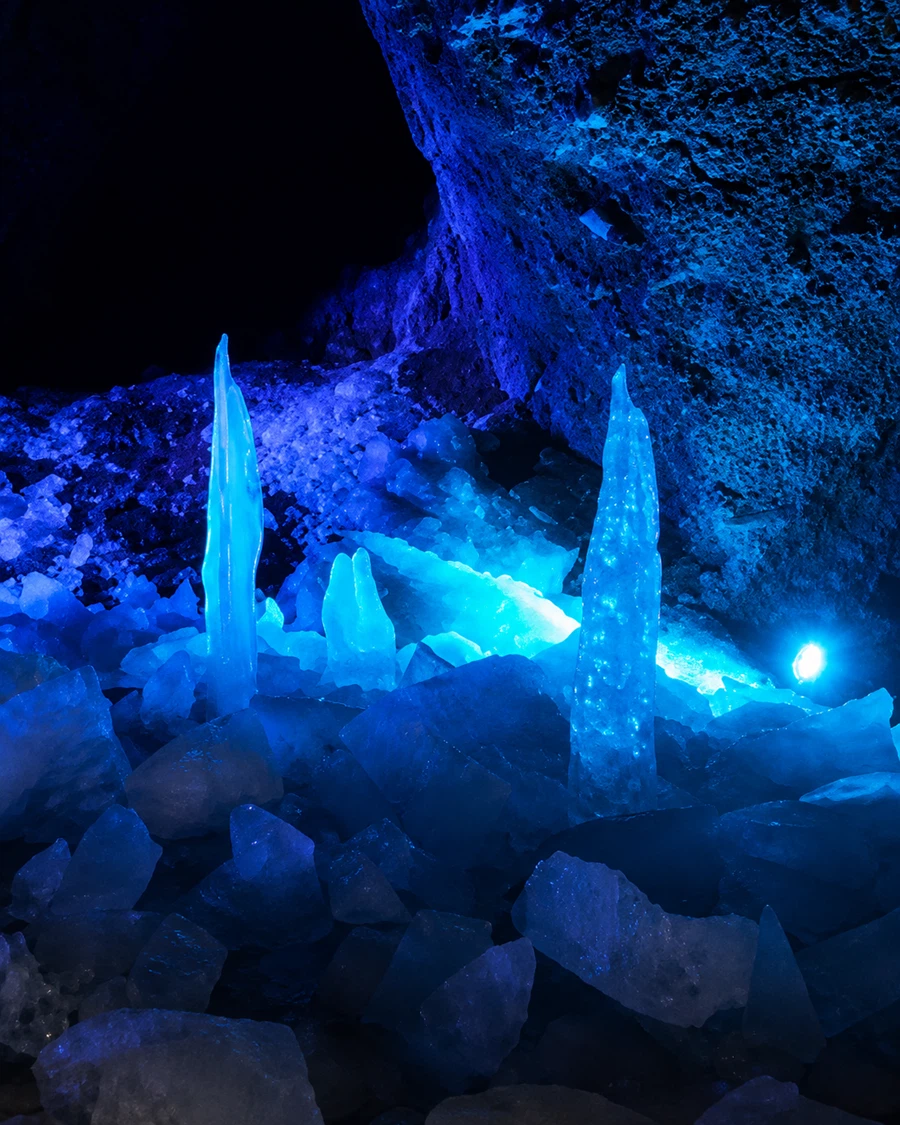
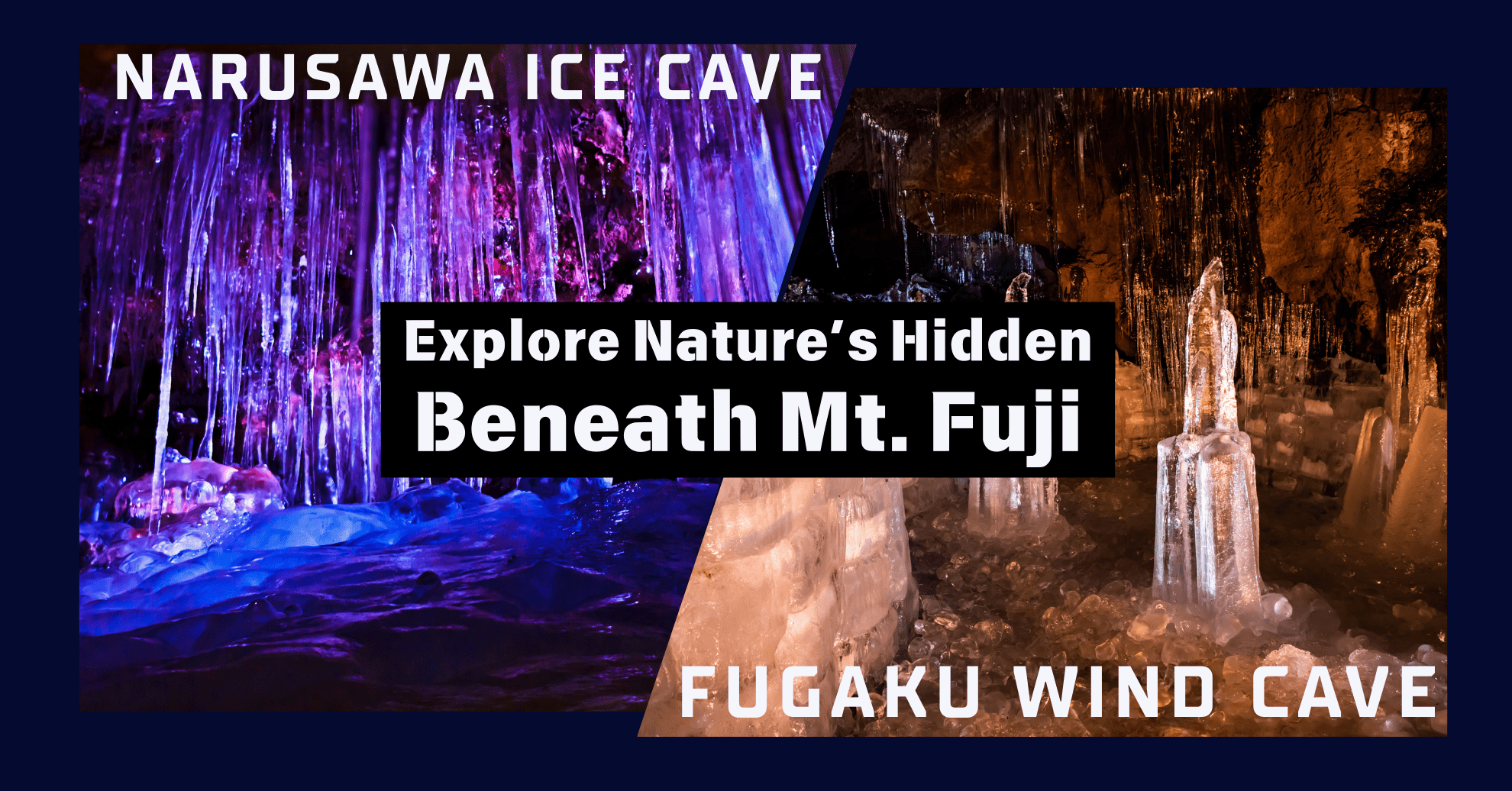
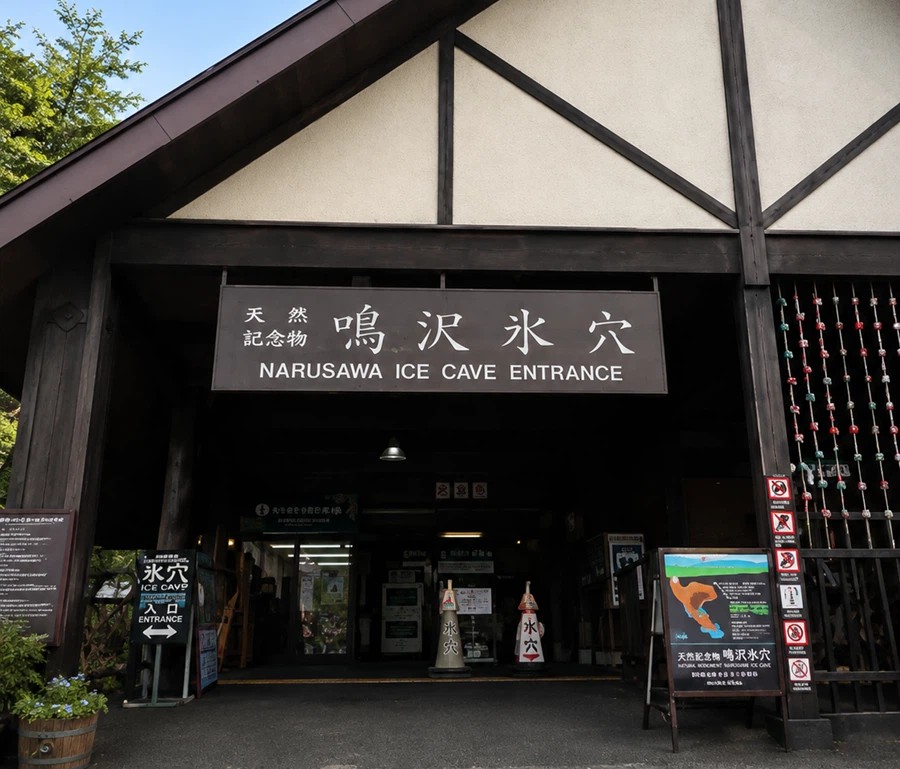
Narusawa Ice Cave sits in the Aokigahara Forest on the northwest side of Mt. Fuji. It is a lava cave that stays around 3°C even in midsummer, with ice pillars hanging from the ceiling.
That said, many visitors find it narrower than expected, with steeper stairs than they pictured. The walk through the cave takes 6 to 7 minutes. Because it is short, deciding what to wear and how to combine it with nearby stops makes a real difference.
This guide covers admission, hours, clothing, how long to allow, entry restrictions, and how to pair Narusawa Ice Cave with nearby Fugaku Wind Cave. It also fits easily into a Mt. Fuji day trip that includes Lake Kawaguchiko.
Contents
What Narusawa Ice Cave Is: A Lava Cave 21 Meters Underground, Formed by an Eruption of Mt. Fuji
Narusawa Ice Cave is a lava cave in Narusawa Village, Minamitsuru District, Yamanashi Prefecture. It was designated a National Natural Monument in 1929.
It was formed by the eruption of Mt. Fuji in 864. Lava flowed from Mt. Nagao, a side vent, and only the surface cooled and hardened while the hot lava inside kept moving. Once that lava drained away, the hollow space it left behind became the cave seen today.
The cave runs about 153 meters. It is a vertical type that descends from the entrance, loops around inside, and returns the way you came. At its deepest point it reaches 21 meters underground.
Fugaku Wind Cave, a horizontal cave, lies in the same Aokigahara Forest. A separate article covers how both caves formed and what each one looks like inside.
What to See: Ice That Survives Midsummer, Underneath Mt. Fuji
Do the Ice Pillars at Narusawa Ice Cave Really Survive Any Heat Wave?
Even on a scorching day above ground, the cave stays between 0 and 4°C year round, averaging about 3°C. On some summer days the difference from outside is more than 20°C, so short sleeves feel cold inside.
On top of that, the natural ice forms in winter and lasts into early fall. In other words, ice is still there in midsummer. It can be 35°C at street level and there will be ice at the bottom of the stairs. That is the main reason to come.
There are three main reasons for this.
The first is the shape of the cave. Cold air is heavy, so it collects at the bottom of a vertical cave. Cold air that enters during winter does not escape in summer.
The second is the lava itself. The thick lava walls left by the eruption conduct little heat from outside and act as natural insulation.
The third is water. Groundwater and snowmelt seep in and freeze, and that ice keeps cooling the air around it.
The Ice Pillars Are Largest in Spring
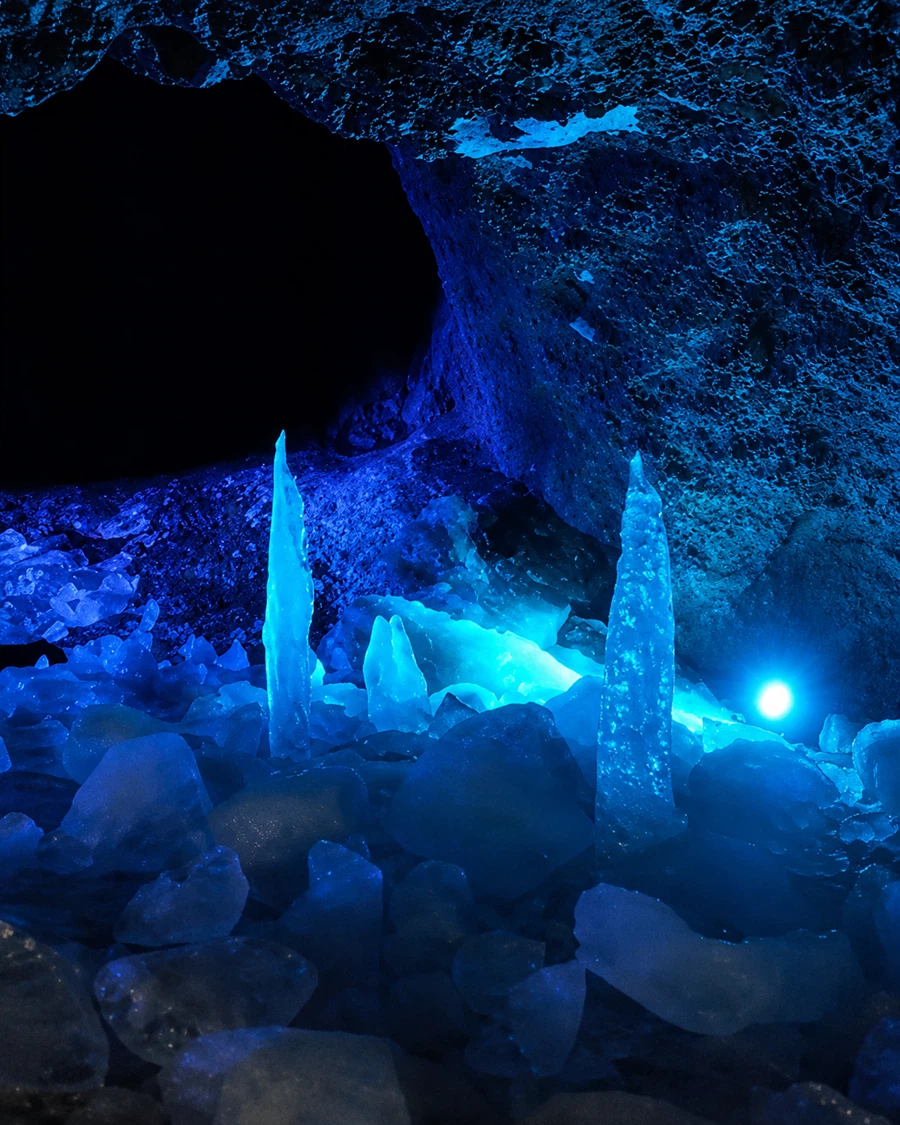
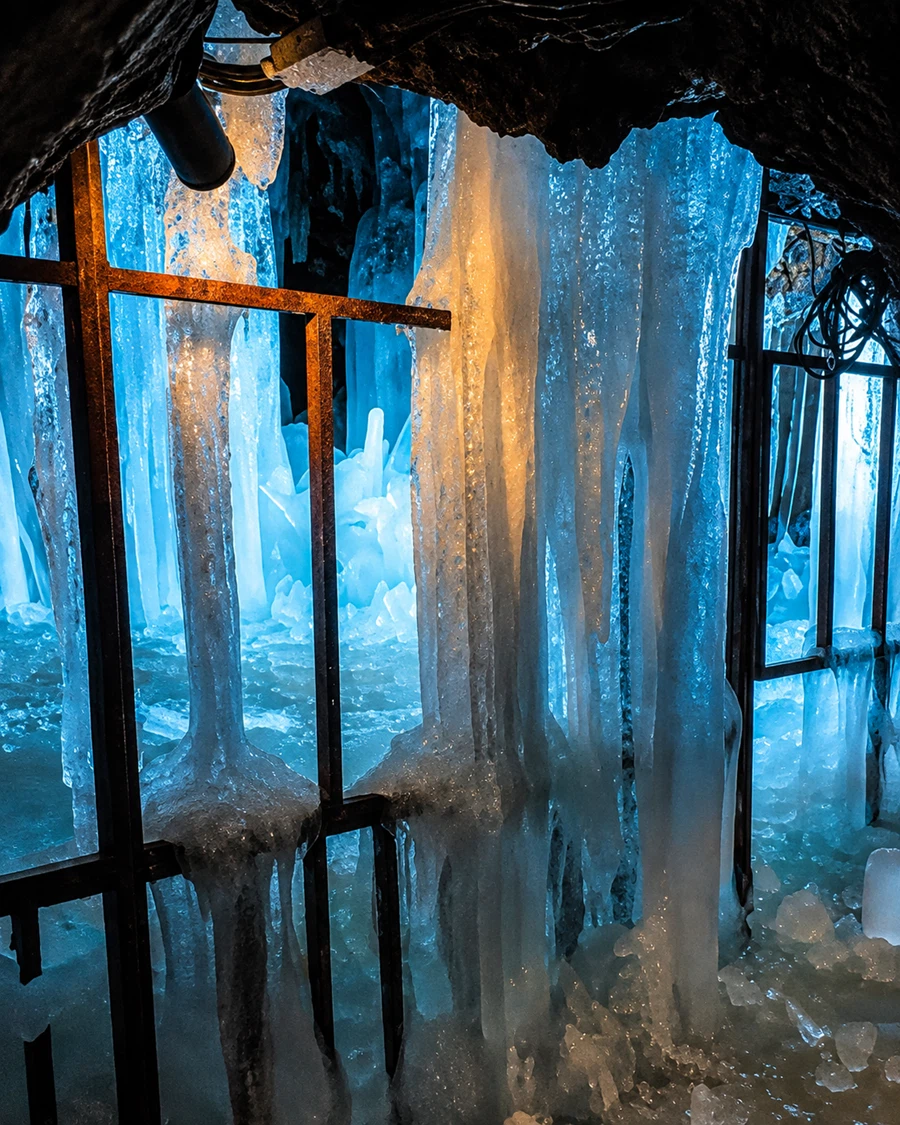
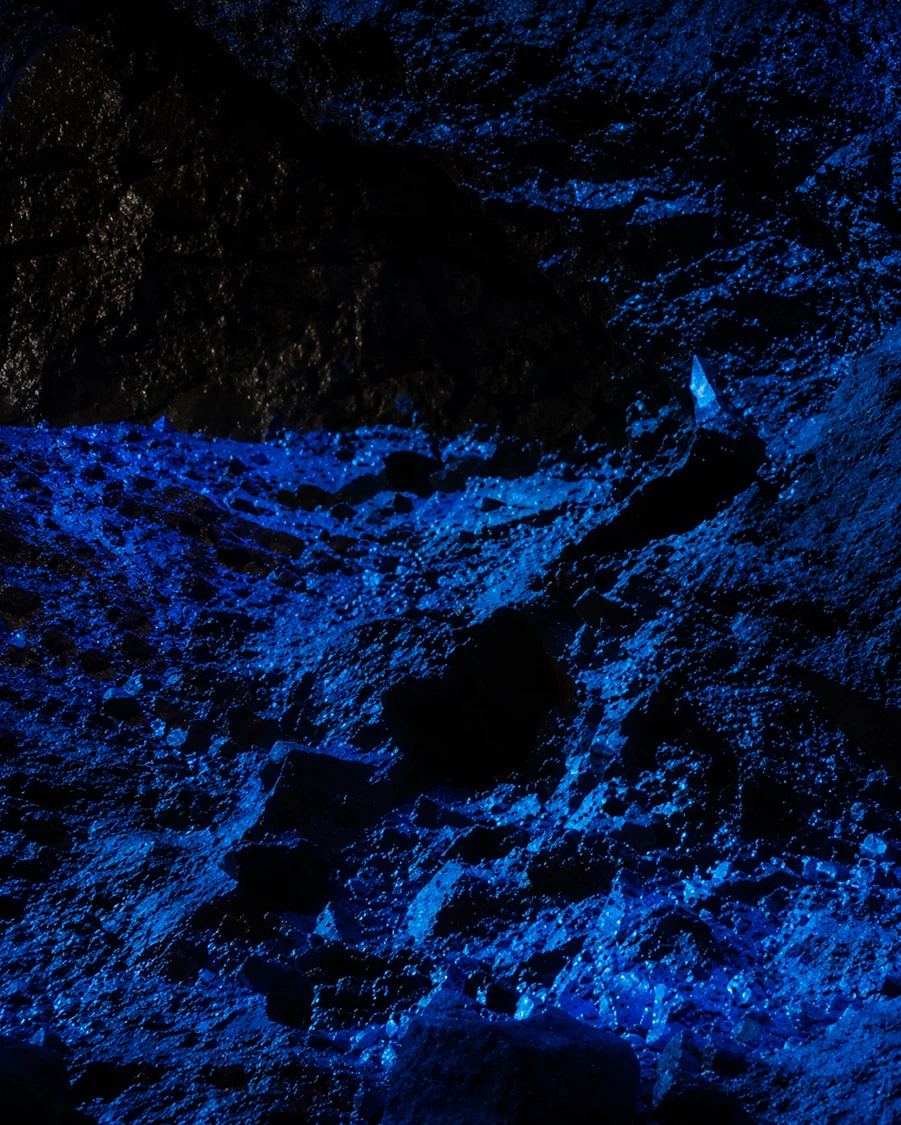
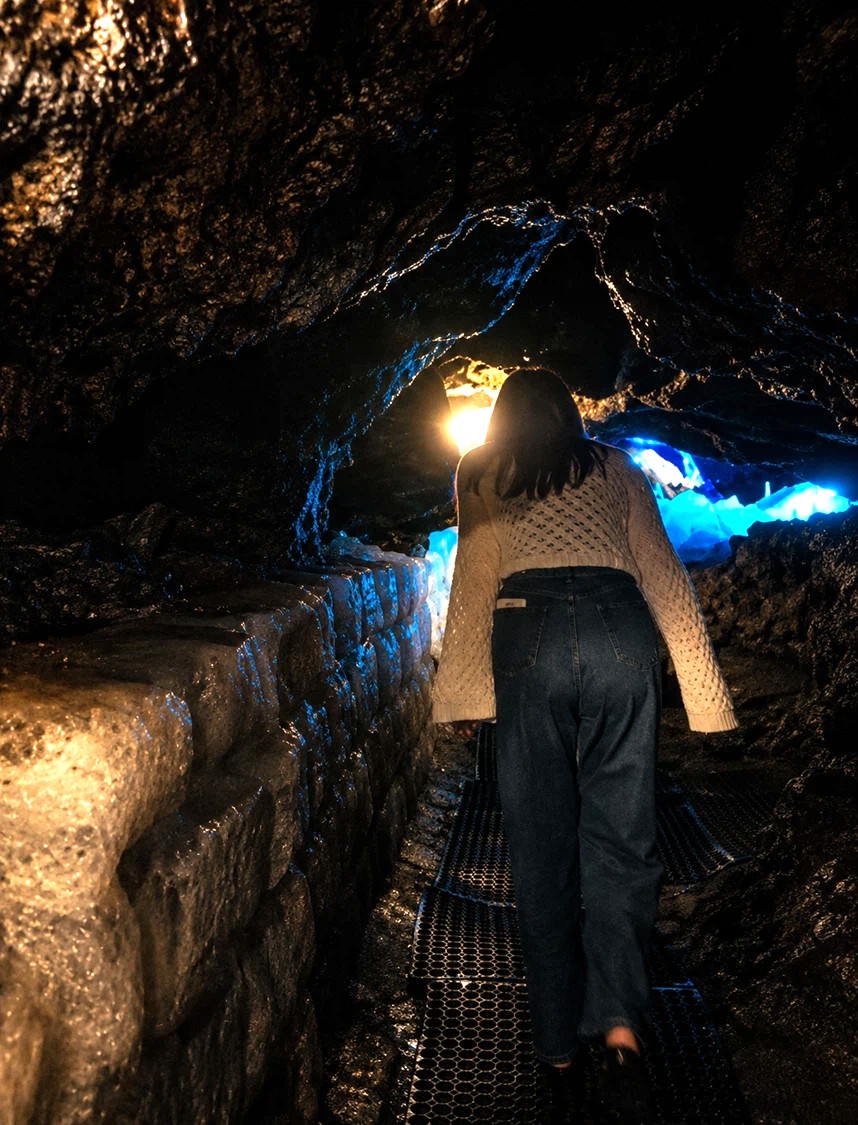
The ice cave under its lightingThe cave wall
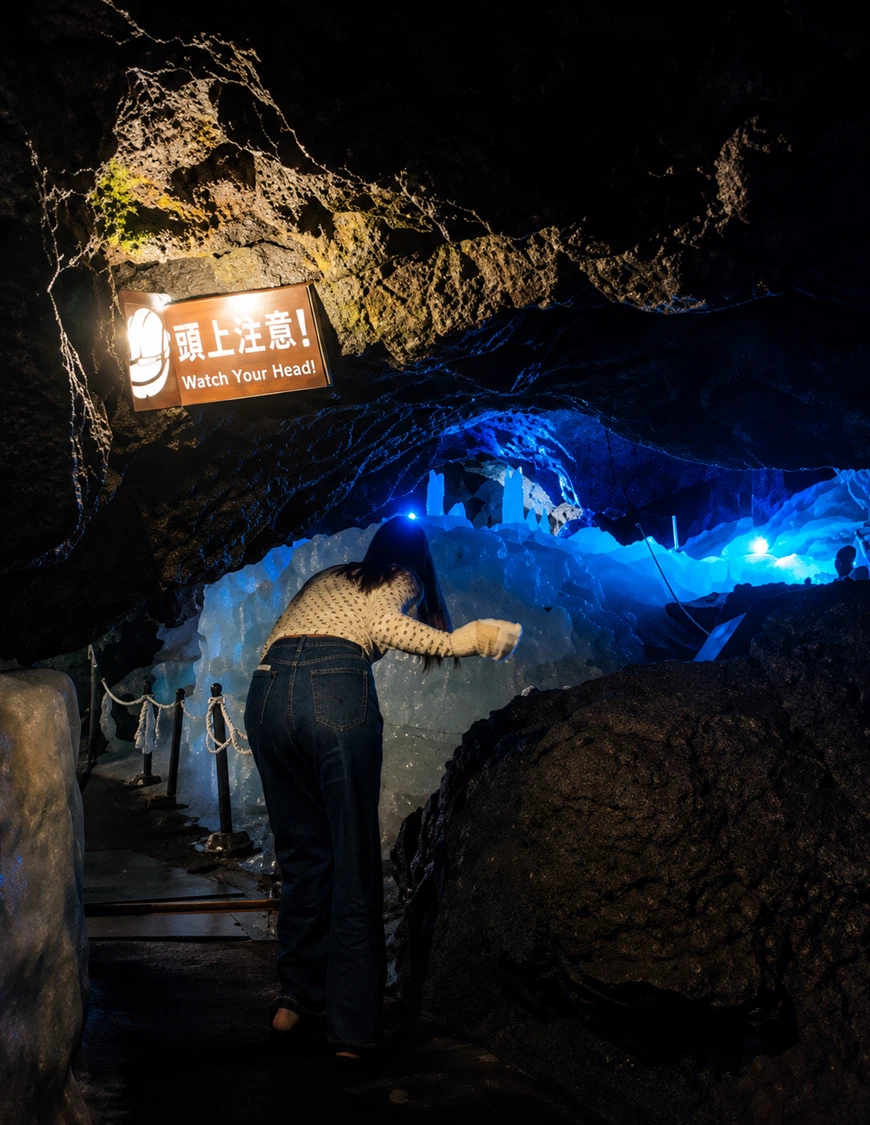
The ice pillars are the centerpiece. Water seeping from the ceiling freezes slowly and extends downward, growing from winter through spring. They reach their largest size around April, and in a good year they can measure about 50 centimeters across and 3 meters tall.
The blue of the lit ice against black lava walls, nothing like a limestone cave, is what makes this cave look the way it does.
Does the Hell Hole Connect All the Way to Enoshima?
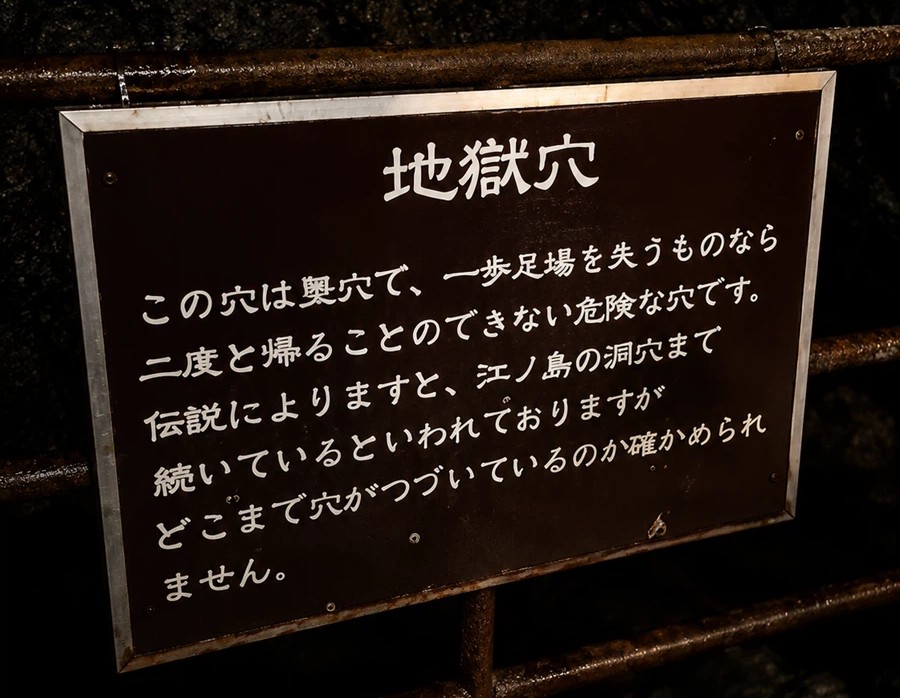
At the deepest point of the cave there is an opening called Jigoku-ana, the hell hole. Local legend says it runs underground all the way to the Iwaya caves of Enoshima in Kanagawa Prefecture.
No such connection has been confirmed. A deep hole with no visible bottom invites that kind of story. Several legends around Mt. Fuji describe passages to an underworld or to distant places.
Visiting Both Caves: Wind Cave First, Ice Cave Second
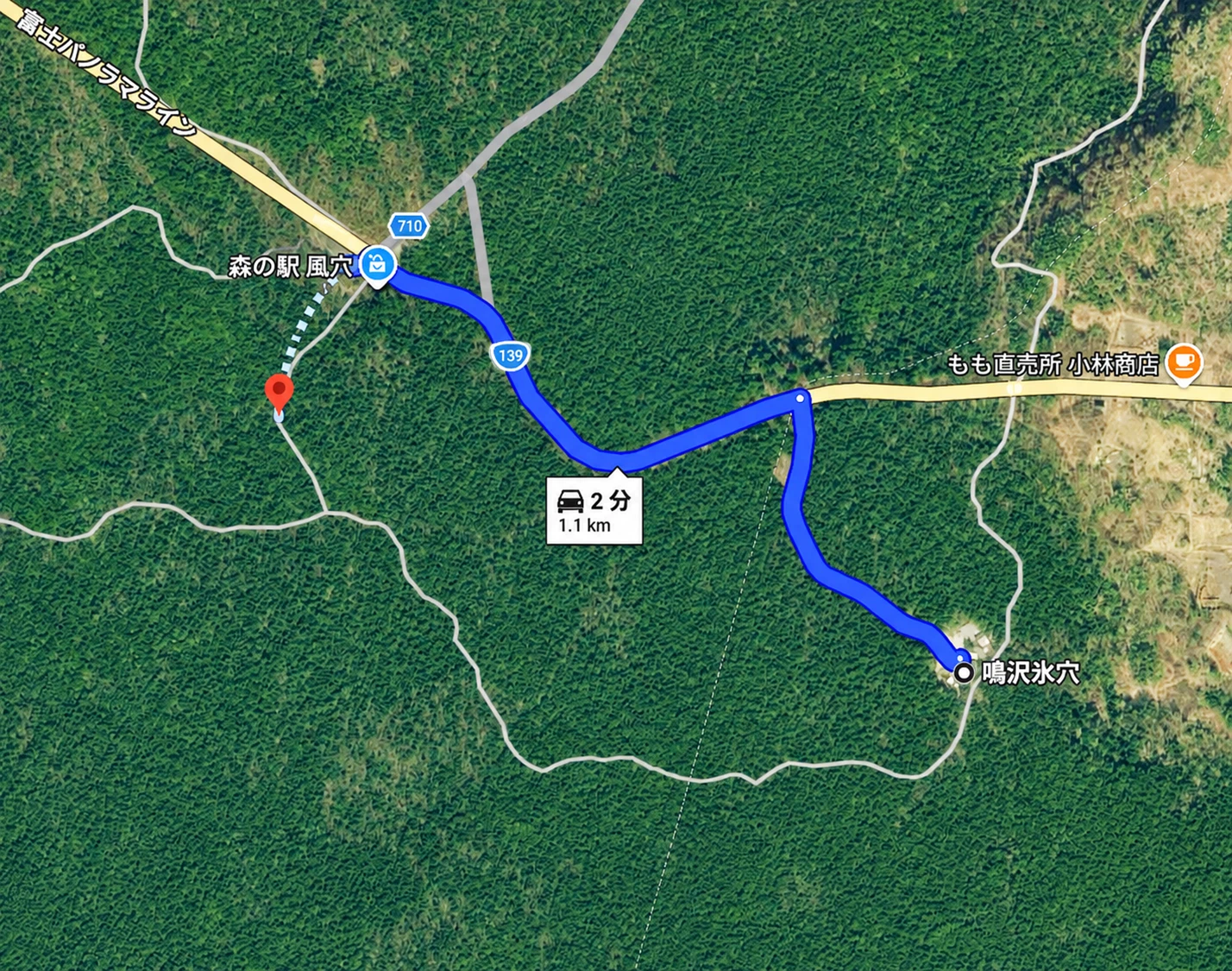
Fugaku Wind Cave and Narusawa Ice Cave are about 2 minutes apart by car, or a 15 to 30 minute walk covering roughly 1.6 kilometers. Most visitors see both.
Travel sites often recommend starting with Fugaku Wind Cave, but the order makes little practical difference. It matters if you are unsure about the walking: the flat Fugaku Wind Cave lets you get used to a cave before the stairs at Narusawa Ice Cave. The other option is to visit Narusawa Ice Cave first thing in the morning, since it fills up faster.
Fugaku Wind Cave
Narusawa Ice Cave
Shape
Horizontal, almost level
Vertical, many stairs
Length
About 201 m
About 153 m
Time inside
About 15 min
About 6-7 min
Walking
Easy
Sections require crouching (ceiling as low as 91 cm)
How Long It Takes: 6-7 Minutes Inside, 30 Minutes in Your Schedule
The official walking time is about 6 to 7 minutes. Stopping for photos along the way, most people are back outside within 15 minutes.
When planning your day, allow 30 minutes to cover buying a ticket, the stairs, and waiting at busy times. Lines form at the entrance during summer vacation and long weekends.
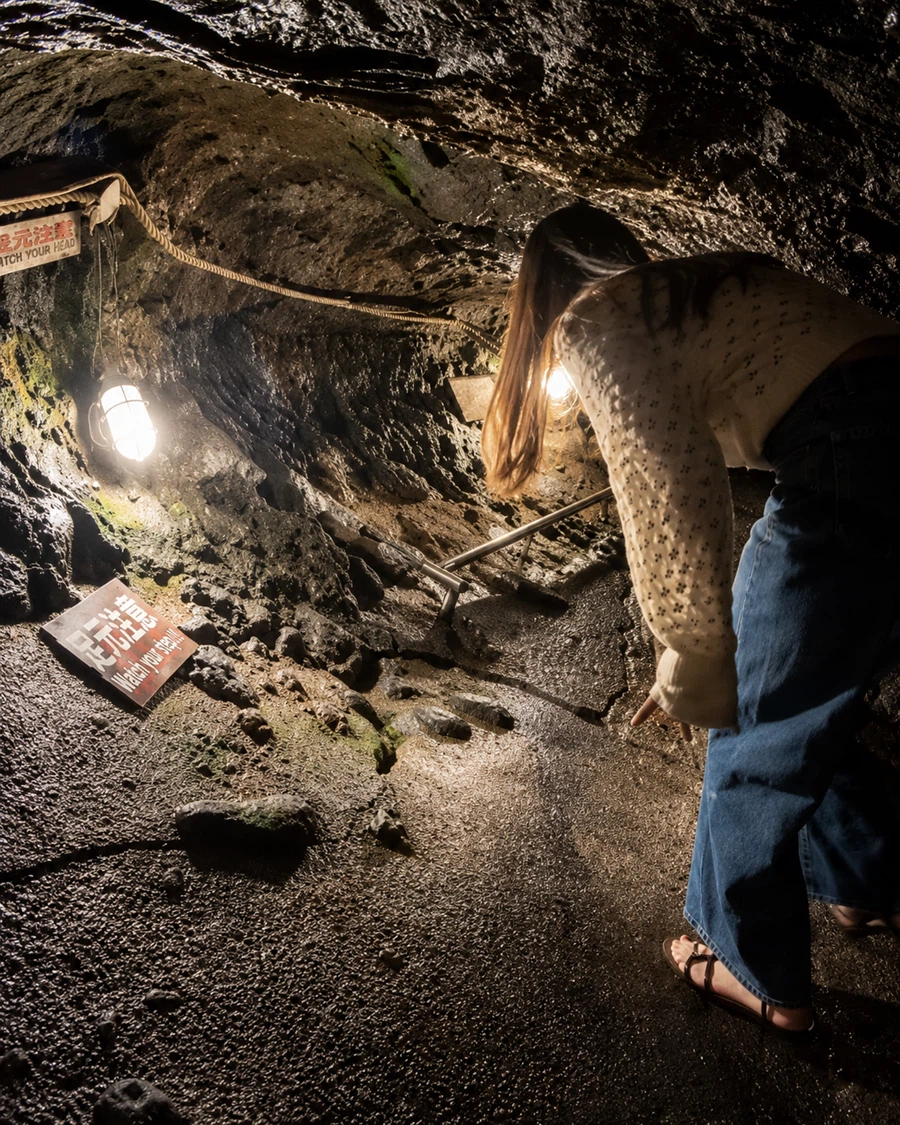
It is short, but steep stairs, low ceilings, and narrow passages keep changing, so the six minutes feel closer to caving than to sightseeing. On the way out you climb all 21 meters back up, which means a continuous run of stairs.
Admission and Hours: 350 Yen for Adults
Admission is 350 yen for adults and 200 yen for elementary school students and younger. Group rates apply to parties of 15 or more, at 250 yen for adults and 100 yen for children.
Fugaku Wind Cave next door charges the same, and there is a combination ticket covering both caves. Bought separately the two come to 700 yen; the combination ticket is 600 yen for adults and 300 yen for elementary school students. Prices can change, so check at the ticket window or on the official site.
Hours shift several times through the year.
Period
Hours
March 16 – July 31
9:00-17:00
August 1 – October 15
9:00-17:30
October 16 – November 15
9:00-17:00
November 16 – February 15
9:00-16:30
February 16 – February 28
9:00-16:00
March 1 – March 15
9:00-16:30
The cave is open year round, but hours can change and it may close temporarily depending on weather and conditions inside.
What to Wear, and Who Cannot Enter
At its lowest point the ceiling is only 91 centimeters. You crouch through those sections, and hitting your head is easy to do. A hooded jacket that protects your head helps. Helmets are also available to borrow.
The stairs are stone and stay damp. Heels and sandals are unsafe here, so wear sneakers with grip. With stairs the whole way, a skirt is not practical either.
The cave holds 0 to 4°C year round, averaging about 3°C. Short sleeves feel cold in midsummer. You are only inside for about 10 minutes, though, so a heavy winter coat is unnecessary. One extra layer is enough.
Your clothes will not get wet here. There is no need for rain gear or a change of clothes.
Who cannot enter
Children under 100 cm tall. Carrying them in your arms or on your back is not permitted either
Pets, including animals in a carrier
Visitors with heart conditions should take care, as the temperature difference from outside can exceed 20°C
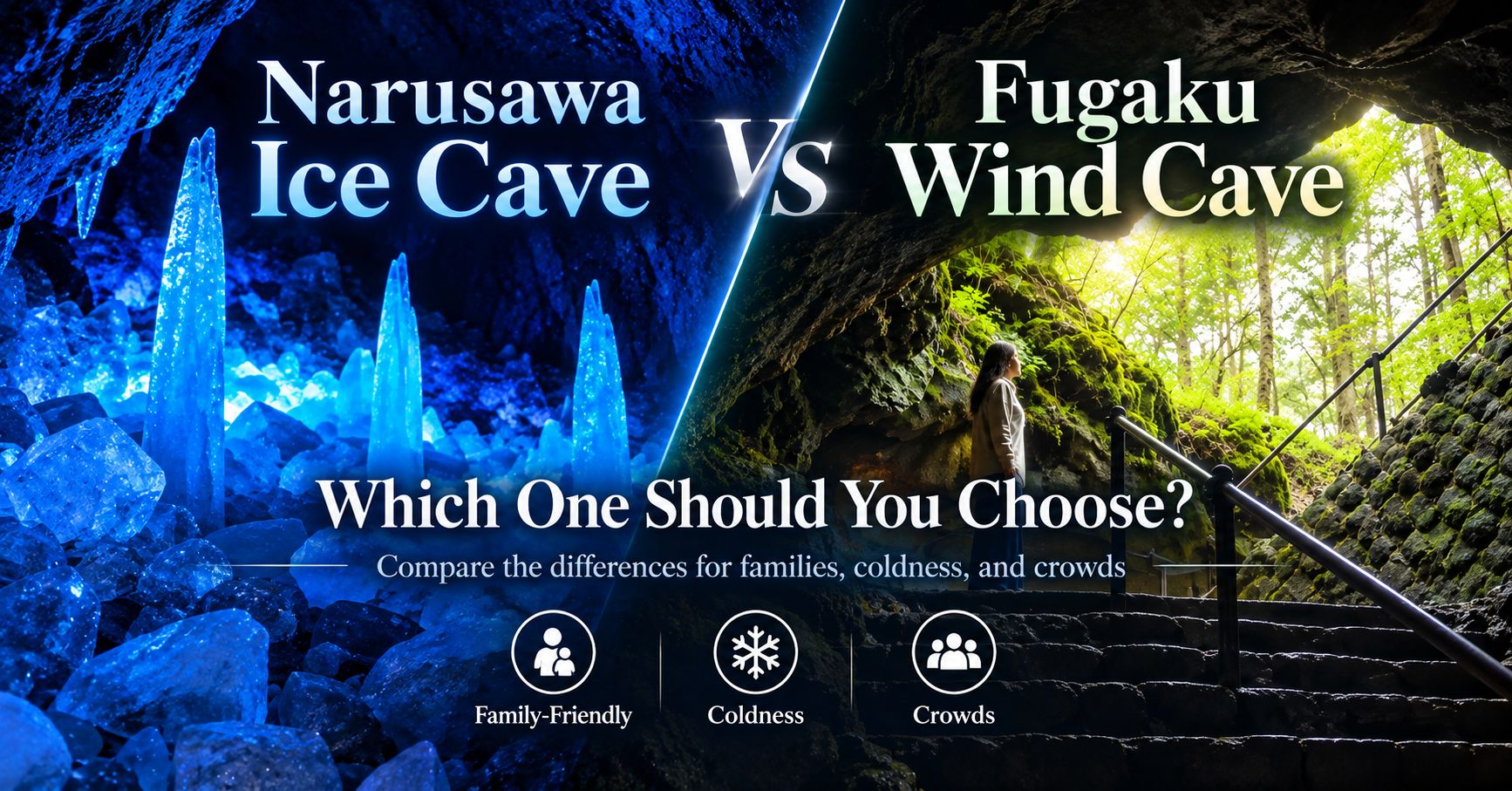
With small children, the level path at Fugaku Wind Cave is the better choice.
Large bags can go in the coin lockers near the ticket window. With narrow passages and stairs throughout, traveling light makes the walk easier.
Getting There and Parking
The nearest station is Kawaguchiko Station on the Fujikyuko Line. It is too far to walk, so take a local bus or a taxi from in front of the station.
By car it is about 20 minutes from the Kawaguchiko interchange on the Chuo Expressway, heading west on Route 139. Car navigation systems sometimes route drivers elsewhere, so check the access map on the official site as well.
Parking is free, with room for about 100 cars across lots 1 through 3. The lots fill up during summer vacation and long weekends, so allow extra time.
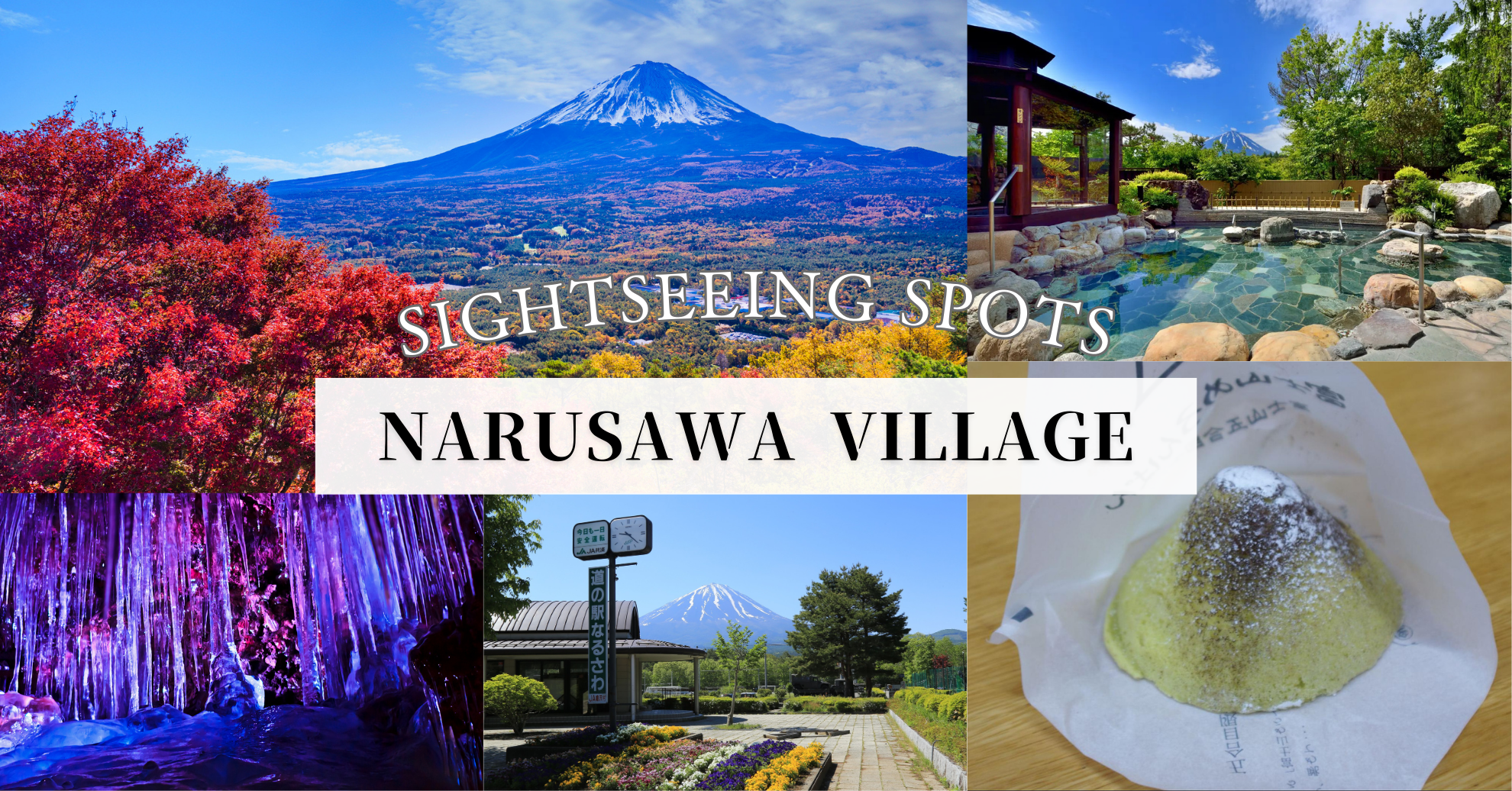
After the Caves, Take Your Time in Narusawa Village: Glamping Village Fuji Kawaguchiko
Narusawa Village, where the ice cave is, is a small village between Lake Kawaguchi and the Aokigahara Forest. The places worth stopping at after the caves are all within it.
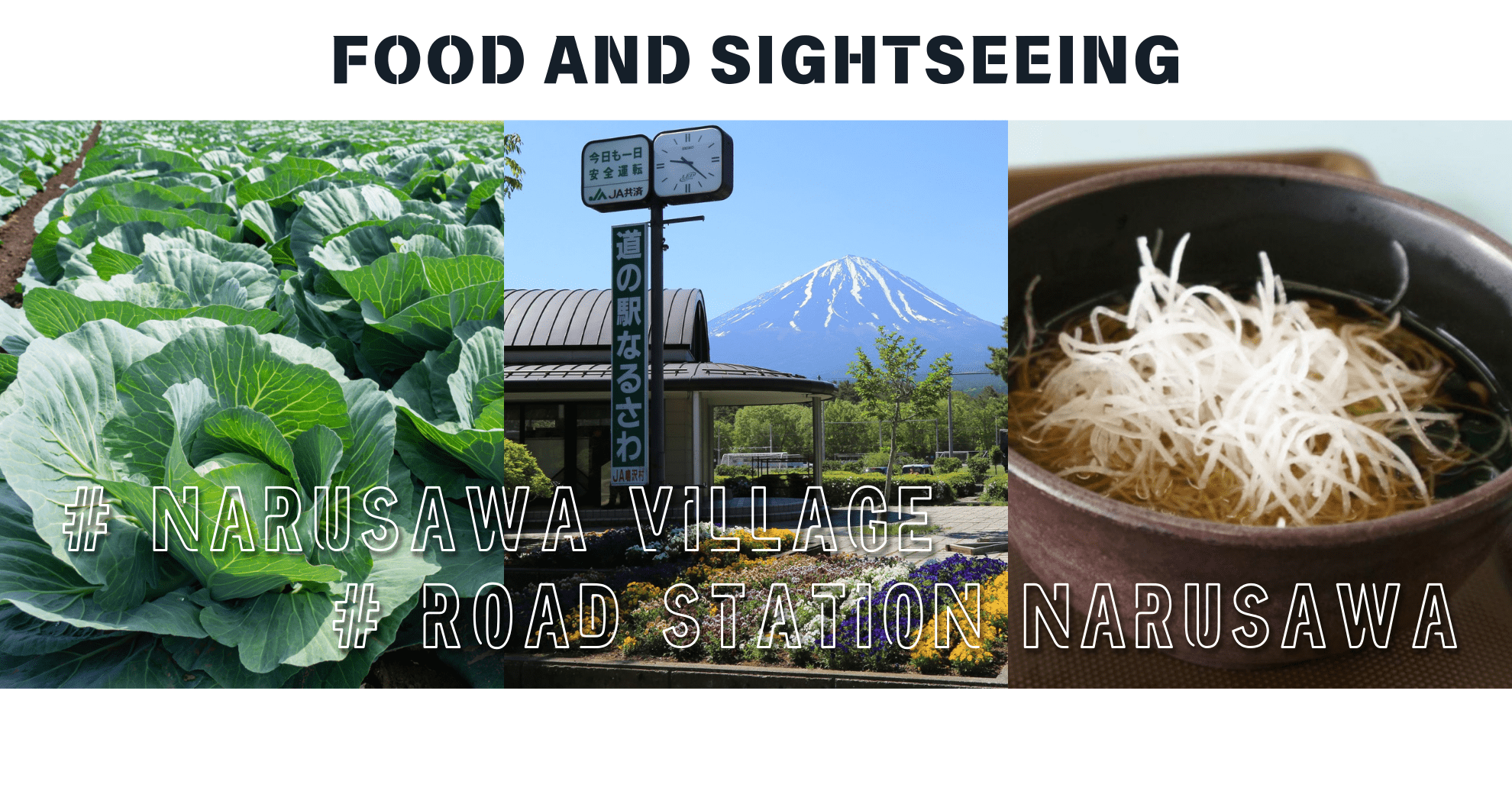
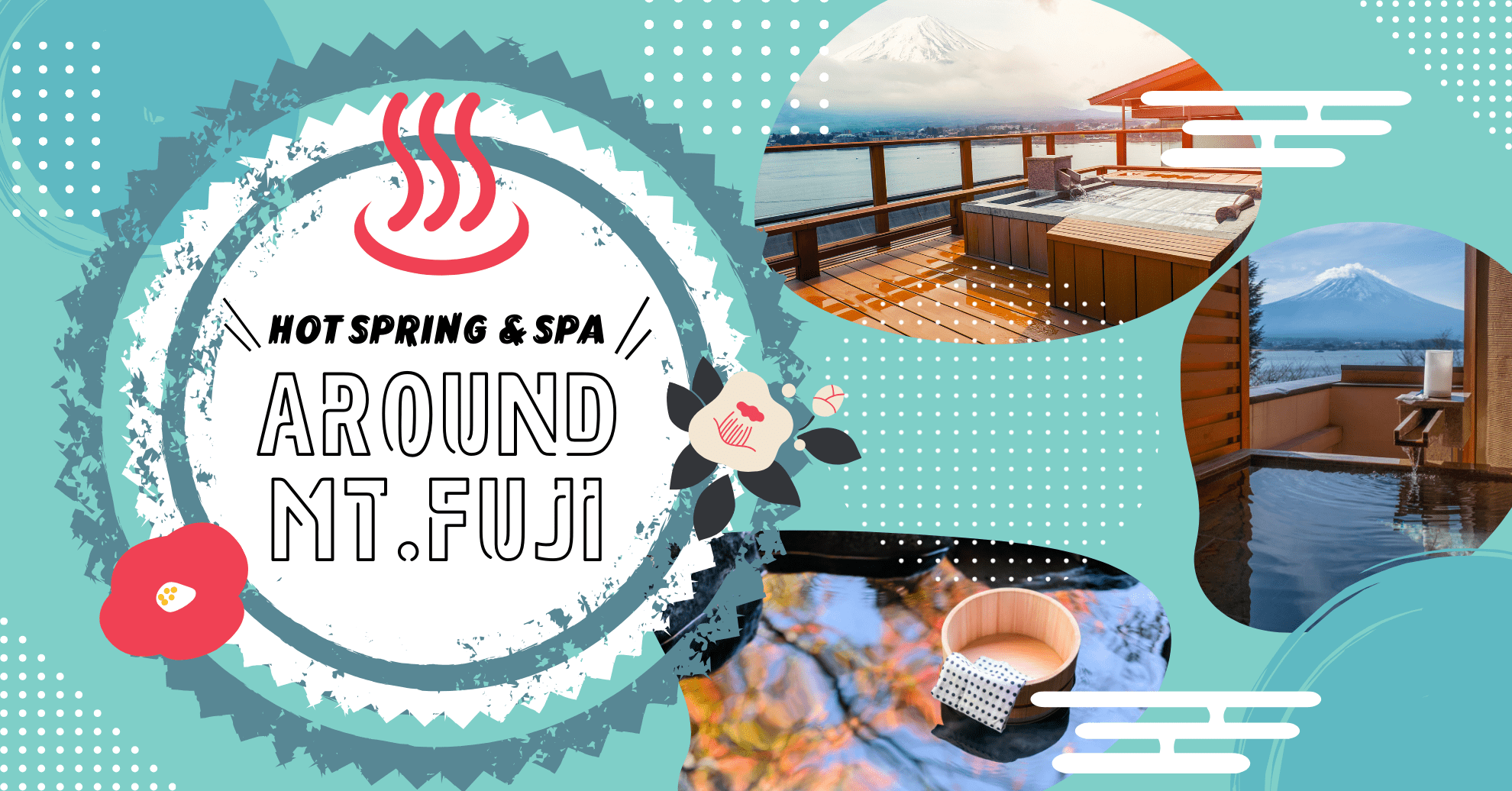
Michi-no-Eki Narusawa sells local produce such as highland cabbage and Narusawa greens. Next door, Fuji Chobono yu Yurari is known for open-air baths with a view of Mt. Fuji, which is a good way to warm up after the cold of the cave.
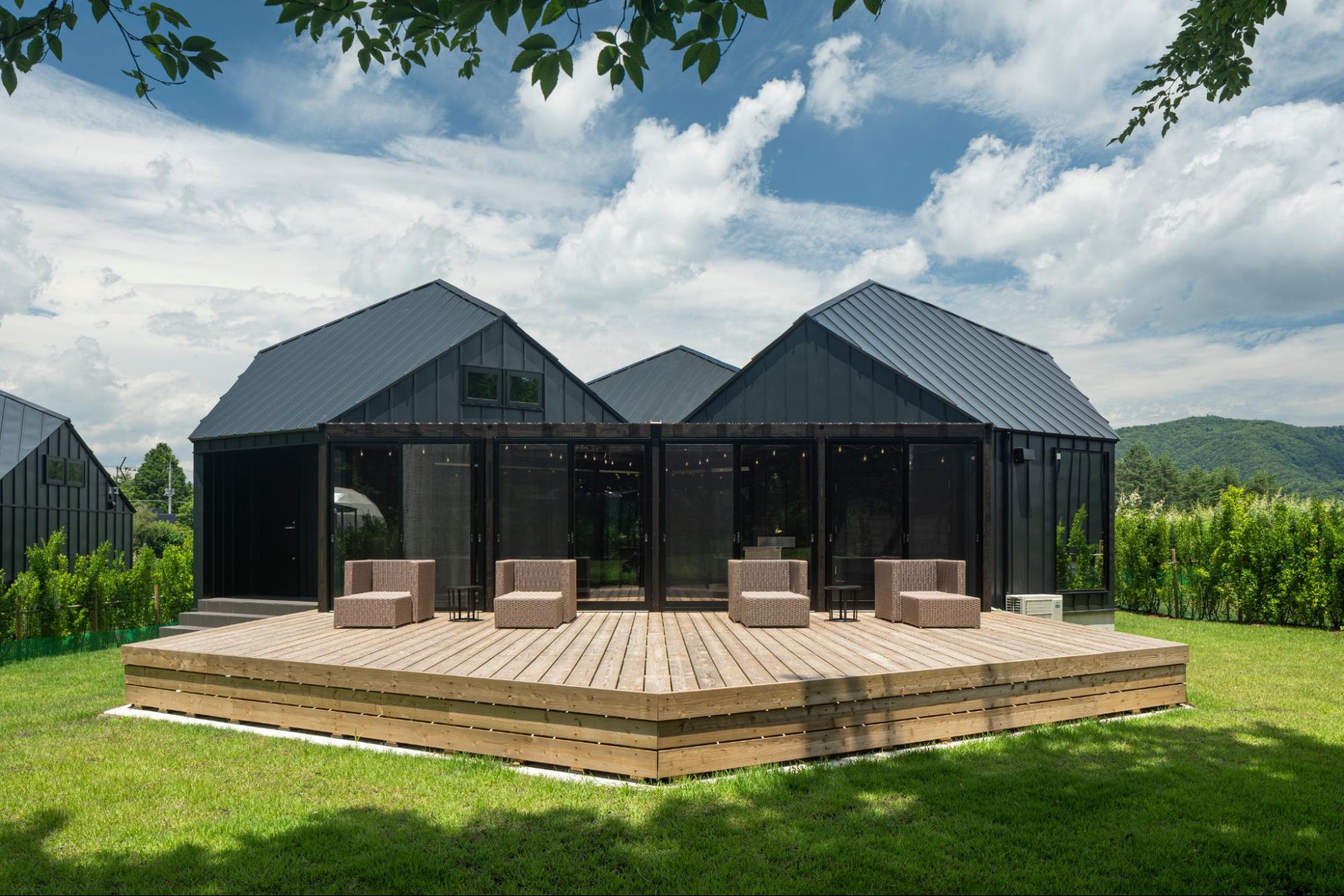
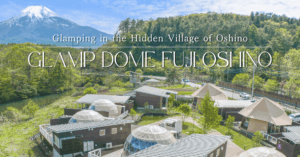
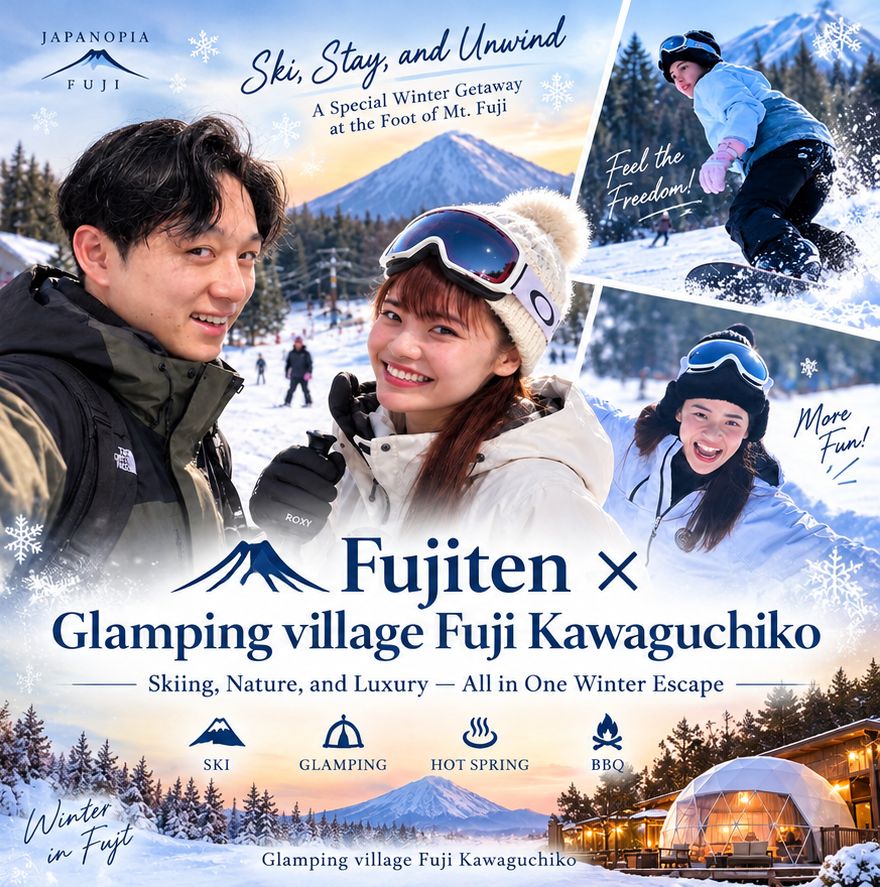
To stay in Narusawa Village itself, there is Glamping Village Fuji Kawaguchiko. The name says Fuji Kawaguchiko, but the property is in Narusawa Village, a short drive from the ice cave.
Every unit has its own hot spring bath, and room types range from suite villas facing Mt. Fuji to garden domes set in the forest. After a day of caves and forest trails, you can soak in the bath in your own room.
Address
7430 Narusawa, Narusawa Village, Minamitsuru District, Yamanashi 401-0320
The walk through Narusawa Ice Cave takes only 6 to 7 minutes. It is a short stop, but whether you bring a hooded jacket and sneakers changes the visit considerably.
If you are visiting both, take the level Fugaku Wind Cave first and the stair-heavy Narusawa Ice Cave second. The ice pillars are largest in spring, while midsummer visits work as a break from the heat.
Terrain formed by an eruption of Mt. Fuji more than a thousand years ago still holds cold air and ice. Walk in with that in mind and six minutes underground look rather different.
I am a writer with six years of experience. Born in Hyogo, I traveled to the U.S., India, Thailand, and Taiwan during my student years, experiencing and enjoying cultural differences between Japan and other countries. Inspired by Kyoto’s tea caddy maker Kaikado and paper-cutting artist Teppei Hayakawa, whose work helps preserve traditional techniques, I developed a deep interest in Japanese craftsmanship.
Now, I focus on uncovering lesser-known attractions and locally loved establishments in Japan, driven by a passion to share them with more people. My goal is to provide detailed, authentic information through research and interviews.
I believe history, traditional culture, and uniquely Japanese customs become even more fascinating when you understand their background. Every day, I write articles with the hope that readers will feel inspired to visit and experience these places for themselves.