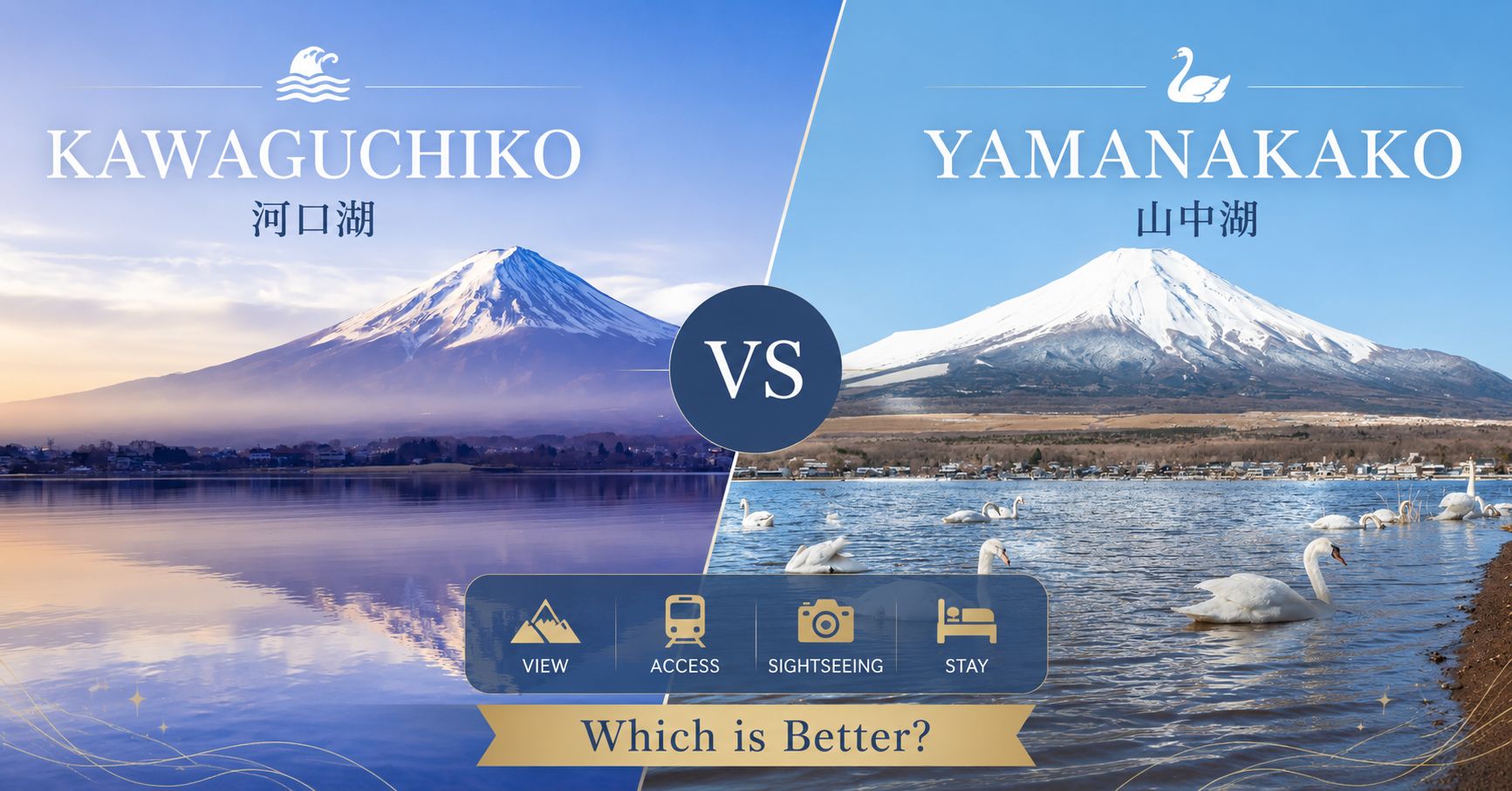
When it comes to Mt. Fuji sightseeing, the two most popular bases are Lake Kawaguchiko and Lake Yamanakako. Both are among the most popular destinations in the Fuji Five Lakes area, but once you actually visit, you’ll find they offer very different atmospheres and travel experiences.
“Which lake has the better view of Mt. Fuji?”
“If it’s my first visit, where should I stay?”
“Which one is easier to reach from Tokyo?”
Here’s the short answer: choose Yamanakako for dramatic, up-close views of Mt. Fuji and peaceful natural surroundings, and Kawaguchiko for the range of attractions and easy access.
This guide compares the two lakes point by point — the view of Mt. Fuji, transport, attractions and accommodation — and finishes with a two-day itinerary that covers both.
Quick Comparison: Kawaguchiko vs Yamanakako
| Kawaguchiko | Yamanakako | |
|---|---|---|
| Elevation | Approx. 831m | Approx. 981m (highest of the five lakes) |
| Lake size | 2nd largest | Largest of the Fuji Five Lakes |
| View of Mt. Fuji | Lake + flowers + Mt. Fuji in one frame | Closest to the mountain; you look up at it |
| Nearest station | Kawaguchiko Station (end of the Fujikyu Line) | No railway station (bus or car) |
| Without a car | Easy — the loop bus covers everything | Harder — a rental car or scooter is recommended |
| Attractions | Museums, ropeway and more | Flower parks, amphibious bus, nature |
| Restaurants | Plenty of choice | Fewer, but several are worth a special trip |
| Accommodation | Hotels and hot spring ryokan | Villas, glamping and whole-house rentals |
| Atmosphere | Lively tourist town | Quiet highland resort |
| Best for | First-timers, families, travel by train | Photographers, outdoor lovers, quiet stays |
The Basics: How the Two Lakes Relate
The Fuji Five Lakes are Motosuko, Shojiko, Saiko, Kawaguchiko and Yamanakako, spread across the northern foot of Mt. Fuji. Kawaguchiko and Yamanakako are the two most popular bases for exploring the Fuji Five Lakes.
Yamanakako is the largest of the five lakes and sits at about 981m — roughly 150m higher than Kawaguchiko (about 831m). That difference in elevation keeps it noticeably cooler in summer, sometimes 4–5°C below Kawaguchiko. Birch woods and open grassland give it the feel of a highland resort.
Kawaguchiko, by contrast, is the hub of Fuji Five Lakes tourism. Hotels, ryokan, restaurants, souvenir shops and museums are clustered around the lakeshore, which makes it easy to plan a trip even on a first visit.
The two lakes are about 30 minutes apart by car, so visiting both on a single trip is entirely realistic.
Which Lake Has the Better View of Mt. Fuji?
The way Mt. Fuji appears from each lake is genuinely different.
Yamanakako: For Up-Close Views of Mt. Fuji
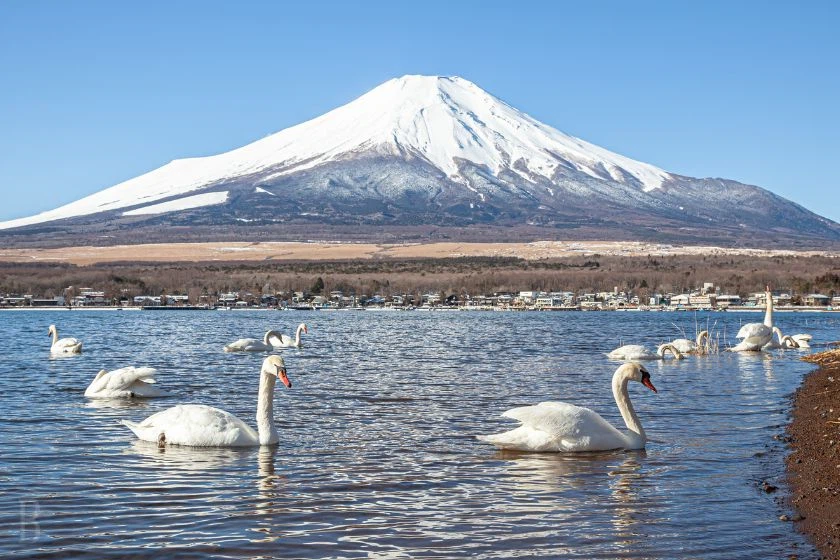
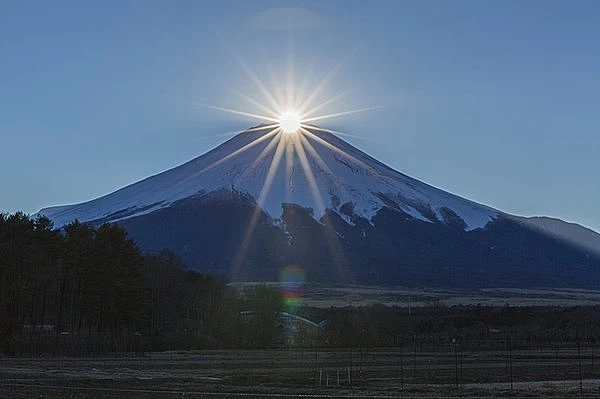
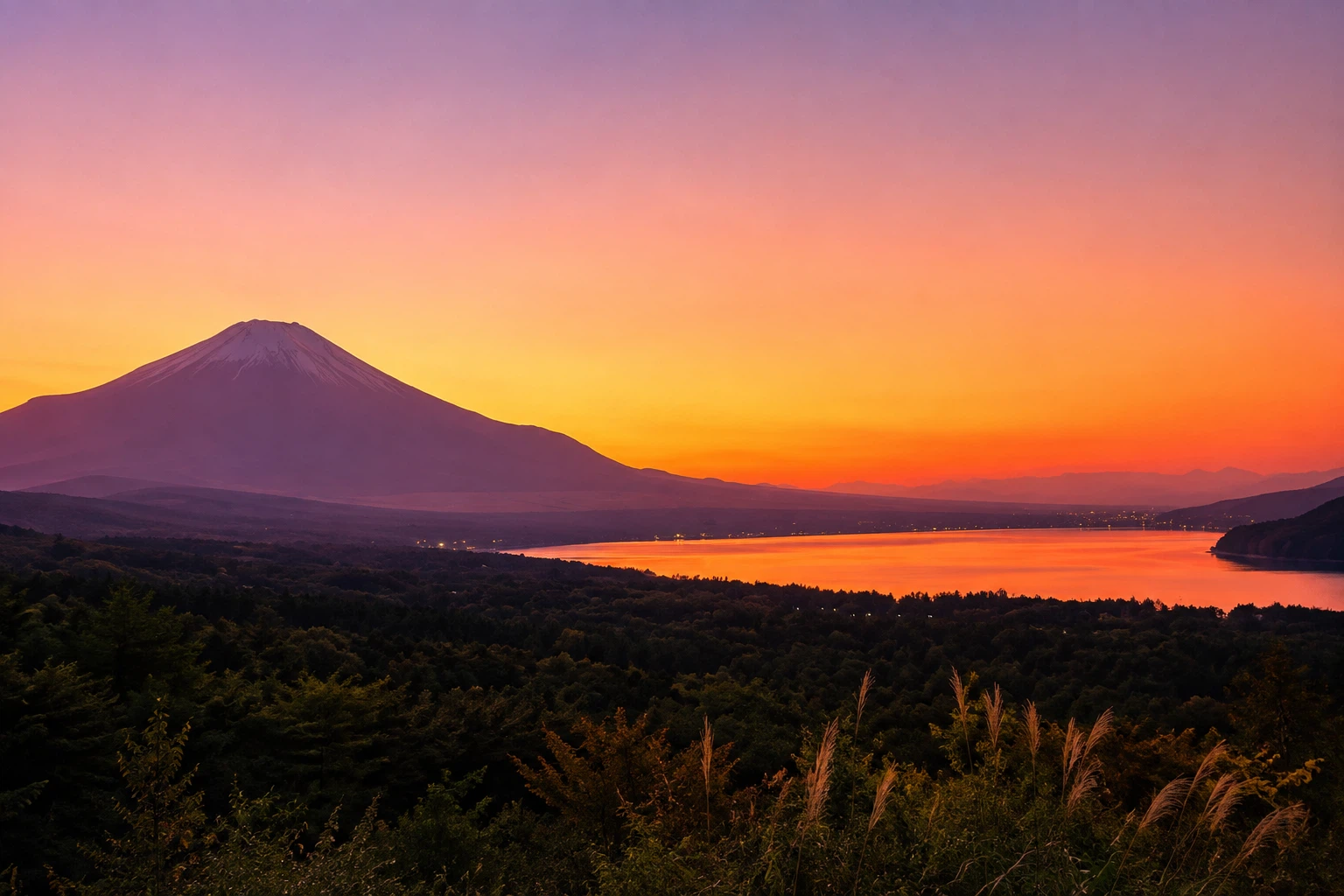
Yamanakako is the closest of the five lakes to Mt. Fuji, which means you can enjoy dramatic, up-close views of Mt. Fuji towering above you.
Three spots stand out.
- Nagaike Shinsui Park — a classic viewpoint for photographing Mt. Fuji across Lake Yamanakako
- Yamanakako Panorama-dai — a hillside viewpoint over both lake and mountain; in winter, Mt. Fuji may turn red in the evening light
- Around Asahigaoka — a lakeside walking path offering different views of Mt. Fuji throughout the seasons
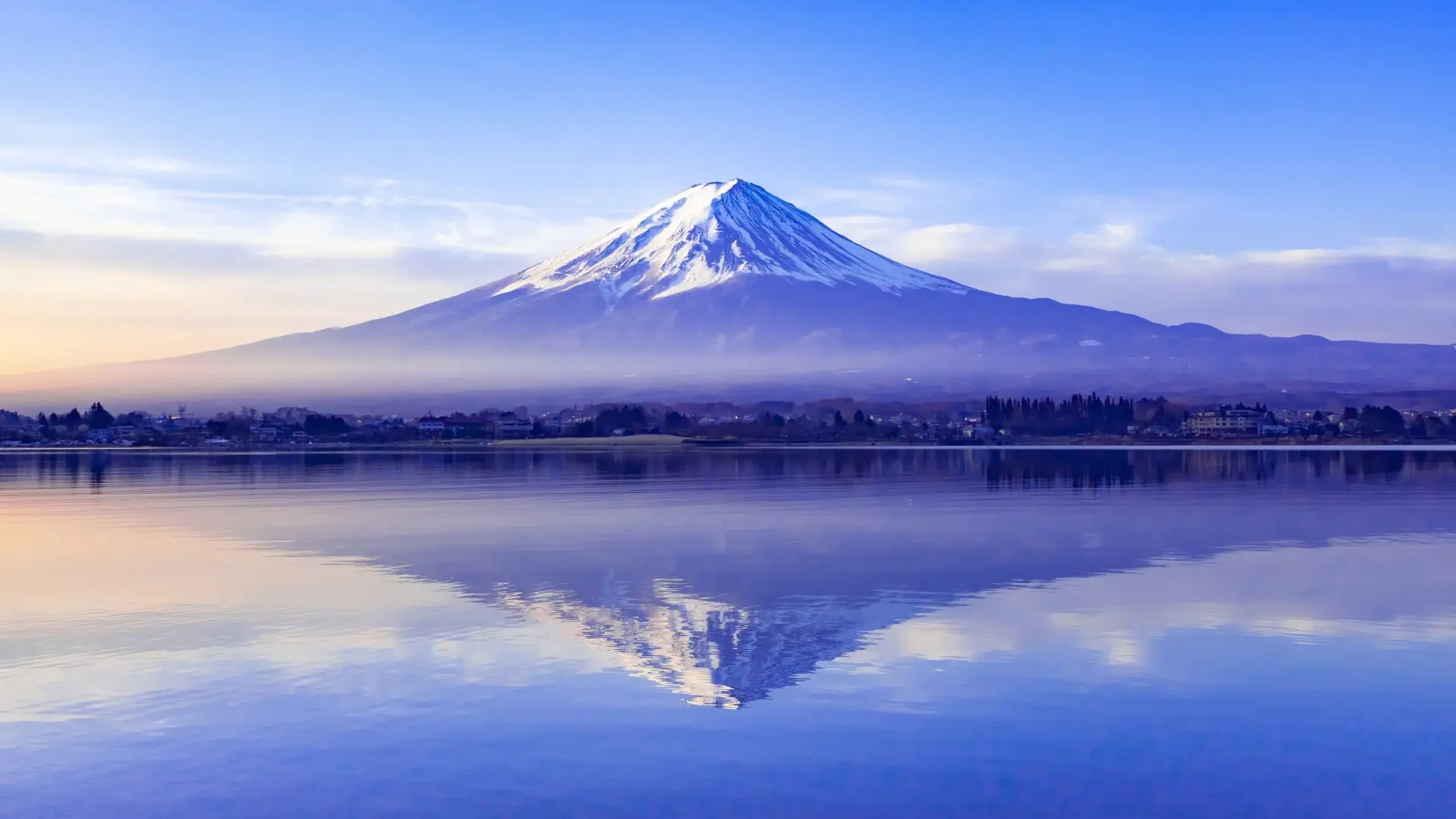
On a still day you may catch the reflection of Mt. Fuji on the lake, known in Japan as “Sakasa Fuji” (Upside-Down Fuji). In winter, the snow-capped peak can turn red in the morning sun — a phenomenon known as Beni-Fuji (Crimson Fuji).
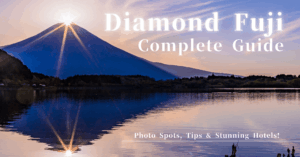
Yamanakako is also one of Japan’s most famous places to see Diamond Fuji, when the sun sits exactly on the summit. Photographers travel from all over the country for it.
Kawaguchiko: For Picture-Perfect Scenery
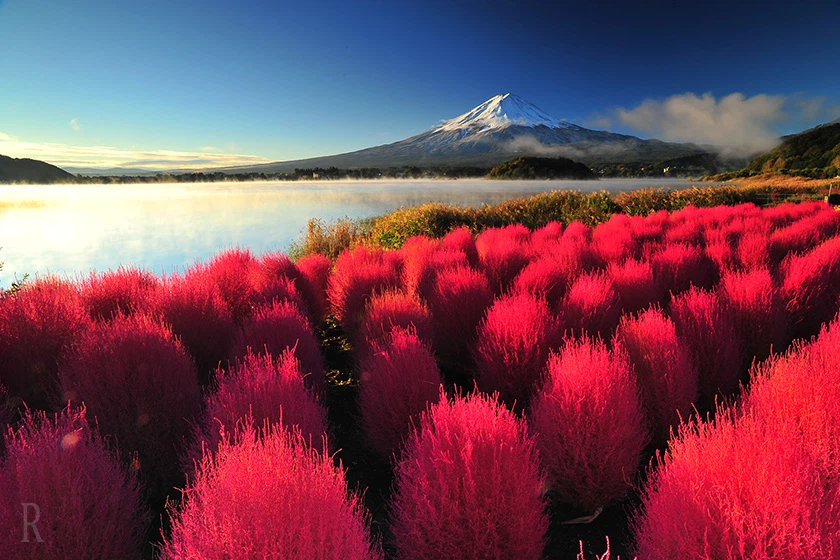
One of Kawaguchiko’s greatest attractions is the chance to capture the lake, Mt. Fuji and seasonal flowers in a single photograph.
- Oishi Park — tulips in spring, lavender in early summer, kochia in autumn, with Mt. Fuji providing a stunning backdrop
- The northern shore — quieter, and the best place to catch the reflection on the water
- Ubugasaki — a small cape with both Kawaguchiko Bridge and Mt. Fuji in view
You can photograph the reflected Fuji at Kawaguchiko too, but Yamanakako is better known for Diamond Fuji and offers a wider choice of viewing spots.
In short: choose Yamanakako for the sheer presence of Mt. Fuji, and Kawaguchiko for beautifully composed landscapes.
A clear view of Mt. Fuji is never guaranteed. Across the year, there are only a limited number of days when the entire mountain is clearly visible. Three things will improve your odds considerably.
- 1. Go early. From sunrise until around 9am is when clouds are least likely to obscure the mountain. Clouds tend to build up in the afternoon
- 2. Winter is best. From November to February the air is clearer and the snow-capped mountain is visible far more often. In summer, haze and cloud frequently hide it completely
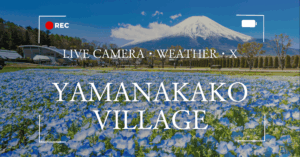
- 3. Check a live camera before you set out. Local live cameras show you the current sky and the state of the mountain, so you can time your day around it
Getting There from Tokyo and the Airports
When it comes to accessibility, Kawaguchiko has a clear advantage.
Getting to Kawaguchiko
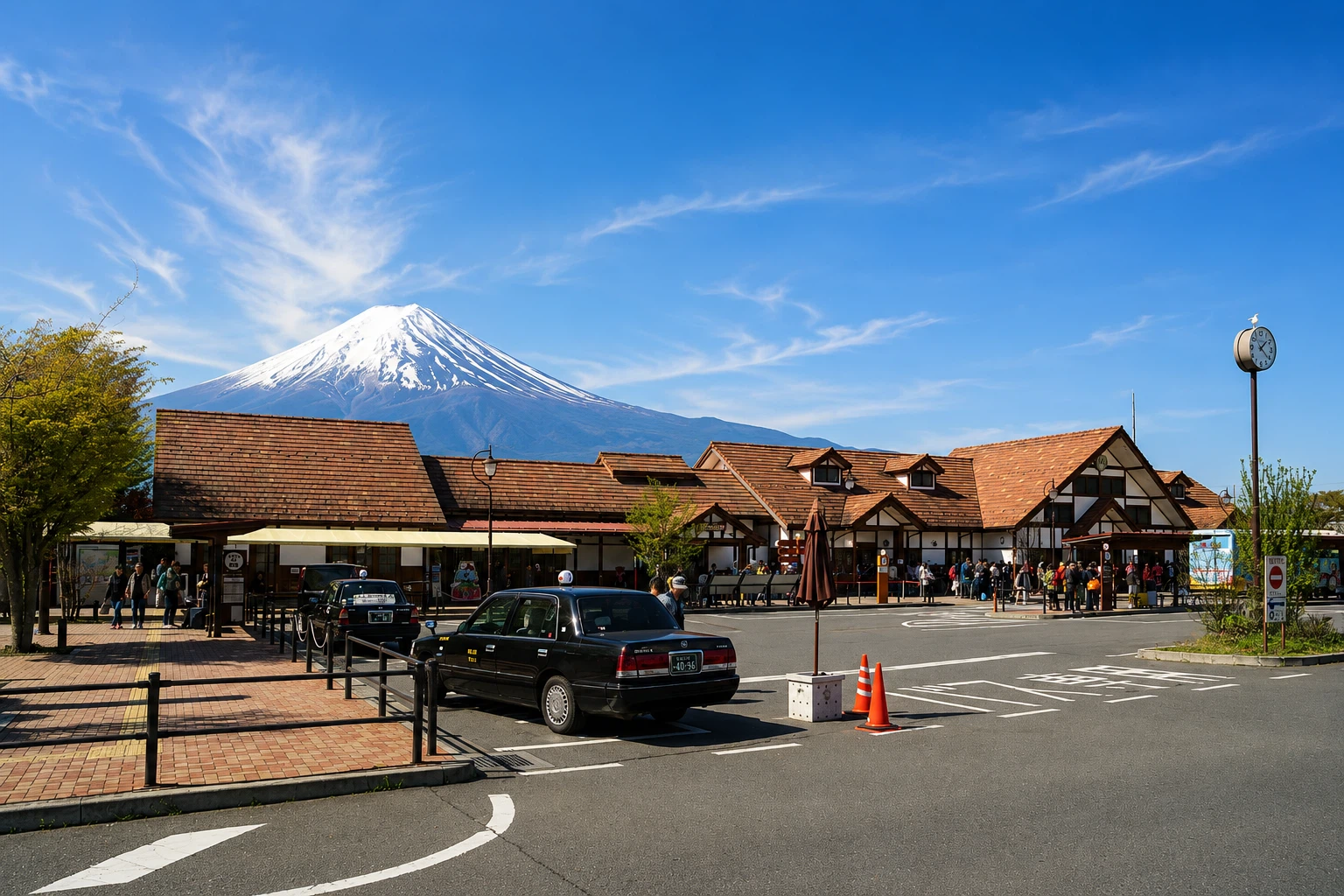
Kawaguchiko Station is the terminus of the Fujikyu Railway Line, and there are several direct options from Tokyo.
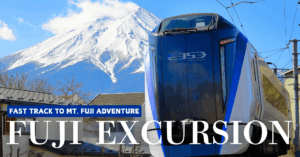
- Limited Express “Fuji Excursion” — direct from Shinjuku Station to Kawaguchiko Station, no transfers, about 2 hours
- Highway bus — from Busta Shinjuku to Kawaguchiko Station in about 1 hour 45 minutes, with frequent departures and reasonable fares
- Direct airport buses — both Narita and Haneda have direct highway buses to Kawaguchiko, so you can head straight to the Mt. Fuji area on arrival without going through central Tokyo (services vary by season, so check current timetables before you travel)
- Kawaguchiko Sightseeing Bus (Retro Bus) — a loop bus linking the main sights. With a day pass you can cover the area comfortably without a car
Getting to Yamanakako
Yamanakako has no railway station. Most visitors take a local bus from Fujisan Station or Gotemba Station. There is also a direct highway bus from Busta Shinjuku, taking about 2 hours 20 minutes.
That said, the sights around Yamanakako are spread right around the lake, so a rental car or scooter makes getting around much easier. This is part of why Yamanakako is such a popular destination for driving and motorcycle trips.
Travelling between the two lakes
It’s about 50 minutes by local bus, or 30 minutes by car. A day trip covering both is possible, but staying overnight gives you more time to enjoy both areas at a relaxed pace.
Rental car offices are clustered around Kawaguchiko Station, so you can pick up a car soon after you arrive. There are fewer rental offices around Yamanakako, so collecting a car near Kawaguchiko Station is generally the more convenient option.
What you need in order to drive in Japan on a foreign licence depends on where your licence was issued, and the rules can change. Check the latest guidance from the Japan Automobile Federation (JAF) or the Japanese police before you travel, and arrange any required paperwork before leaving home.
Japan drives on the left. If you rent a car between December and March, make sure it is fitted with winter tires — roads at this altitude can freeze, particularly early in the morning and on shaded stretches around Yamanakako.
Rental motorcycles and bicycles are also available near Kawaguchiko Station and are a pleasant way to explore the lakeshore. Temperatures drop quickly once the sun goes down at this altitude, so dress warmly.
Attractions: Kawaguchiko Has More to See
In terms of the number and variety of attractions, Kawaguchiko has the edge.
Kawaguchiko: More Than You Can See in One Day
- Mt. Fuji Panoramic Ropeway (Tenjoyama Park) — about three minutes from the lakeshore to a viewing deck at 1,075m, looking out over both the lake and Mt. Fuji. One of the highlights of sightseeing around Kawaguchiko
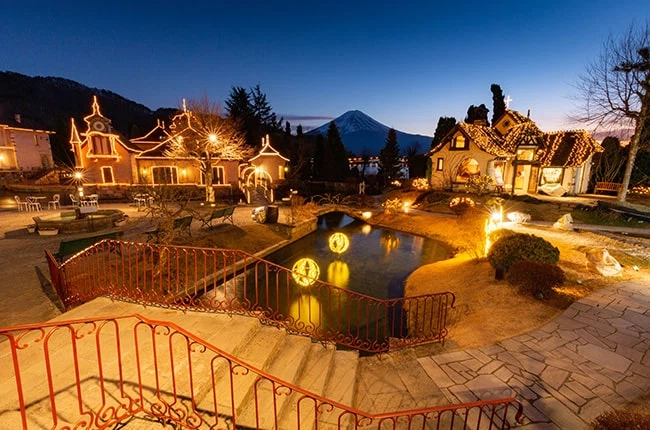
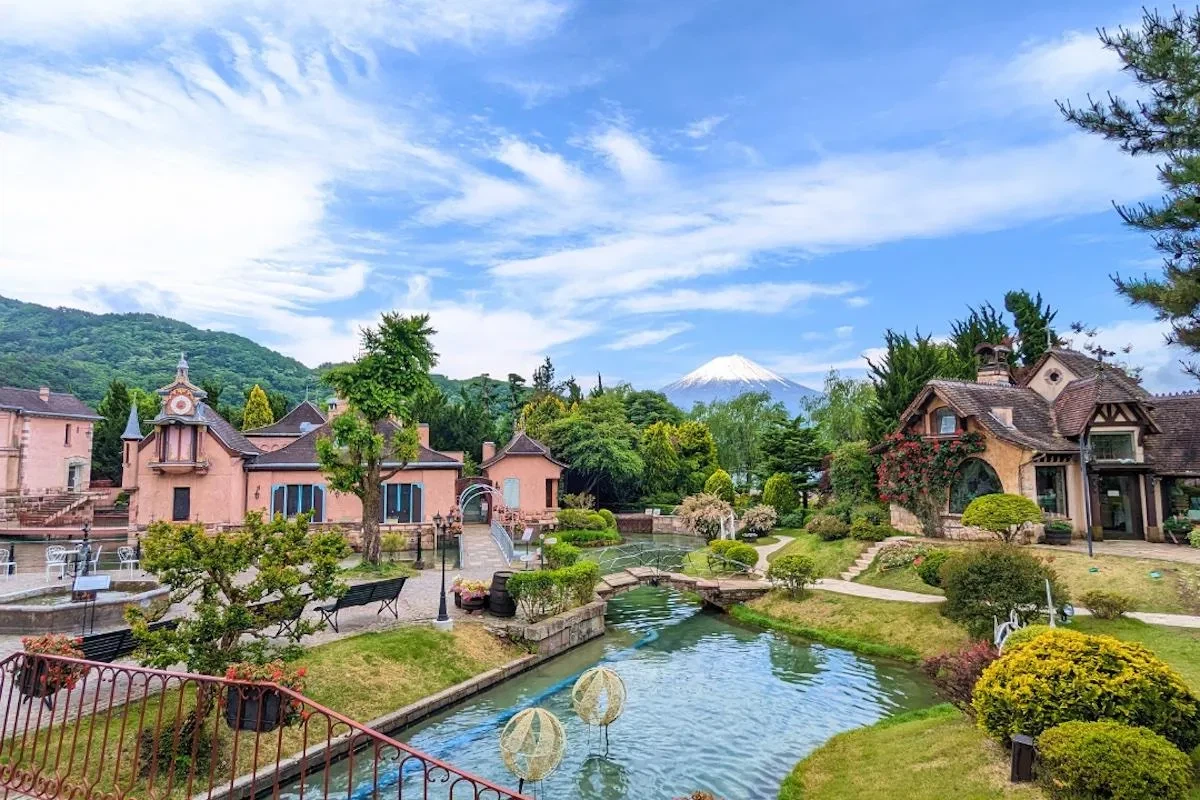
- Kawaguchiko Music Forest Museum — a European-style garden and a collection of automatic musical instruments, also known for its beautiful rose garden
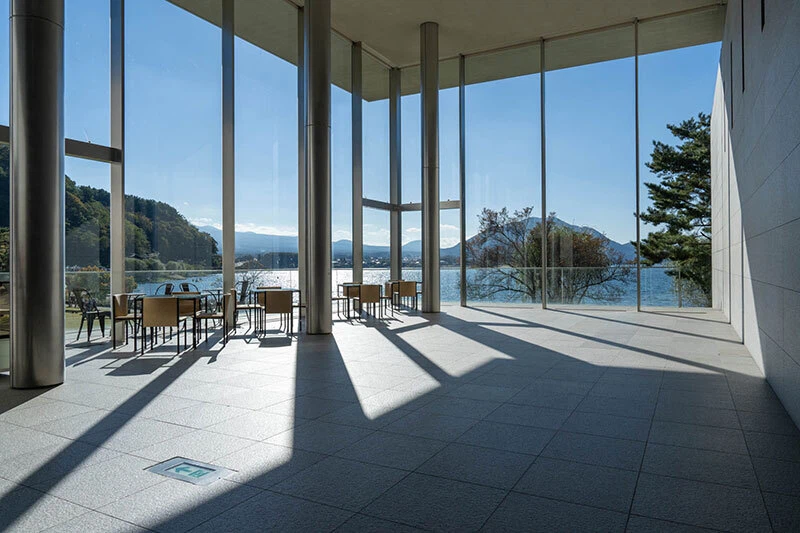
- Kawaguchiko Museum of Art — paintings and photography centred on Mt. Fuji. The museum shop is open to non-ticket holders
- Itchiku Kubota Art Museum — the “Itchiku Tsujigahana” dyed kimono works, in a building and garden that are works of art themselves
- Kawaguchiko Craft Park — hands-on workshops including sandblasting and gel candle making
- Oishi Park & Kawaguchiko Natural Living Center — a popular viewpoint known for its seasonal flower fields, plus blueberry picking and jam making
Yamanakako: Nature-Focused Attractions
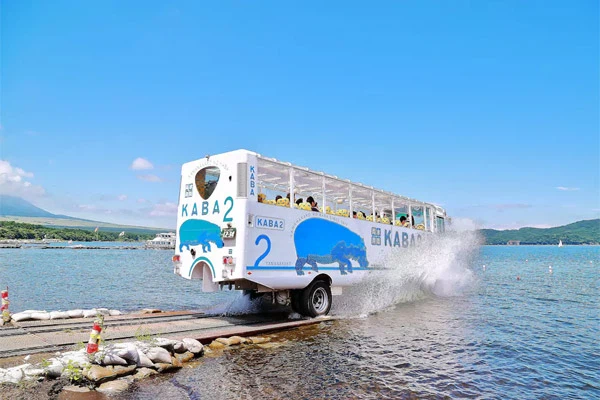
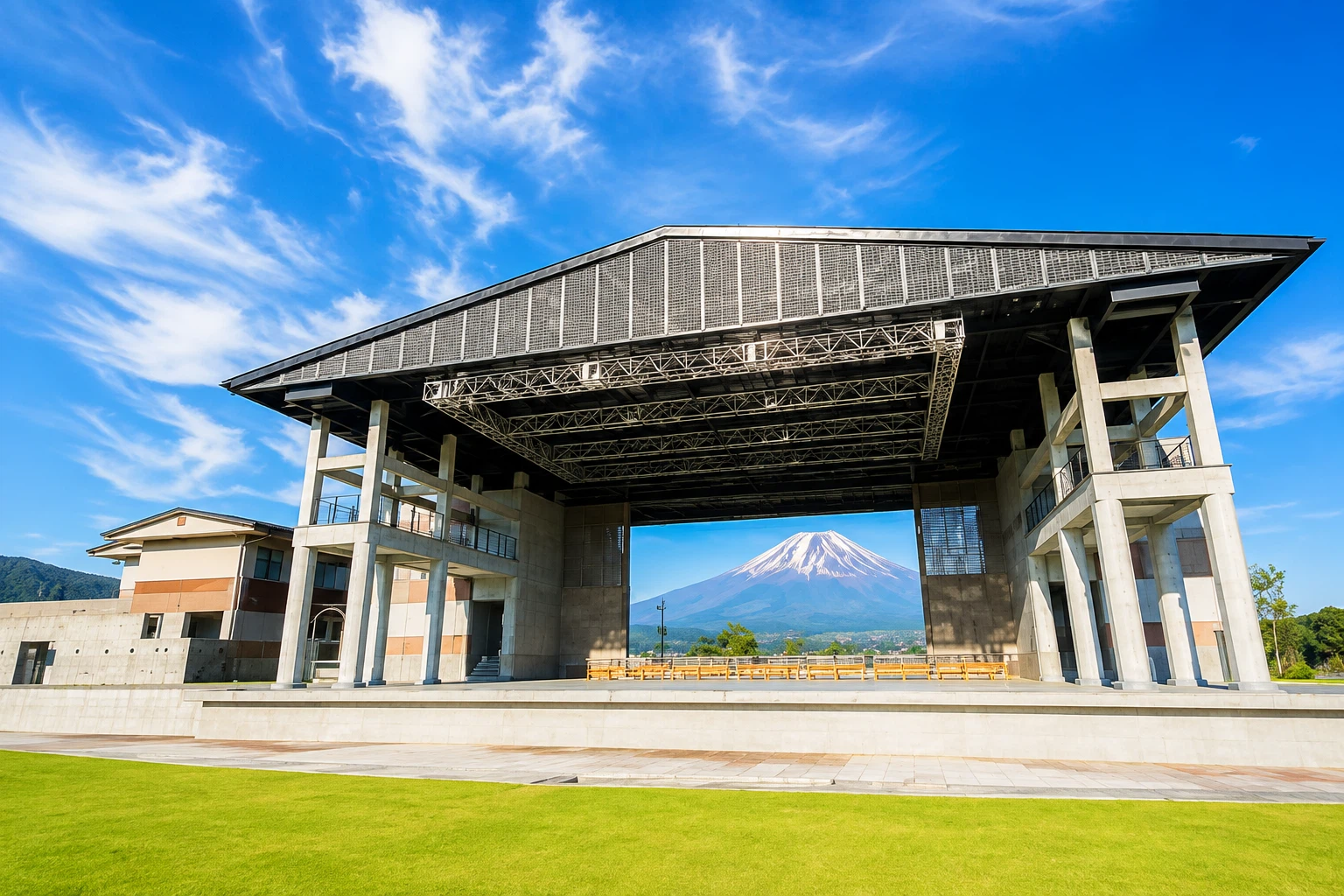
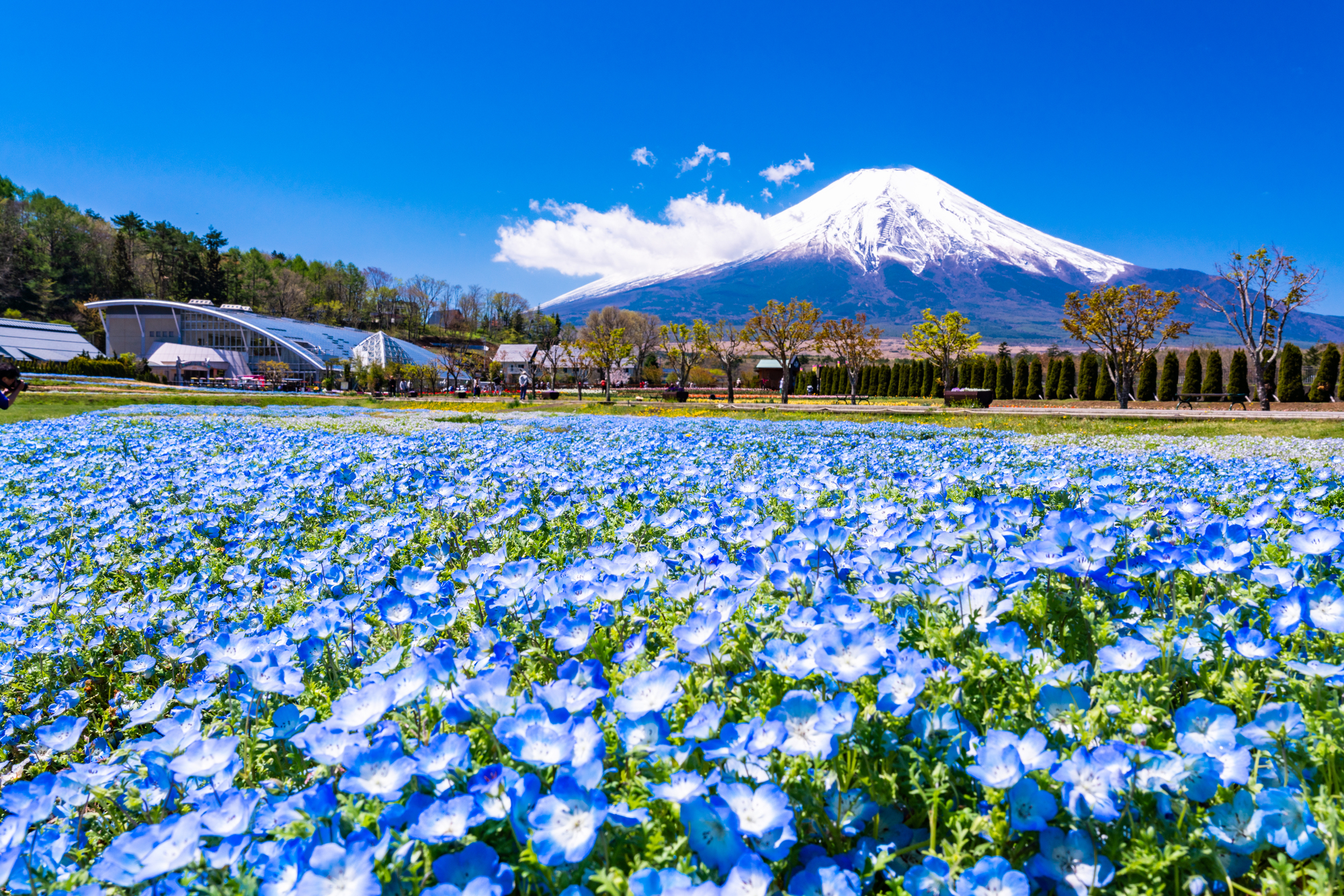
- Yamanakako Hana no Miyako Park — tulips and nemophila in spring, sunflowers in summer, cosmos in autumn, all set against Mt. Fuji
- KABA amphibious bus — a bus that drives down the road and straight into the lake. A thrilling attraction and one of Yamanakako’s most distinctive experiences
- Yamanakako Kirara — a wide natural lawn used for events, and a good base for cycling and walking
- Ishiwari no Yu — one of Yamanakako’s best-known day-use hot springs
- Forest of Literature Park & Mishima Yukio Literary Museum — a quiet woodland park dedicated to one of Japan’s most important modern novelists
Activities on the water and the year-round festival calendar are covered in a separate guide — useful if you are still deciding when to travel.
Where Should You Stay?
The differences between the two areas are also clear when it comes to accommodation.
Kawaguchiko: the widest choice
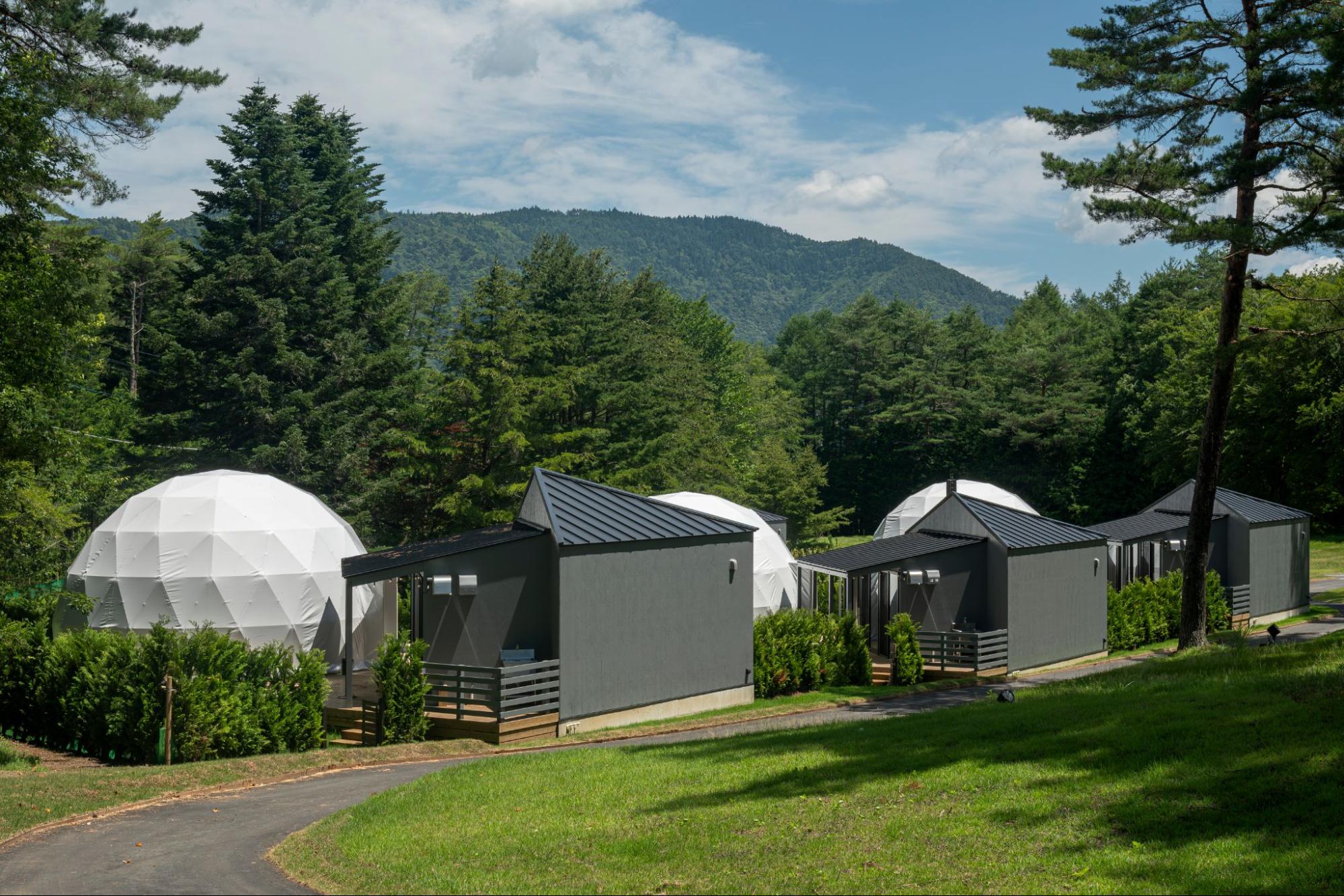
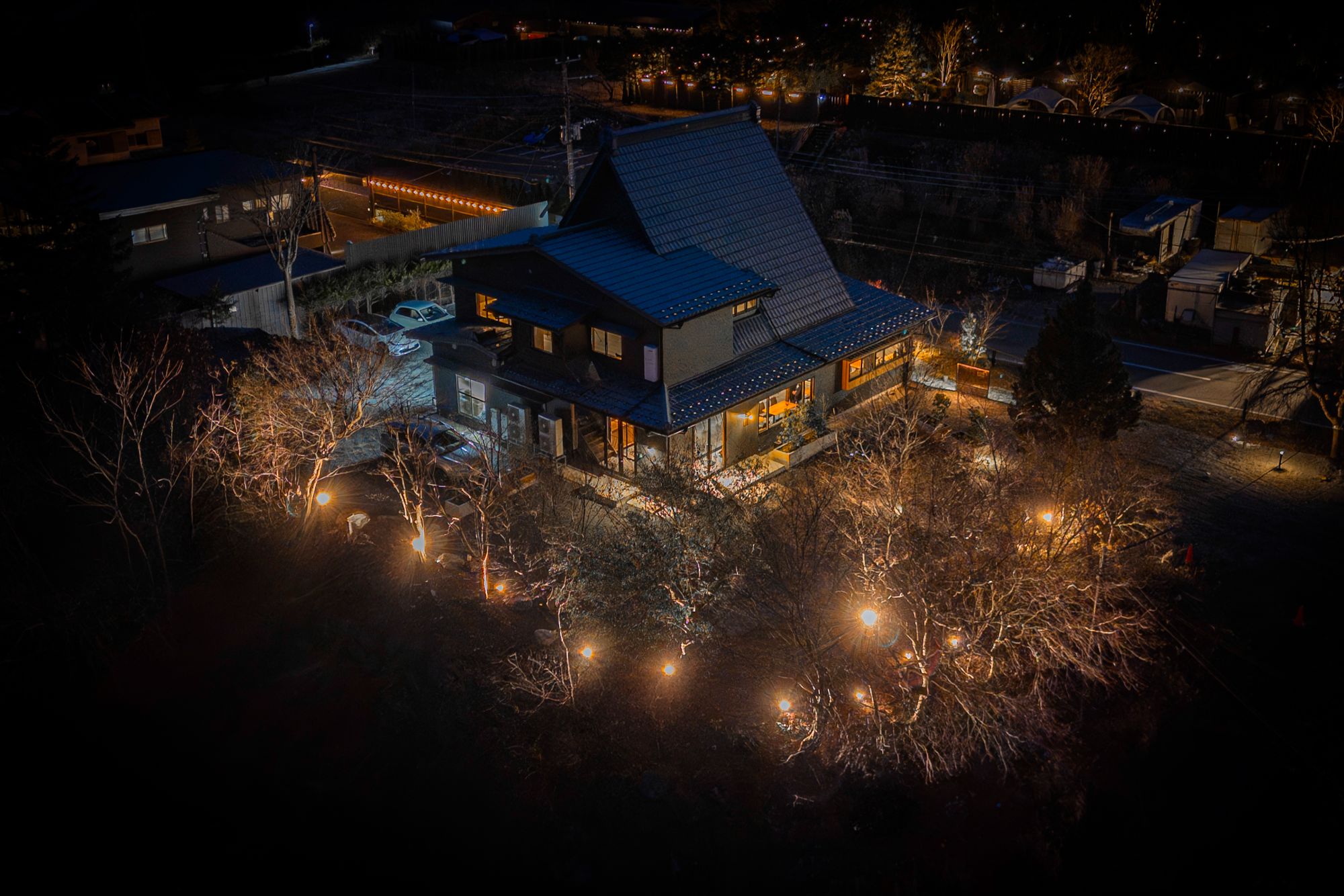
As the centre of Fuji Five Lakes tourism, Kawaguchiko has a large number of places to stay — luxury ryokan, resort hotels, hot spring inns, rental villas and glamping sites, across a wide range of budgets.
Attractions are close by, and if you stay near Kawaguchiko Station you can get around perfectly well without a car.
Yamanakako: quiet and private
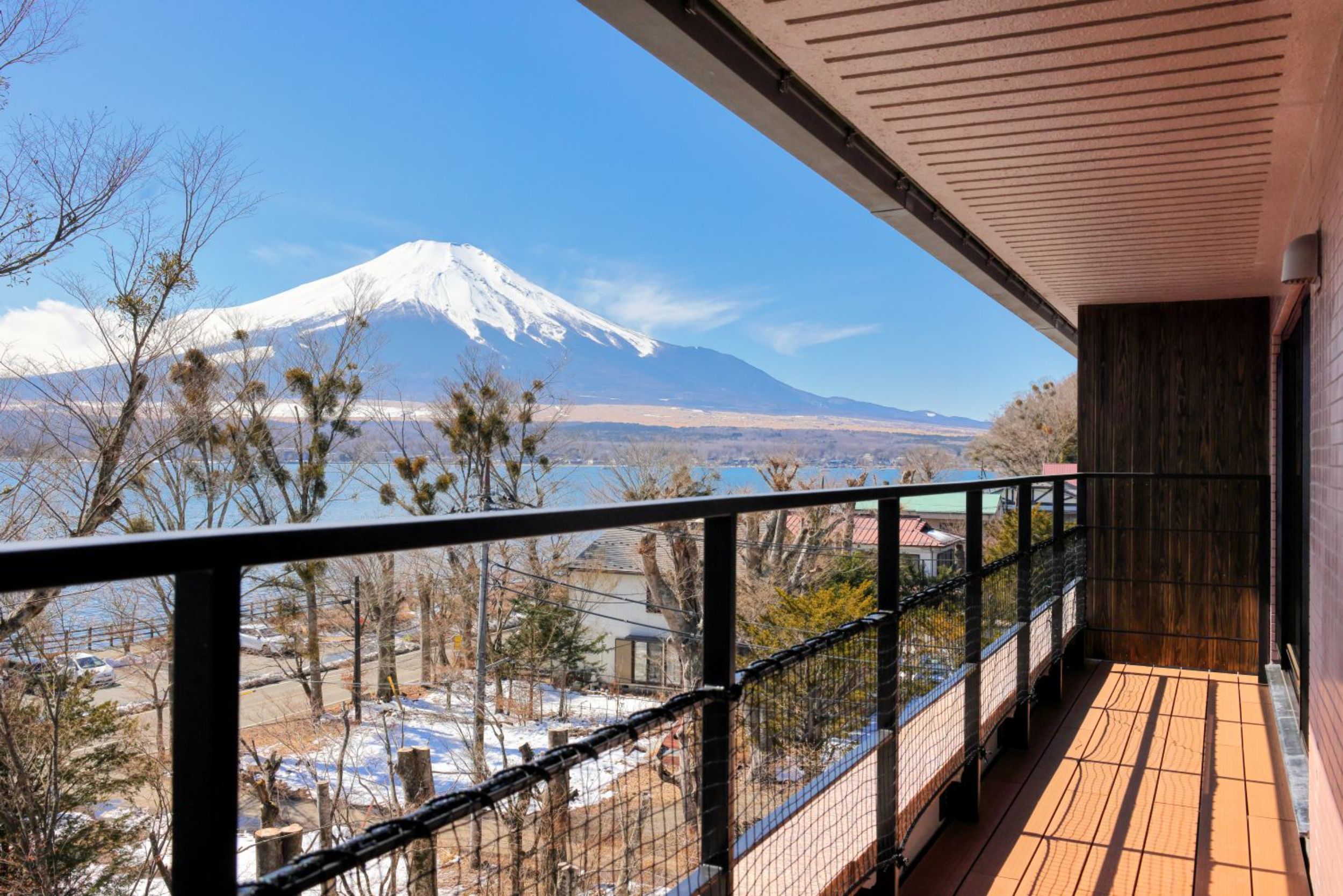
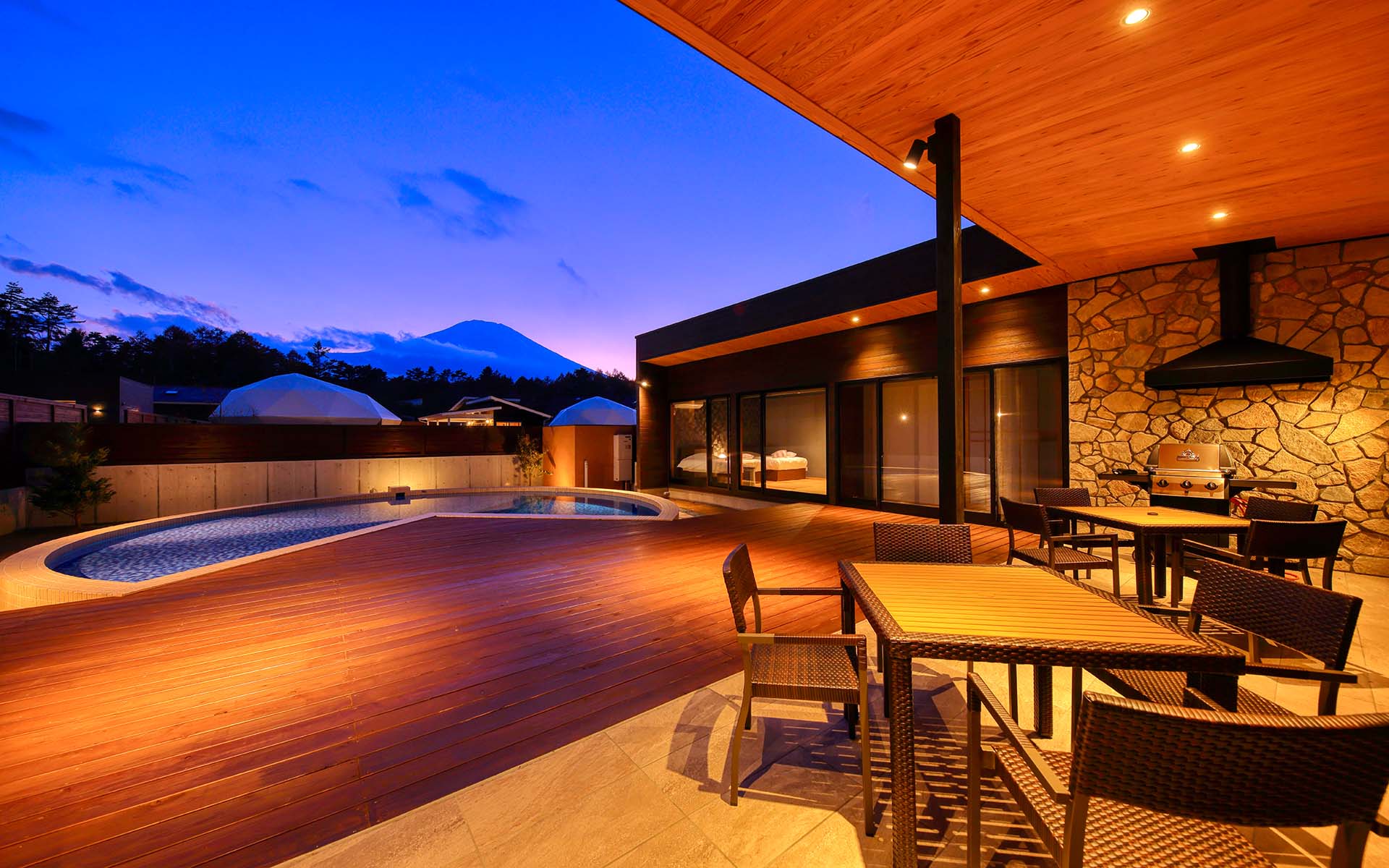
Yamanakako developed as a summer retreat and vacation-home area, so it is dotted with villas, cottages and glamping sites surrounded by forests.
In recent years, villas with private saunas and views of Mt. Fuji, along with whole-house rentals, have become increasingly common, and they’re popular with travellers seeking privacy and tranquility.
Where to stay in Kawaguchiko: GLAMPING VILLAGE Fuji Kawaguchiko
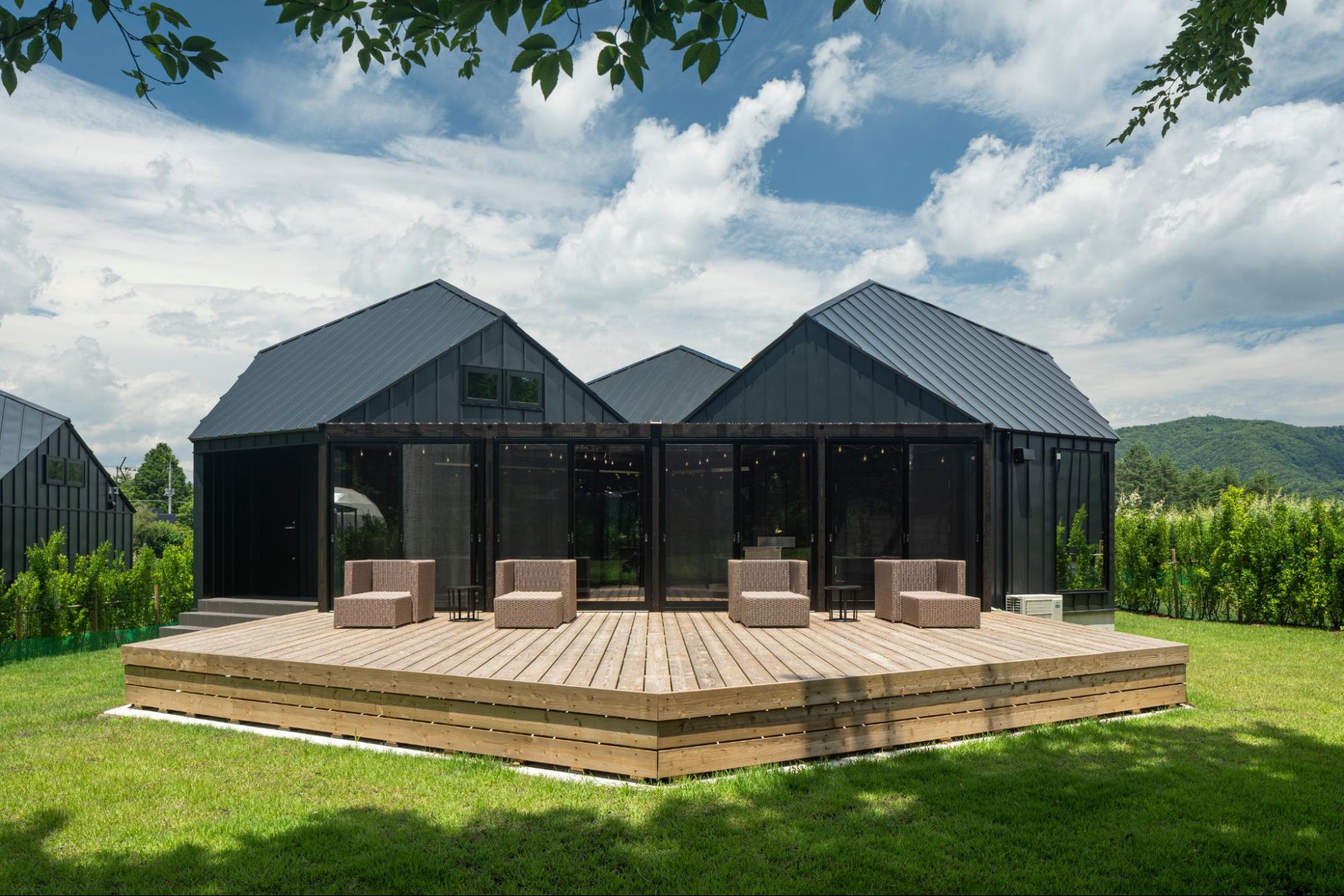
If you’re staying on the Kawaguchiko side, GLAMPING VILLAGE Fuji Kawaguchiko is one of the largest luxury glamping resorts in the Kanto region.
Surrounded by the natural beauty of the Kawaguchiko area, with Mt. Fuji nearby, you can enjoy a luxurious and comfortable outdoor stay without having to bring your own camping equipment. Every room has a kitchen, cookware and tableware, so guests can also enjoy cooking ingredients purchased from local supermarkets.
Guests can also enjoy complimentary drinks at the exclusive “Nature Bar,” including a selection of wines from Yamanashi Prefecture.
| Address | 7430 Narusawa, Narusawa Village, Minamitsuru District, Yamanashi 401-0320 |
|---|---|
| Website | https://en.nature-glamping.com/ |
Where to stay in Yamanakako: Private Villa Glamping Fuji Yamanakako
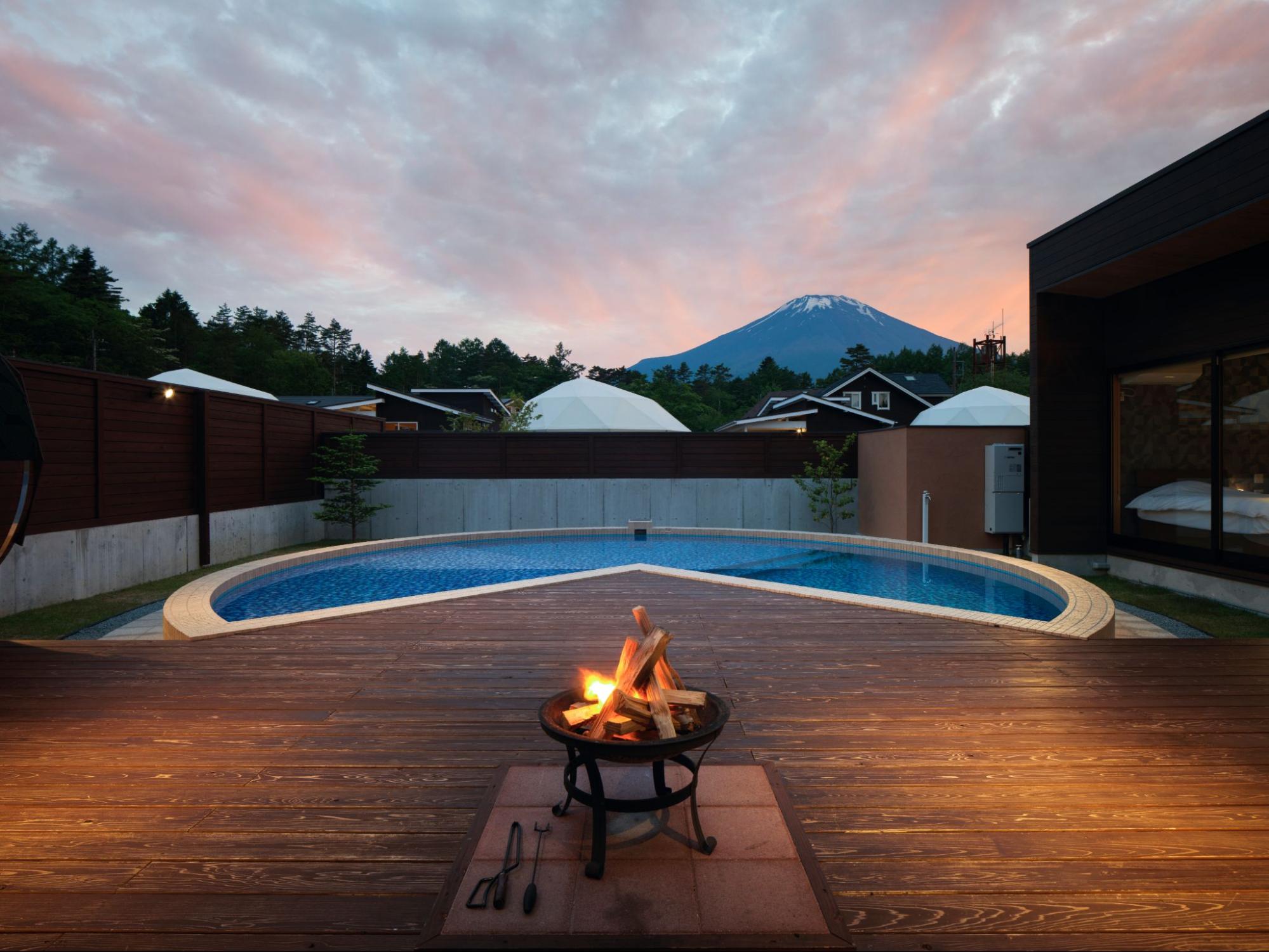
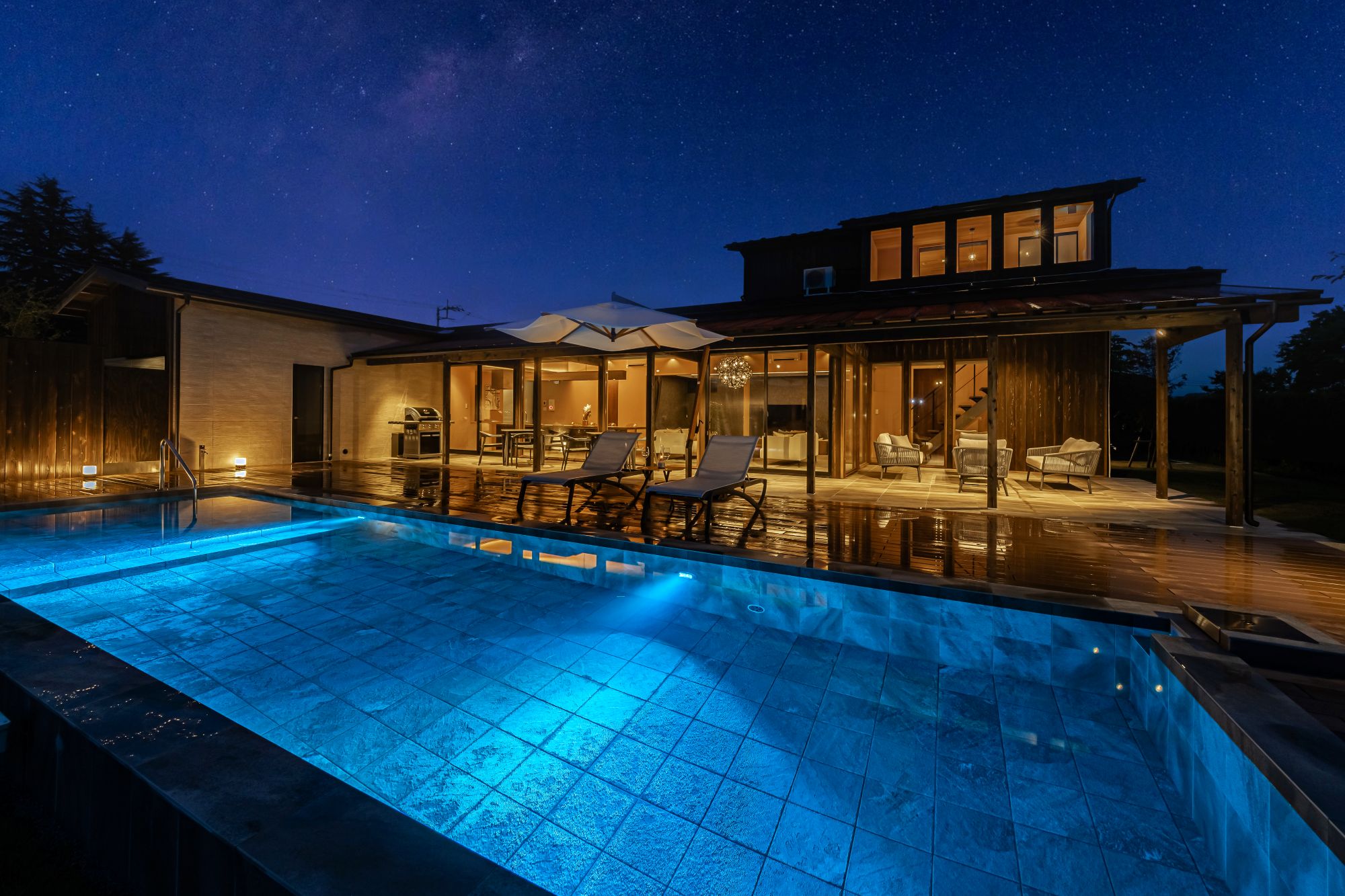
On the Yamanakako side, Private Villa Glamping Fuji Yamanakako gives every villa its own hot spring, private pool and fire pit.
Each unit is a free-standing suite villa. In summer you catch the highland breeze by the pool; in autumn you sit by the fire looking out at Mt. Fuji framed by red leaves; in winter, you can unwind in your private hot spring. It’s a stay that lets you experience the best of Yamanakako in every season.
Yamanakako becomes remarkably quiet after dark. Spending a quiet evening by the fire under a star-filled sky can become one of the highlights of the trip.
| Address | 262-5 Yamanaka, Yamanakako Village, Minamitsuru District, Yamanashi |
|---|---|
| Website | http://en.fuji-suitevilla.com/ |
Located between Kawaguchiko and Yamanakako, Oshino Village is best known for Oshino Hakkai, a set of spring-fed ponds registered as part of the Mt. Fuji World Heritage Site. It’s roughly 20 minutes by car to either lake, which makes it a convenient base if you plan to visit both. Staying overnight also means you can walk through Oshino Hakkai first thing in the morning, before the tour buses arrive — an experience that is much easier to enjoy when staying overnight.

Hot Springs and Saunas
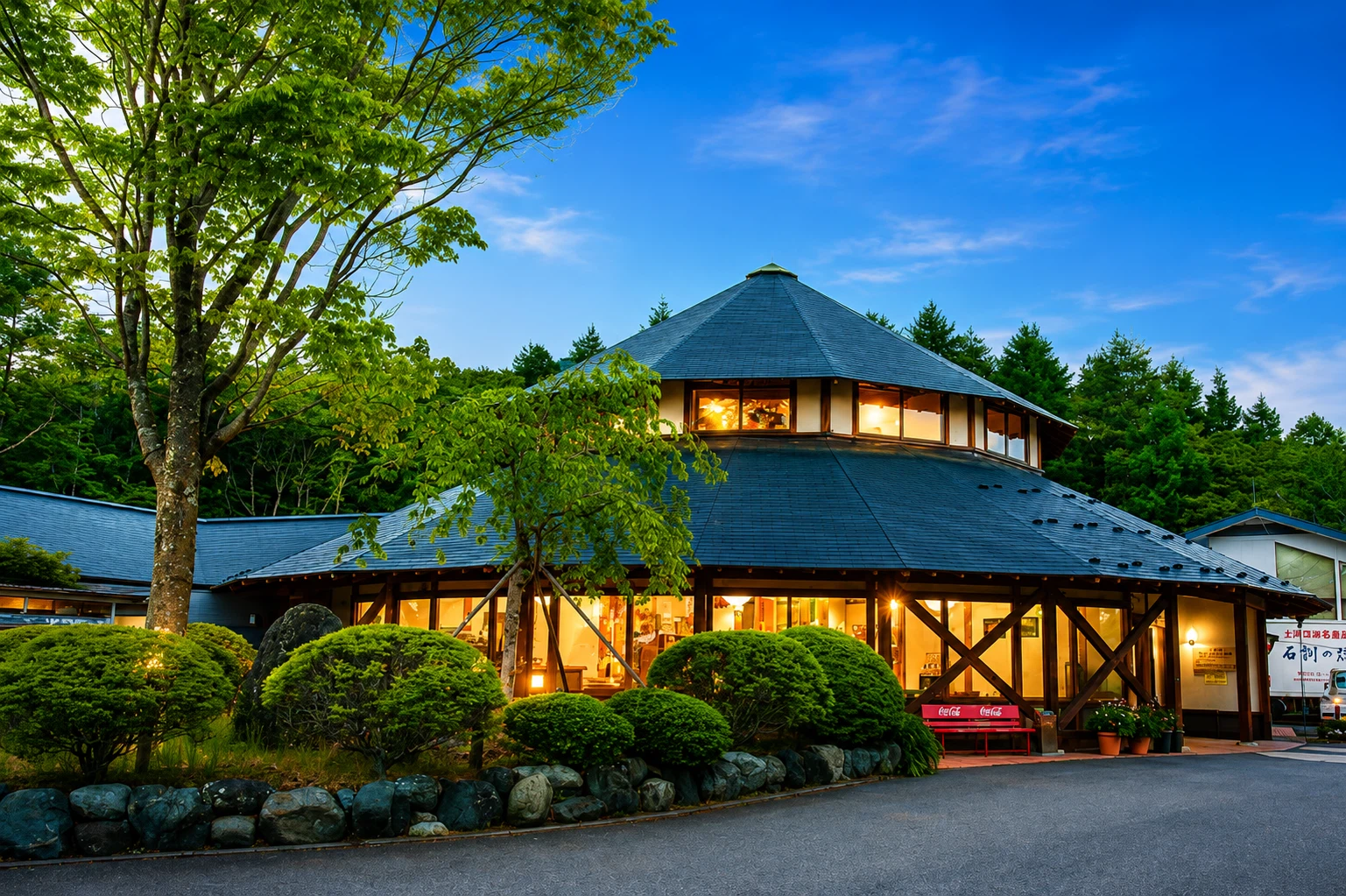
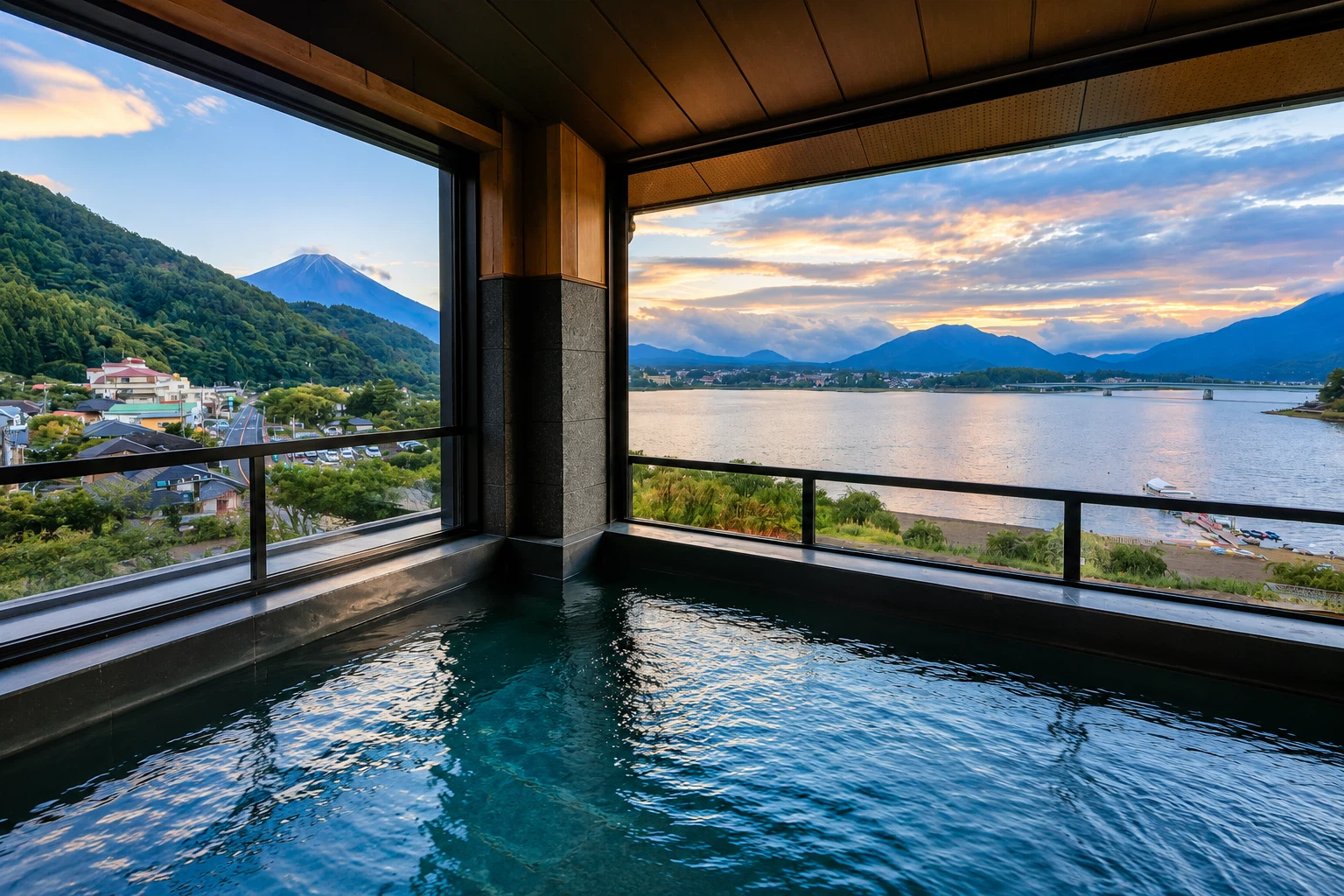
For hot springs, Kawaguchiko has more on offer. The Fujikawaguchiko hot spring area has plenty of day-use baths and hot spring inns, making them easy to visit during a day of sightseeing. Few experiences are more relaxing than soaking in an open-air bath with views of Mt. Fuji.
At Yamanakako, Ishiwari no Yu is the main day-use hot spring.
Saunas have also become increasingly popular among visitors to the Fuji Five Lakes. Barrel saunas with self-löyly and outdoor relaxation areas are becoming increasingly common around Yamanakako, and they suit travellers looking for a quiet, unhurried stay.
Food: Hoto and Soba at Both Lakes
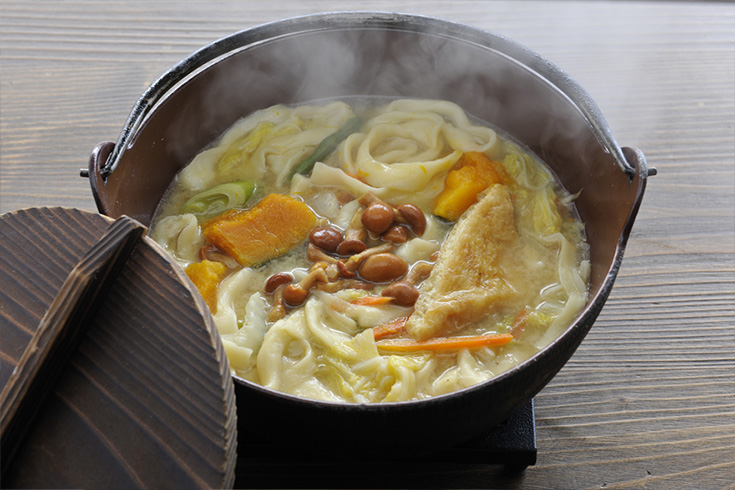
The dish to try in Yamanashi is hoto — flat, thick wheat noodles simmered with pumpkin and other vegetables in a miso broth, making it especially comforting in the cool climate of the Fuji Five Lakes. Hand-cut soba made with Mt. Fuji spring water is the area’s other speciality.
Kawaguchiko has a much wider selection of restaurants, but Yamanakako has a number of distinctive restaurants worth making a trip for. The guides below cover each area in detail.



Which One Suits Your Trip?
Pulling the comparison together:
- You want Mt. Fuji up close → Yamanakako
- You want to photograph Diamond Fuji → Yamanakako
- You want flowers and Mt. Fuji together → Kawaguchiko
- You want the reflection on the water → either works
- You want museums → Kawaguchiko
- You want a ropeway or a sightseeing cruise → Kawaguchiko
- You want the amphibious bus → Yamanakako
- You’re travelling by train and bus only → Kawaguchiko
- You want to enjoy a road trip or motorcycle touring → Yamanakako
- You want plenty of restaurant choice → Kawaguchiko
- You want a hotel or hot spring ryokan → Kawaguchiko
- You want a quiet villa or glamping stay → Yamanakako
- You’re travelling with children, or it’s your first visit → Kawaguchiko
- You want to escape the summer heat → Yamanakako
Neither lake is necessarily better than the other. Choose the one that matches how you like to travel — either way, you’ll have plenty of opportunities to enjoy spectacular views of Mt. Fuji.
Two-Day Itinerary Covering Both Lakes
If you have the time, visiting both is well worth it. The lakes are only 30 minutes apart by car, so two days is enough.
Day 1: Sightseeing and food around Kawaguchiko
| 10:00 | Arrive at Kawaguchiko Station (about 2 hours from Shinjuku on the Fuji Excursion) |
|---|---|
| 10:30 | Take the Mt. Fuji Panoramic Ropeway to Tenjoyama Park for views of Lake Kawaguchiko and Mt. Fuji |
| 12:00 | Lunch at a lakeside hoto restaurant |
| 13:30 | Visit Oishi Park for seasonal flowers with Mt. Fuji as the backdrop |
| 15:00 | Visit the Kawaguchiko Music Forest Museum |
| 17:00 | Check in, enjoy dinner, and relax by the fire pit at your glamping site |
Day 2: Mt. Fuji and highland nature at Yamanakako
| 07:00 | Early walk by the lake — the best time of day to see Mt. Fuji |
|---|---|
| 09:30 | Drive to Yamanakako (about 30 minutes); allow about an extra hour if you stop at Oshino Hakkai |
| 10:30 | Hana no Miyako Park for flower fields and Mt. Fuji |
| 12:00 | Lunch at one of Yamanakako’s popular local restaurants |
| 13:30 | Photos at Nagaike Shinsui Park or Panorama-dai |
| 15:00 | A soak at Ishiwari no Yu |
| 16:30 | Highway bus back to Shinjuku (about 2 hours 20 minutes) |
In Summary
Kawaguchiko and Yamanakako are two of the most popular lakes in the Fuji Five Lakes region, and each appeals to a different type of traveller.
Choose Kawaguchiko for attractions, food, transport links and the breadth of accommodation. Choose Yamanakako for dramatic, up-close views of Mt. Fuji, highland nature and quiet. Whichever you choose, unforgettable views of Mt. Fuji await.
If your schedule allows, visiting both lakes is well worth considering.
More features you might enjoy
-

A Gourmet-Filled Hotspot! Highlights of “Tabi-no-Eki Kawaguchiko Base”
-
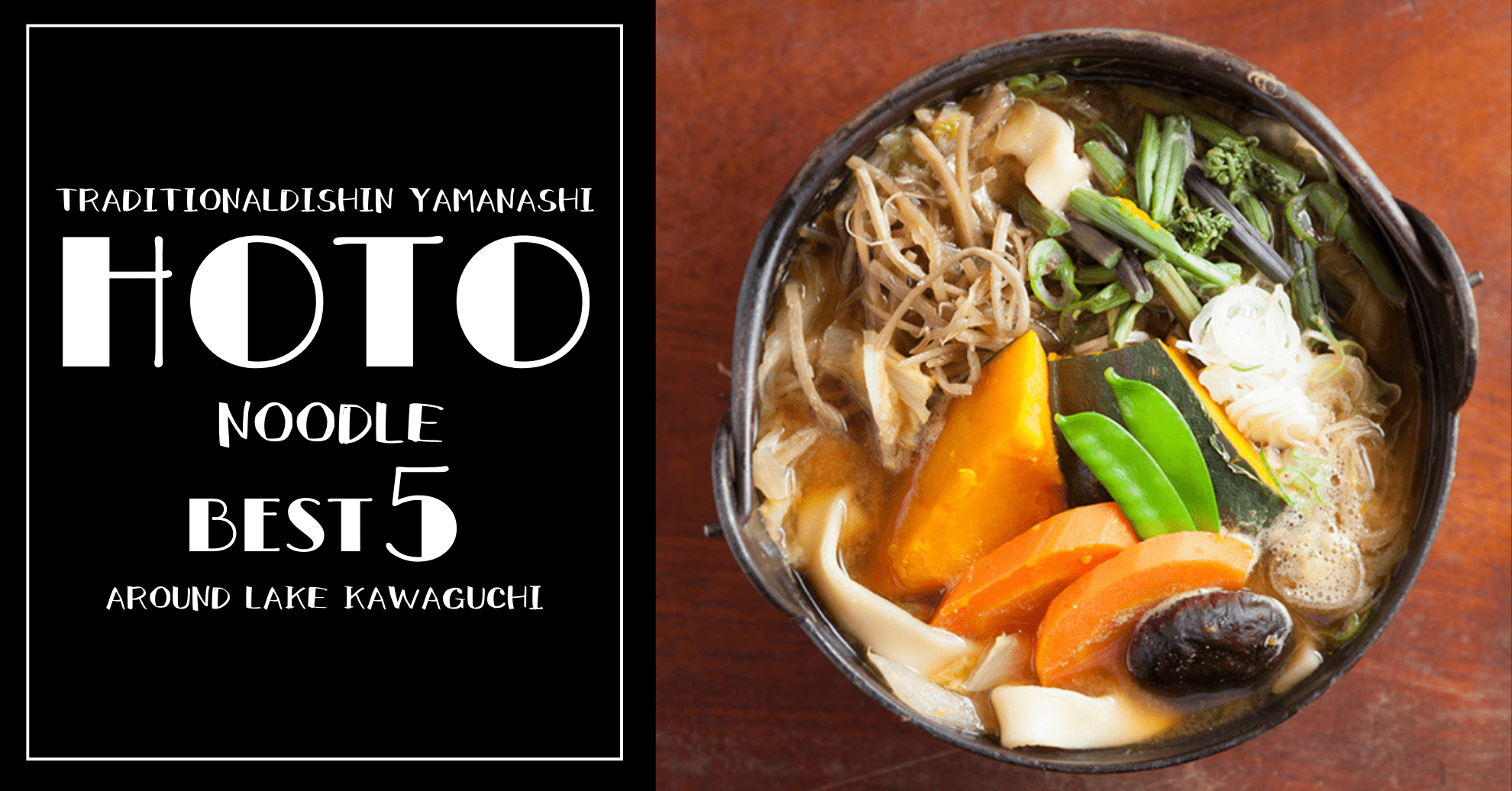
A Flavor Loved by Lord Shingen! Guide to Popular Hoto Noodle Restaurants Around Lake Kawaguchiko
-
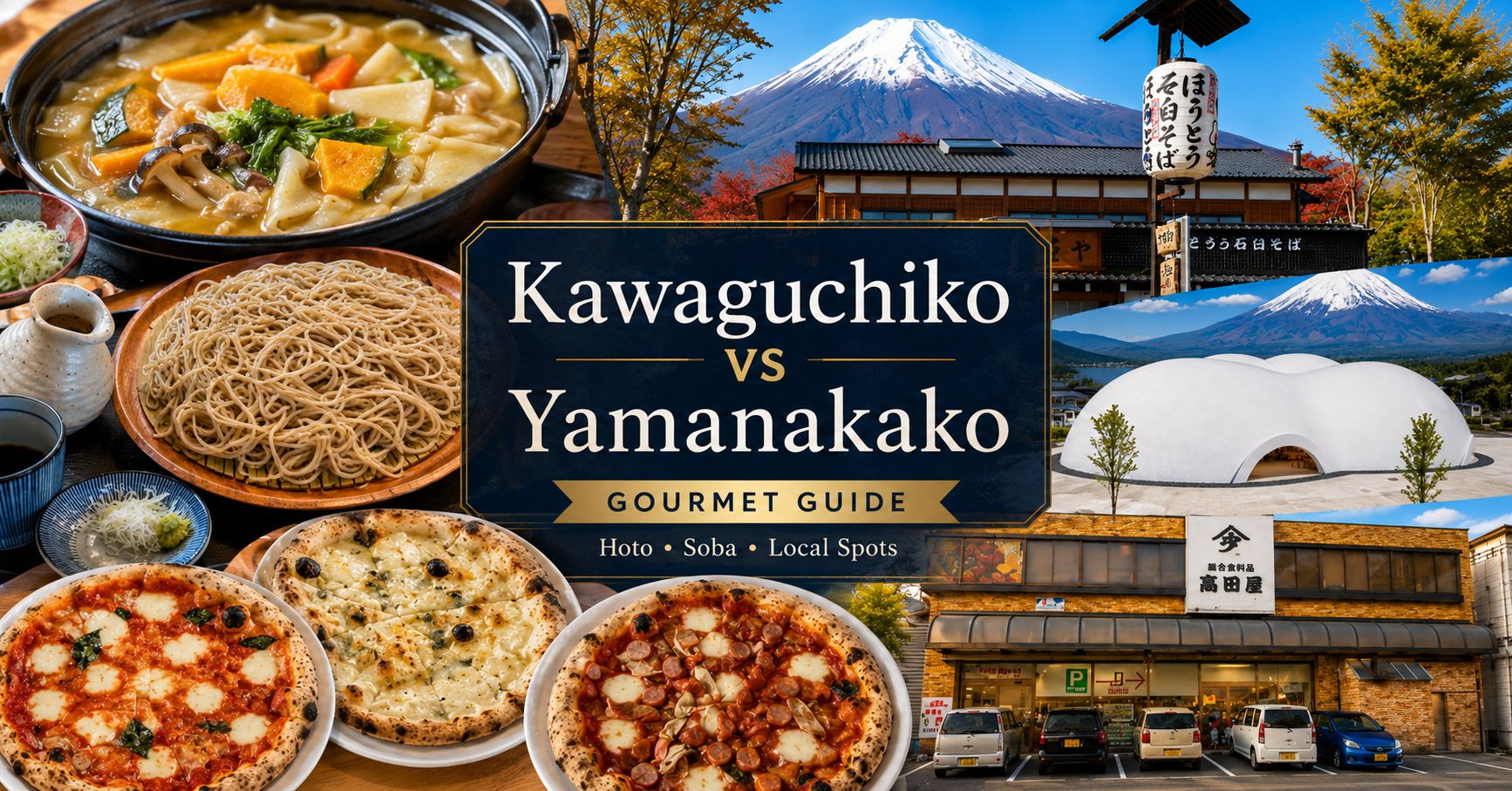
Kawaguchiko vs Yamanakako Food Guide: Best Hoto, Soba, Local Restaurants & Grocery Shopping
-
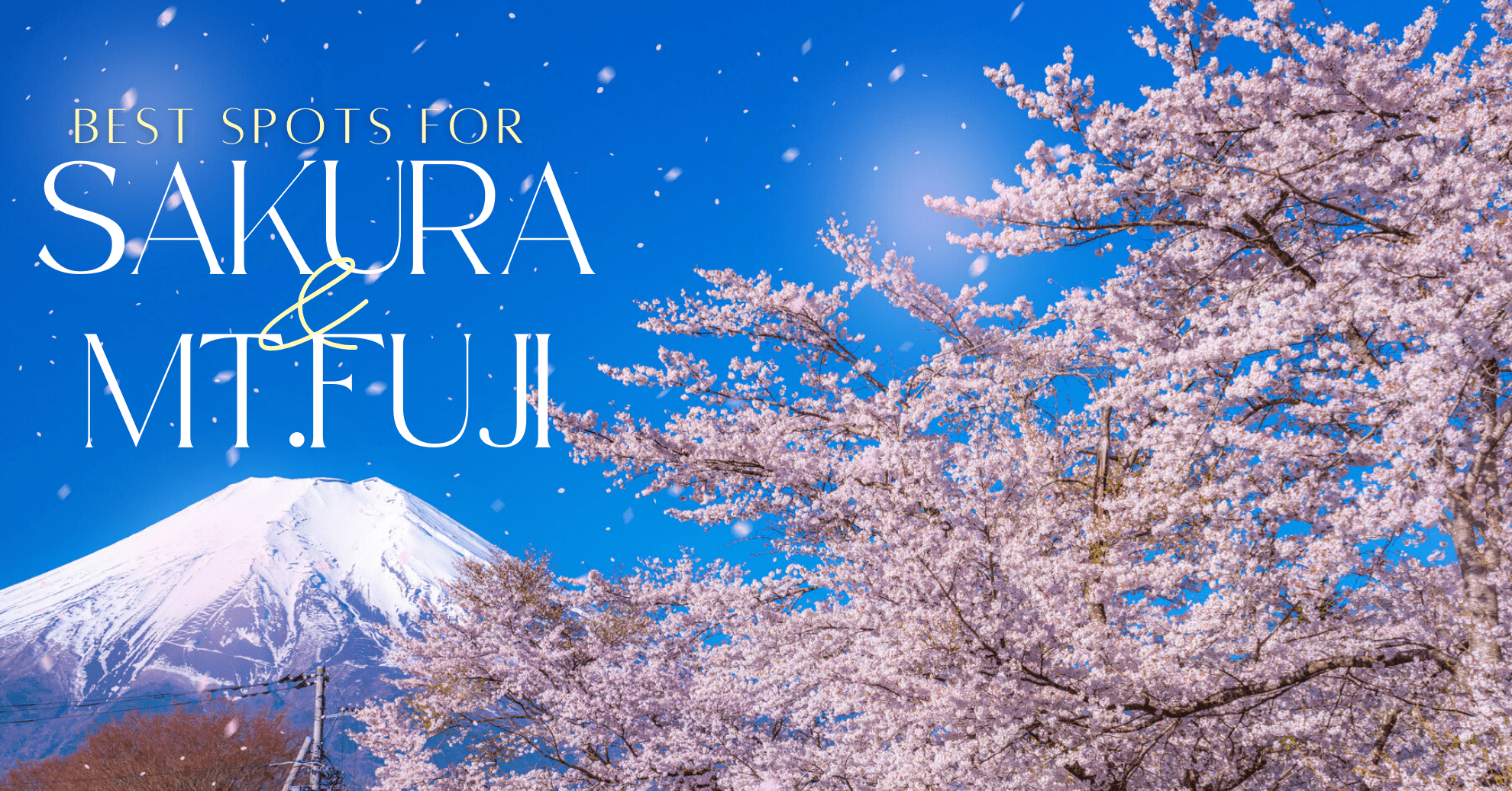
[2025 Edition] Mt. Fuji and Cherry Blossoms: 10 Best Scenic Spots Around Lake Kawaguchiko
-
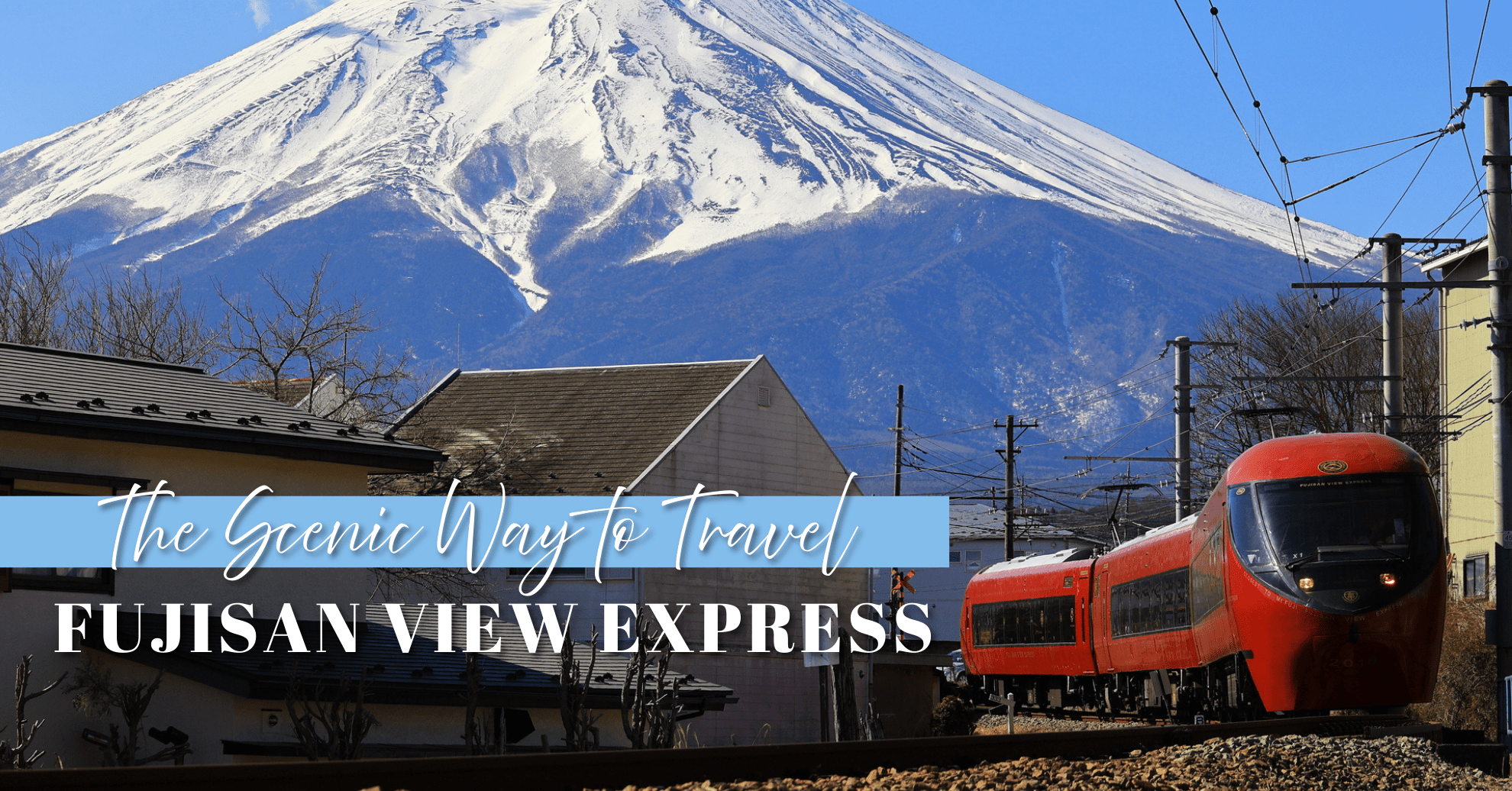
“Fujisan View Express” Complete Guide – Fares, Seating, and More
-
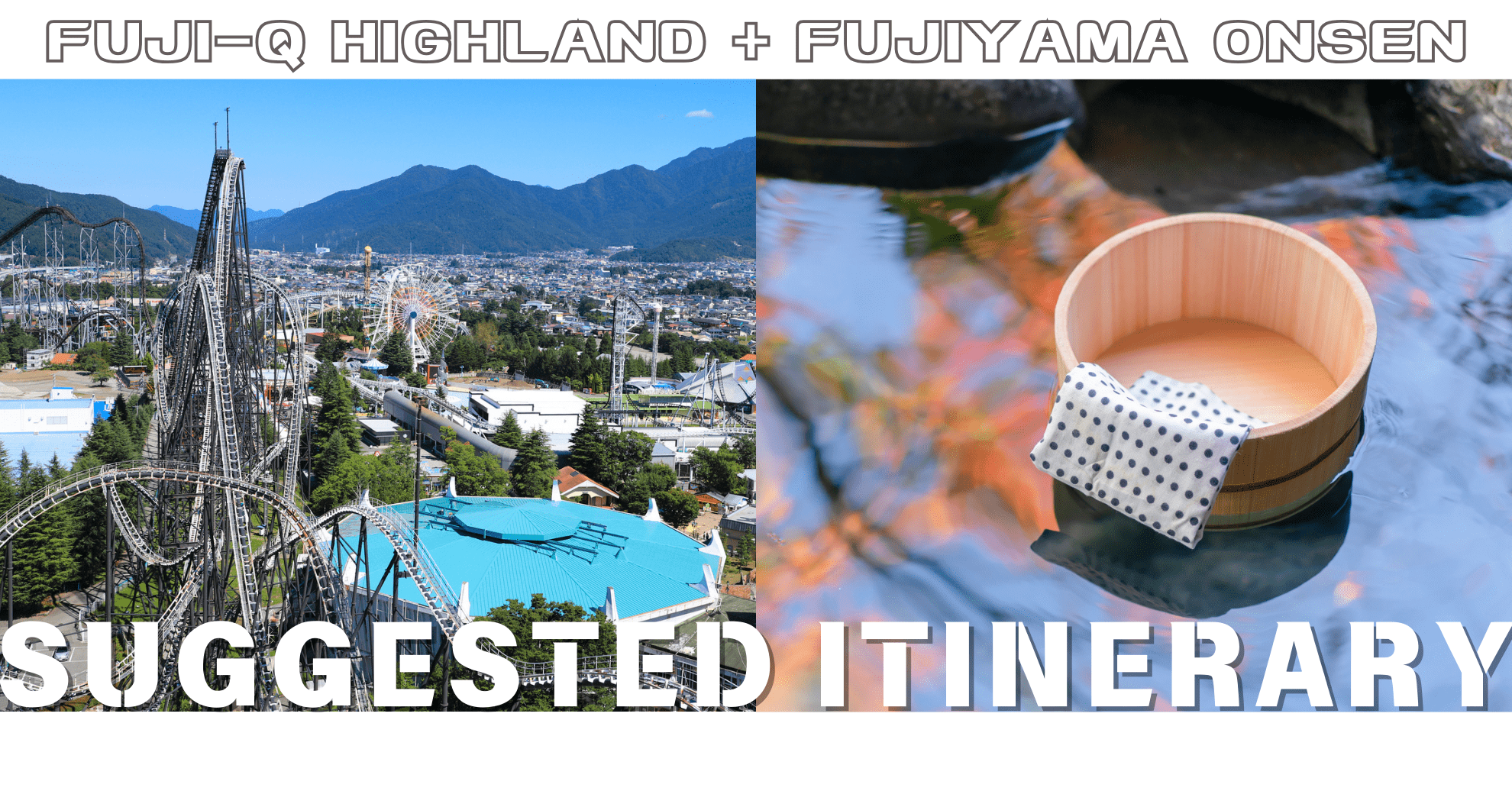
Thrills & Relaxation in One Day! A Perfect Day Trip to Fuji-Q Highland and Fujiyama Onsen