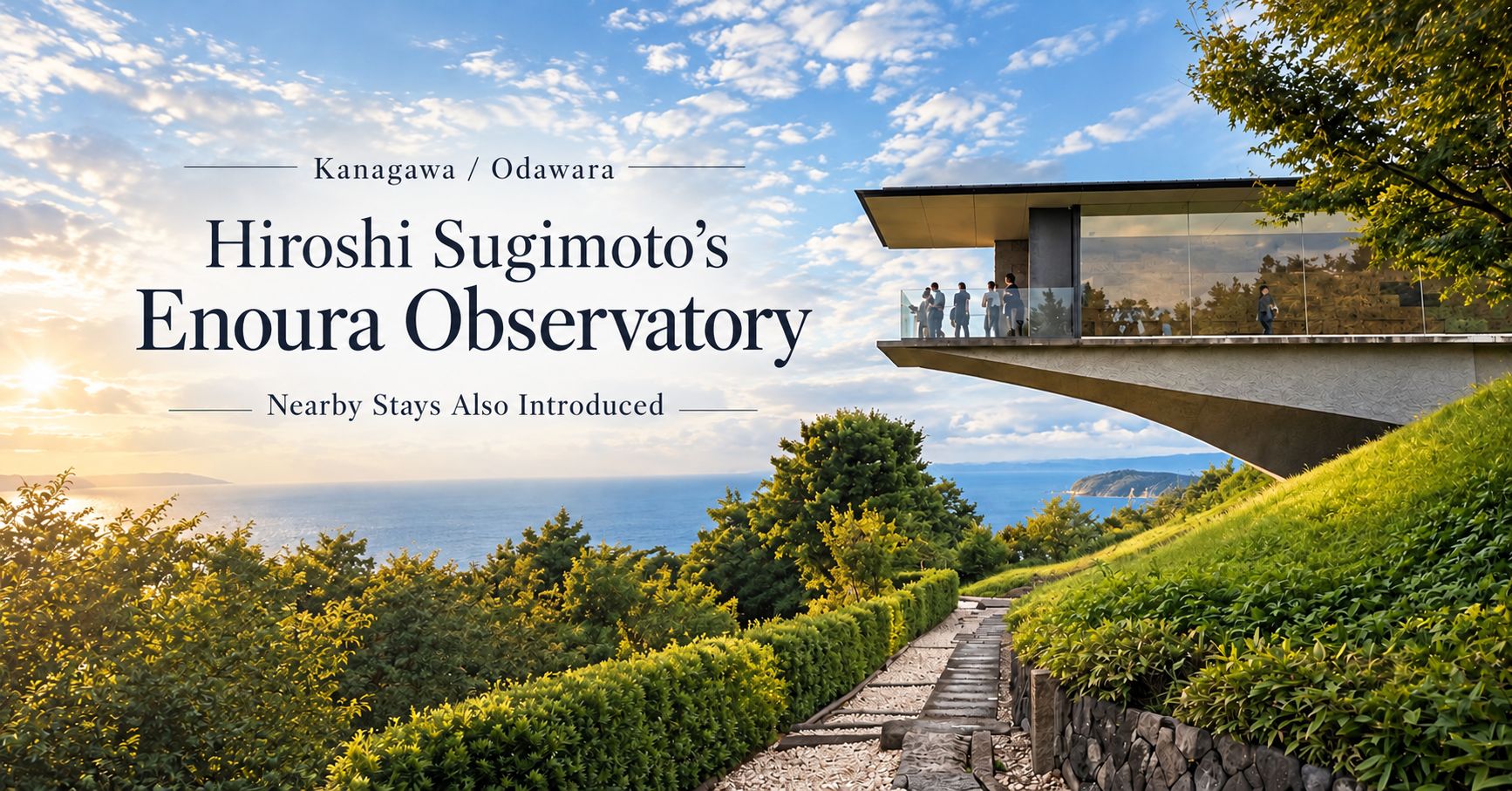
Odawara is about 30 minutes from Tokyo by shinkansen. On the coast south of the city stands an art site created by the contemporary artist Hiroshi Sugimoto,the Enoura Observatory. The buildings here were designed to face the sea and sky, and the light of the summer and winter solstices, and they draw visitors from Japan and abroad.
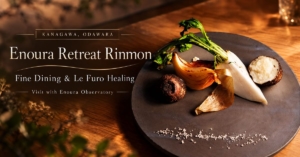
Worth pairing with a visit is a hotel built around the Le Furo bath and its kitchen,Enoura Retreat Rimon。
. A good number of guests come for the Japanese cooking, which uses the local sea and fields down to the last part.
This article covers what to see at Enoura Observatory and how visits work, along with Enoura Retreat Rimon as a place to stay nearby.
If you follow art and architecture, if food is the reason you travel, or if you want to add one quiet night to a trip through Hakone and Mt. Fuji, this should be useful.
Hiroshi Sugimoto and Enoura Observatory: An Art Site That Measures the Sea and the Sun
Who Hiroshi Sugimoto Is
Hiroshi Sugimoto is a contemporary artist born in Okachimachi, Tokyo, in 1948. He moved to the United States in 1970 and has been based in New York since 1974. Starting from photography, he has worked across sculpture, installation, theater, architecture, garden design, writing and even cooking.
A theme runs through all of it:the transience of history and existence. What is time, how do people perceive the world, where did consciousness come from — he pursues these questions from a vantage point that bridges Western and Eastern thinking.
One of his best-known works is the photographic series of horizons taken around the world,Seascapes.Enoura Observatoryshows works from this series in its Summer Solstice Light Worship 100-Meter Gallery.
His work is well regarded in Japan and abroad. He has received theHasselblad Awardand thePraemium Imperiale, and in 2017 he was named aPerson of Cultural Merit.
In 2008 he founded the architectural practiceNew Material Research Laboratory, and the following year, 2009, theOdawara Art Foundation. The foundation works to carry forward theater from the classical to the contemporary, to preserve and show historical art, and to support contemporary art. Enoura Observatory opened in autumn 2017 as the base for that work.Enoura Observatory
What Makes Enoura Observatory Worth Visiting
Sugimoto has said that the first art humans made was the work of confirming where they stood within the sky.
To return to that starting point, he designed the whole site aroundthe summer solstice, winter solstice, spring equinox and autumn equinoxandthe movement of the sun.
The buildings themselves also tracethe history of Japanese architecture. Building styles and traditional techniques from each period are reproduced here, using stone quarried nearby such as Nebukawa and Komatsu stone.
Among the garden stones are pieces unearthed from a nearby quarry site, originally cut for the walls of Edo Castle. Buildings, garden, sea and light come together as one landscape, and walking through it slowly is the point of a visit.
What to See at Enoura Observatory
Meigetsu Gate and the Waiting Hall: Sugimoto’s World Starts at the Entrance
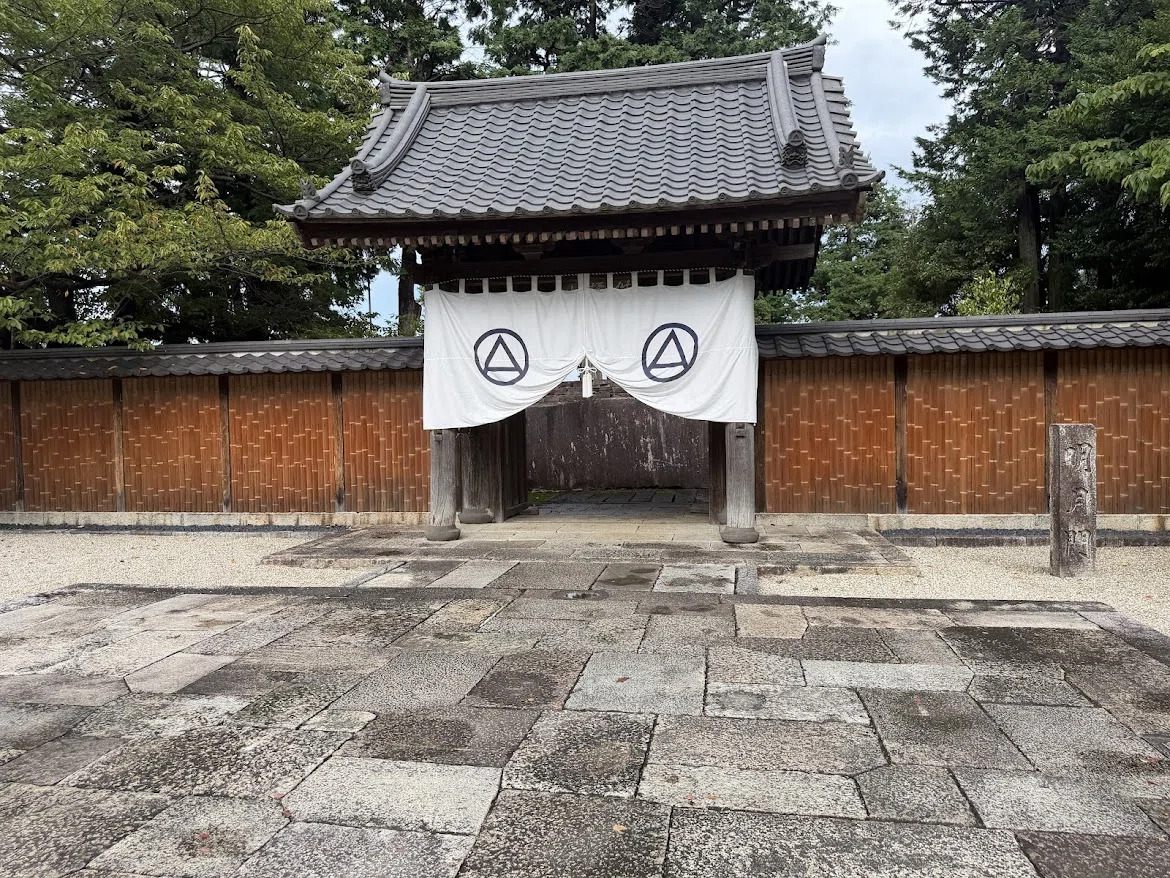
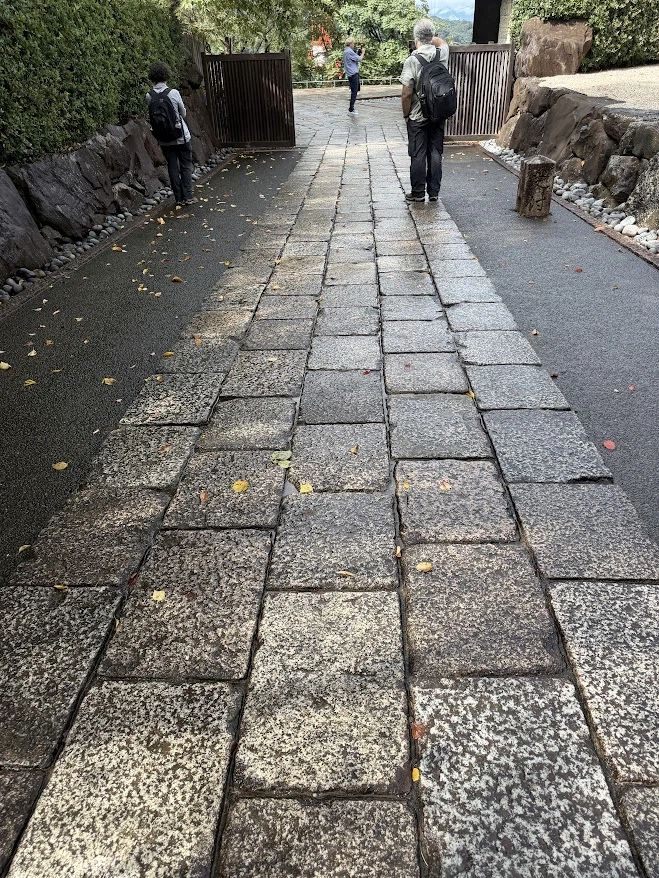
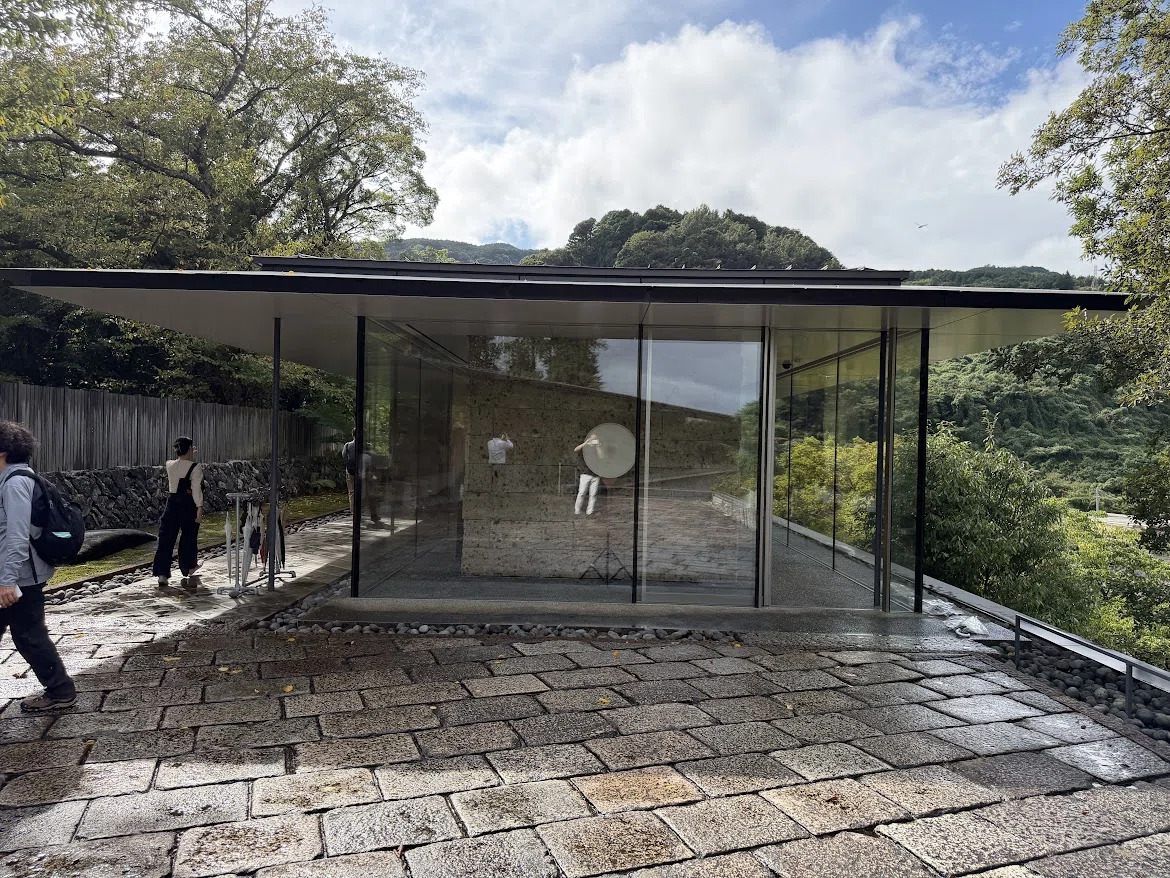
The Meigetsu Gate was built in the Muromachi period as the main gate of Meigetsuin temple in Kamakura. It was moved and rebuilt here, and now serves as the entrance for visitors.
The paving stones along the path were once used by the Kyoto city tram, so earlier time is literally built into the ground you walk on.
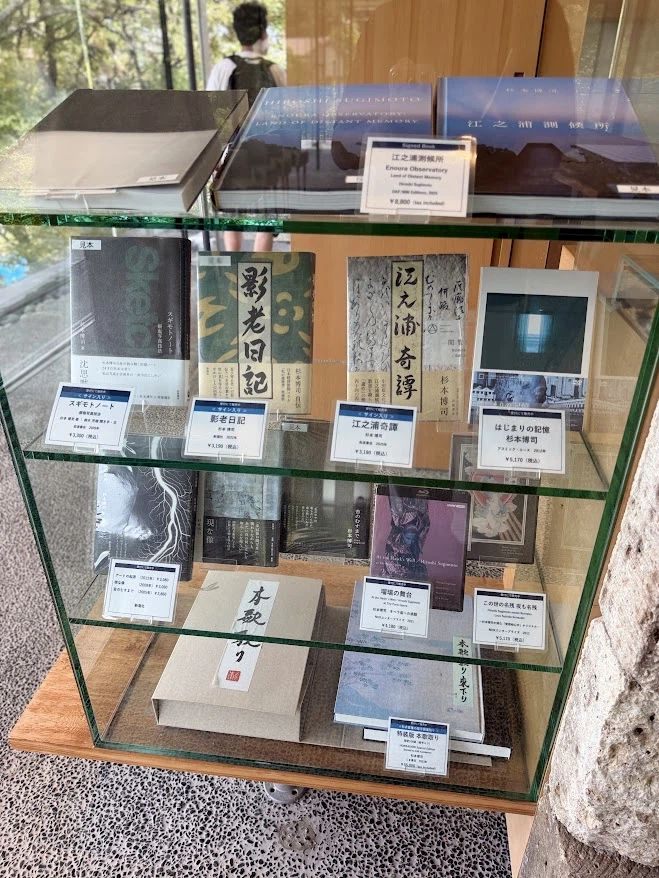
The waiting hall uses large panes of glass to bring the outside in, so the line between building and landscape blurs. Inside, books on Enoura Observatory and on Sugimoto are set out.
Summer Solstice Light Worship 100-Meter Gallery: Where the Solstice Sunrise Runs Straight Through
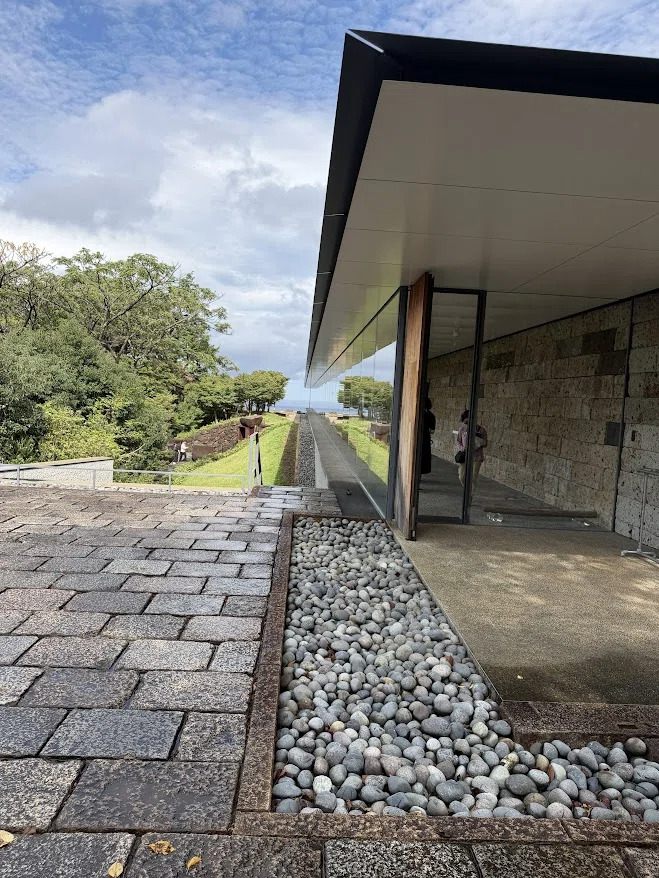
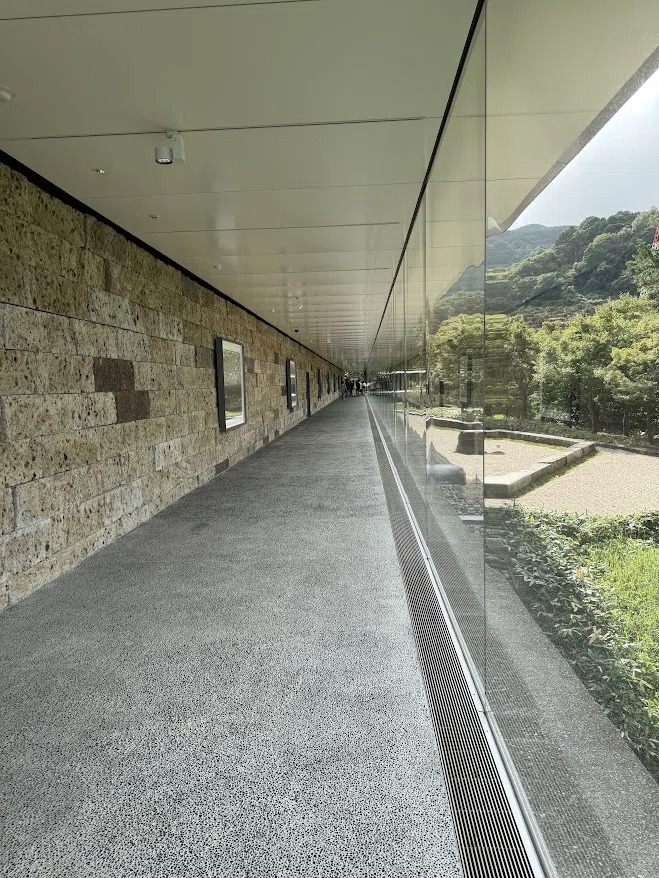
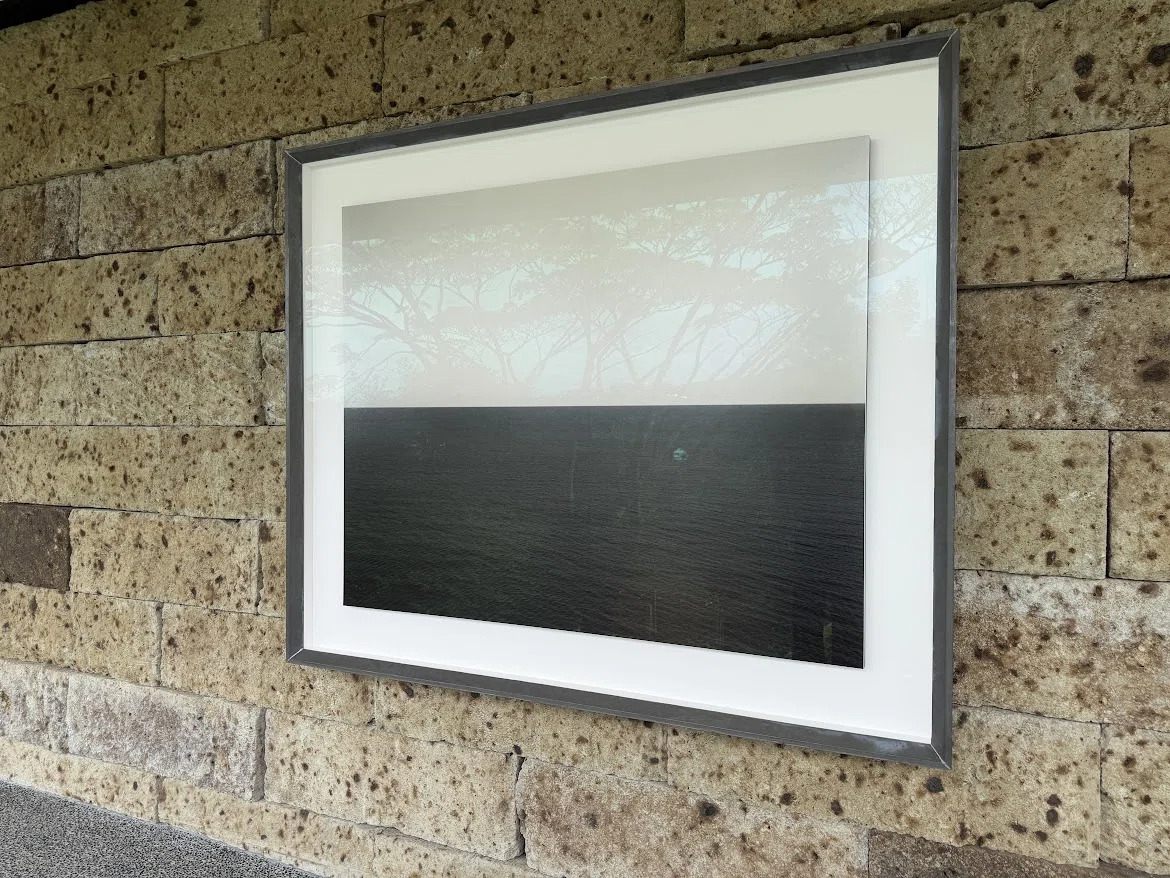
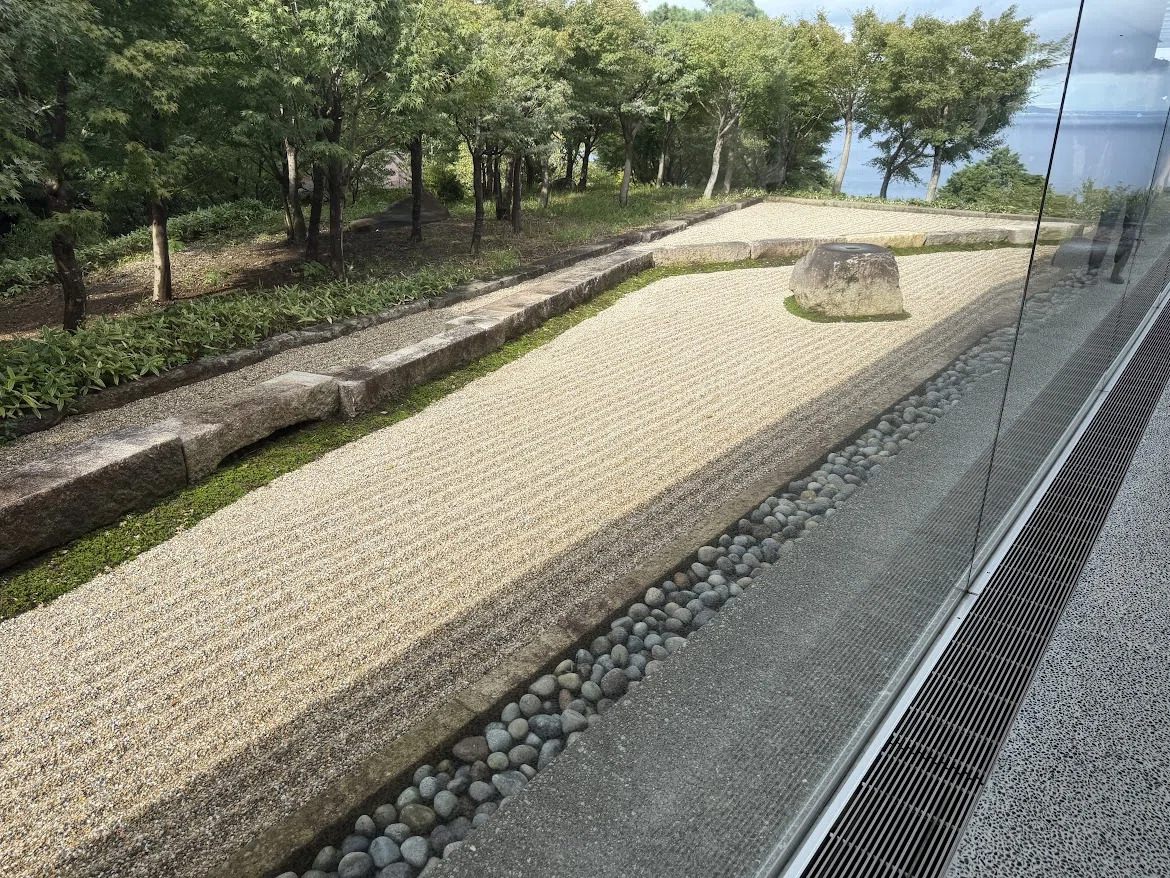
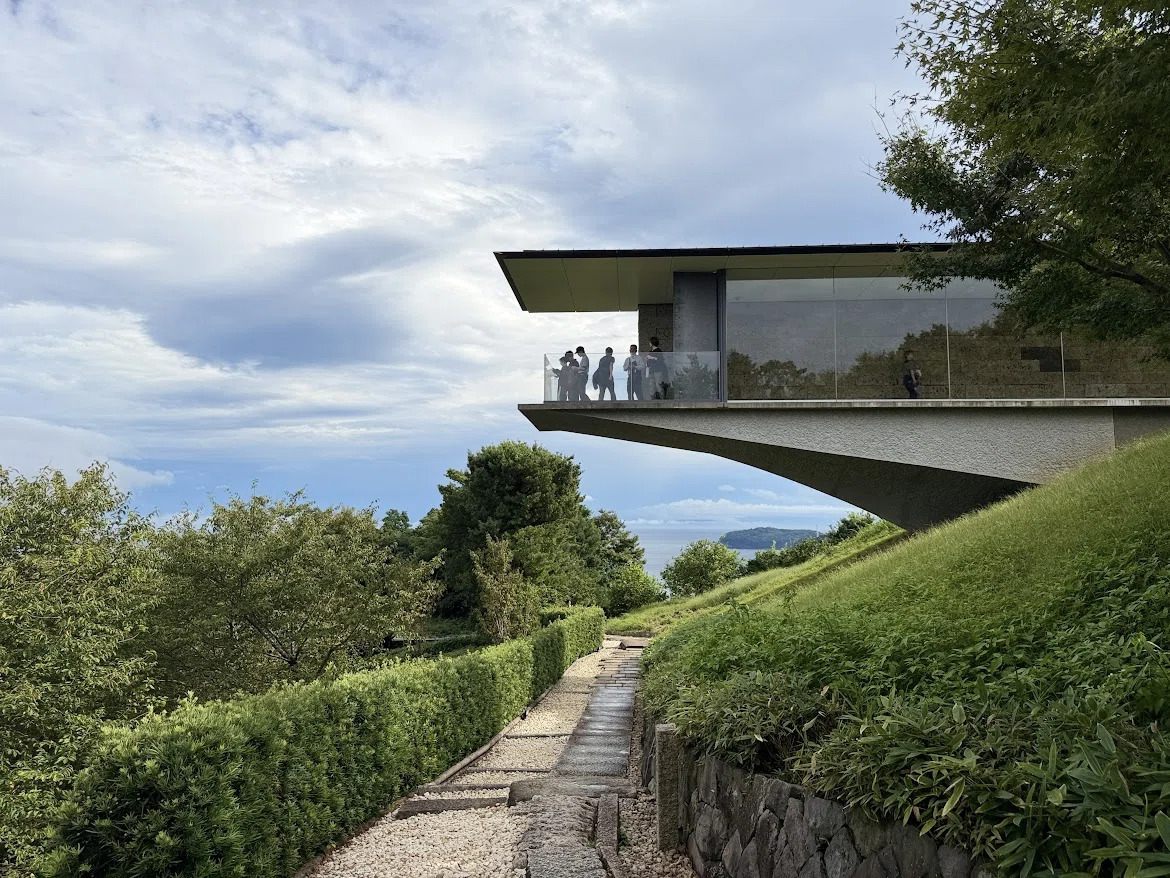
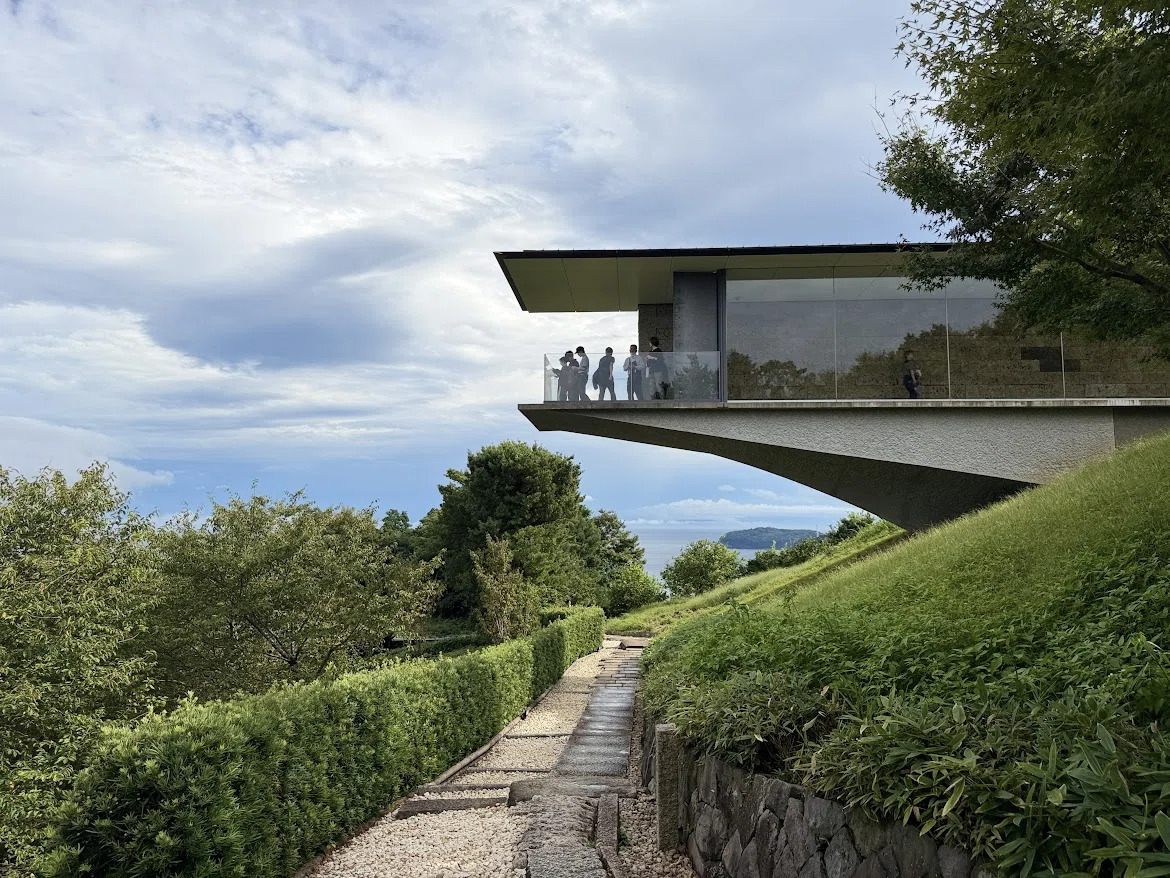
The 100-meter gallery is the building that defines the site.It is oriented so that on the morning of the summer solstice, light from the sun rising over Sagami Bay runs straight down its length.
One long wall faces the sea in glass. Standing at the far end of that narrow space, you get the sense of floating above the water.
Winter Solstice Light Worship Tunnel: Built for the Solstice Light
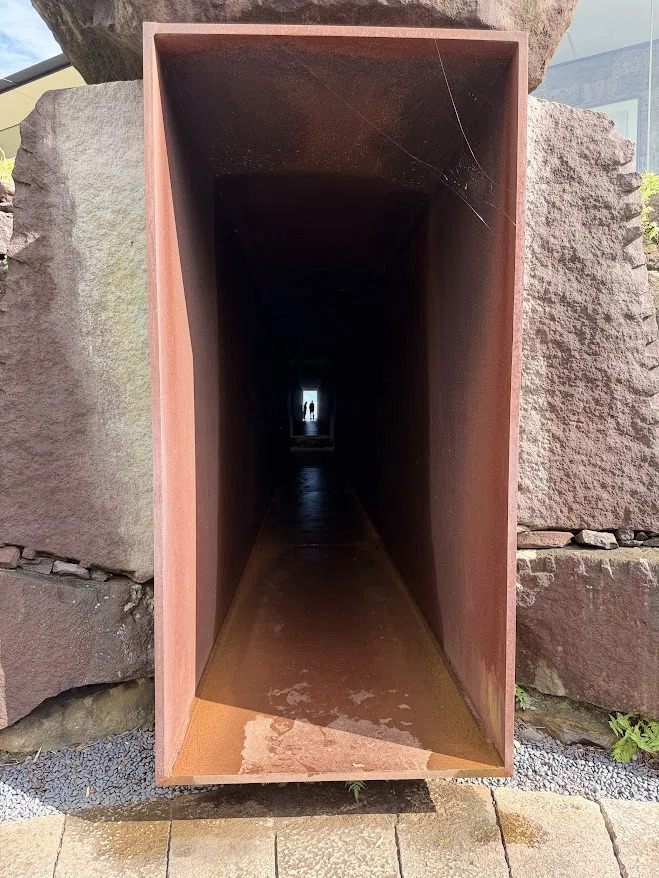
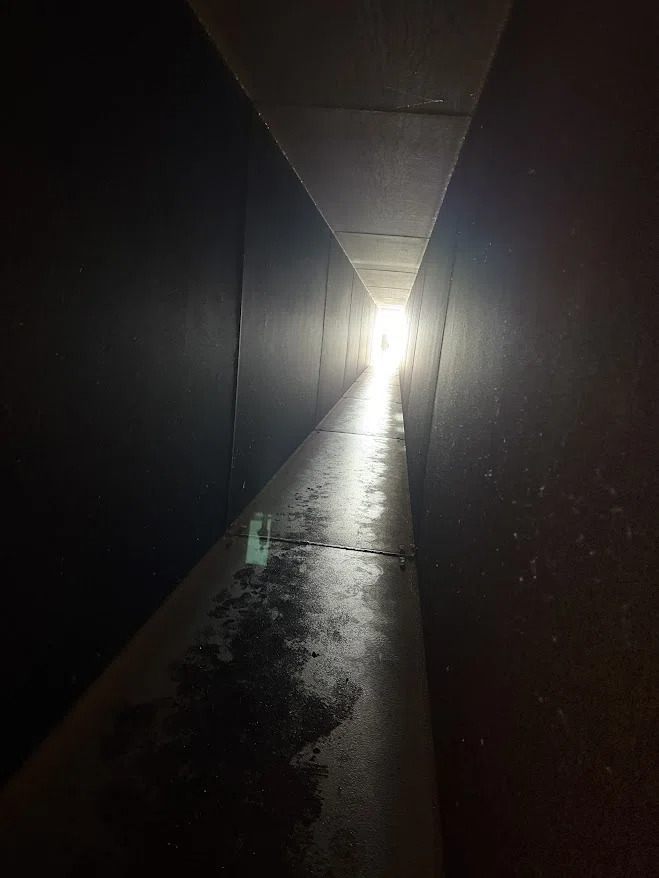
Running beneath the gallery is a steel tunnel about 70 meters long, theWinter Solstice Light Worship Tunnel. It is built so thatthe sunrise on the winter solstice passes down its length. Step inside and it goes dark at once, with the light at the far opening taking on a strange weight.
The Light Well in the Winter Solstice Tunnel: Changing With the Light From Above
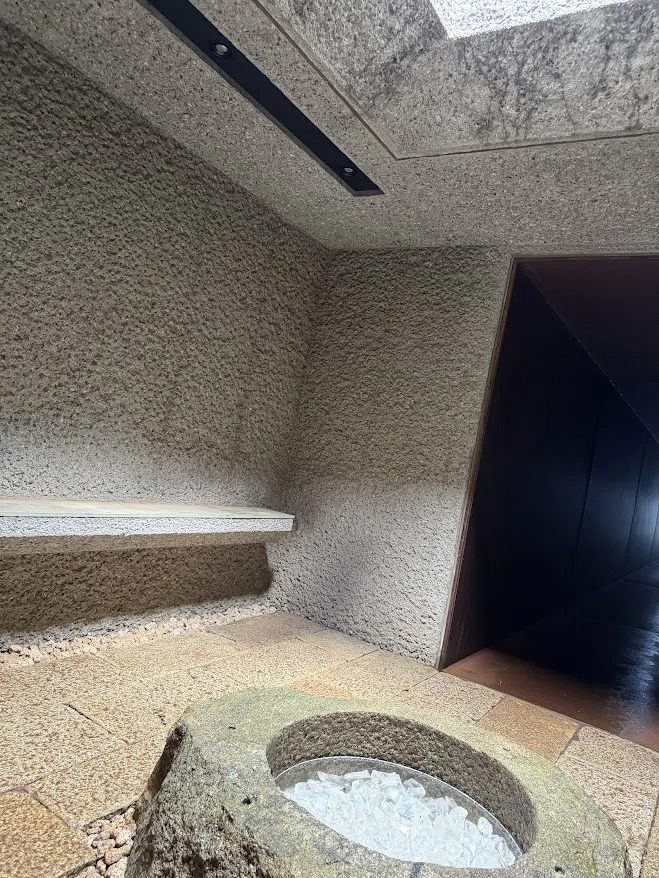
At the end of the tunnel stands a stage made of optical glass, the same material used in camera lenses — theOptical Glass Stage.
Optical glass is set at the bottom of the well, catching light from above so that its look changes through the day. You do not need to come on the solstice itself; the season and the hour change what you see, which makes repeat visits worthwhile.
The Stone Stage and the Sanri-zuka Mound: Better With the Background
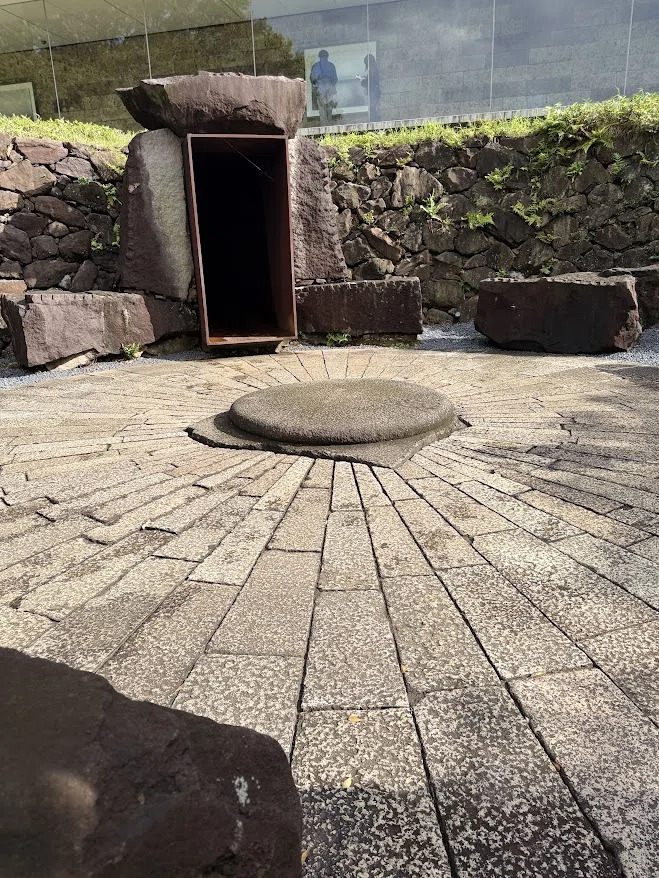
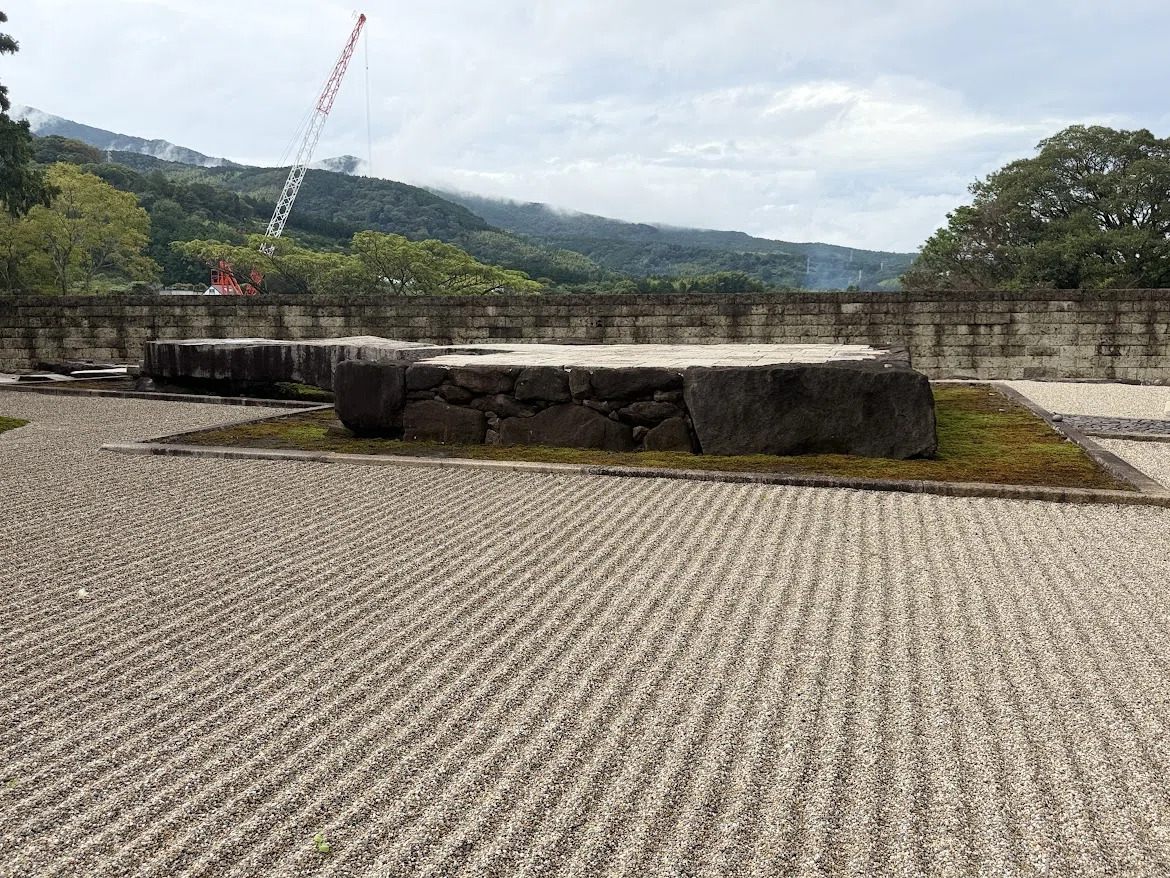
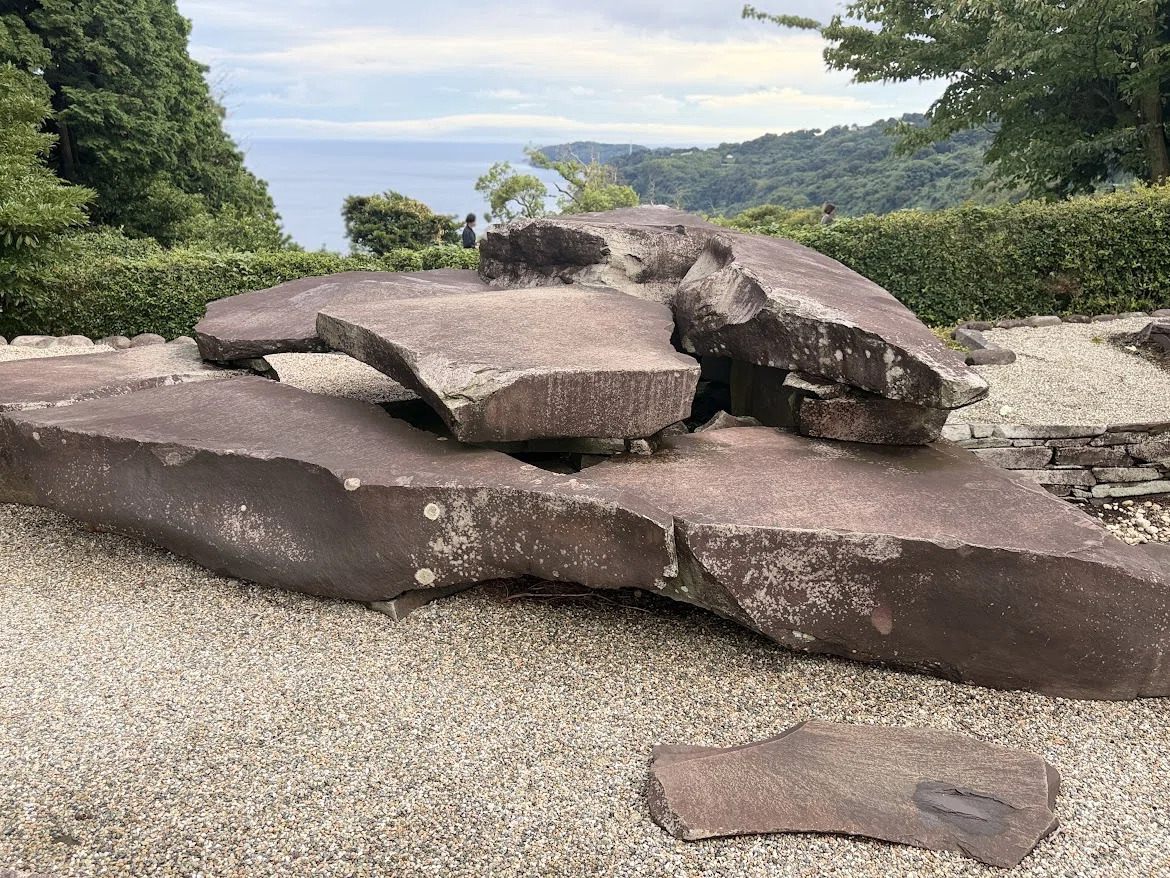
Further along is a stone stage planned to the dimensions of a noh stage, theStone Stage. Stone here is not simply building material: pieces once used in old temples and buildings have been given another role and another life. That sense runs through the whole site.
Nearby stands a triangular structure facing the sea, its apex pointing toward the sun at noon on the equinoxes — the meridian — known as theSanri-zuka Mound.
Uchoten Tea House: Plain Beauty
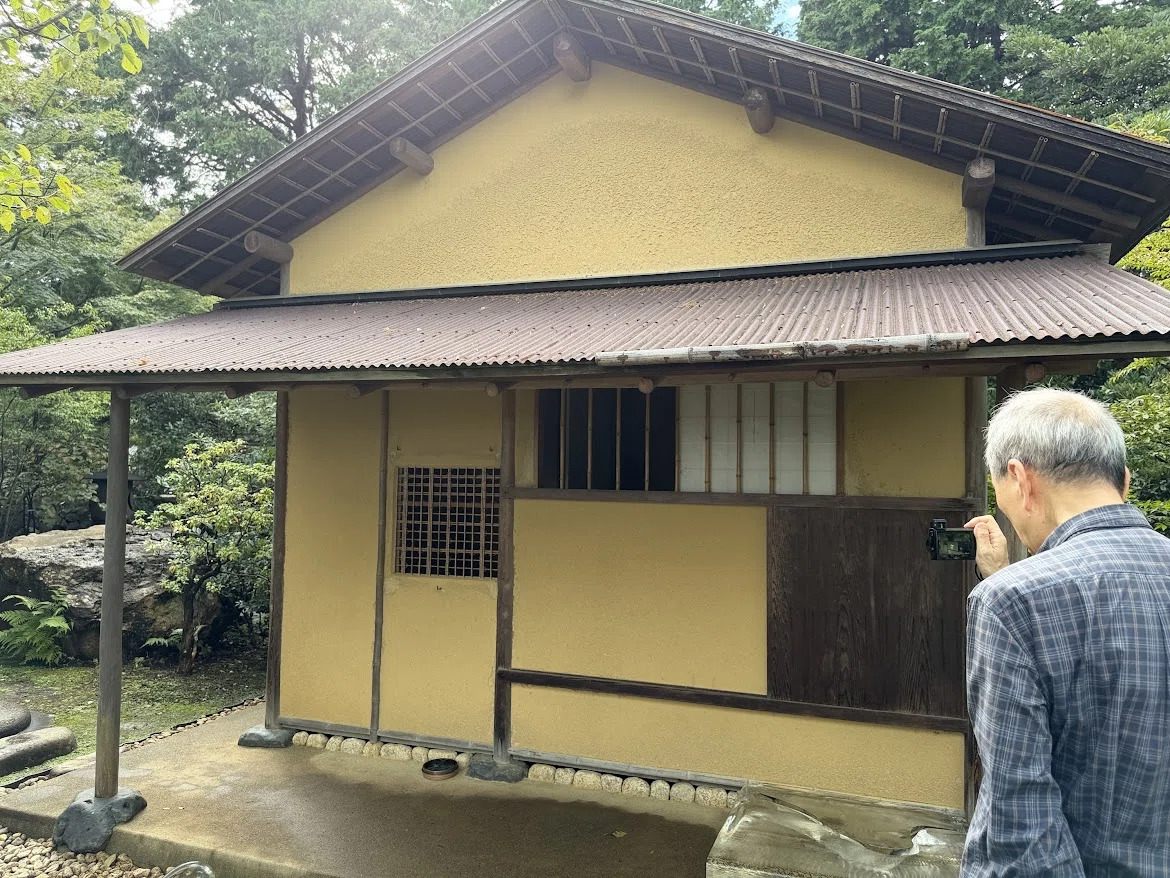
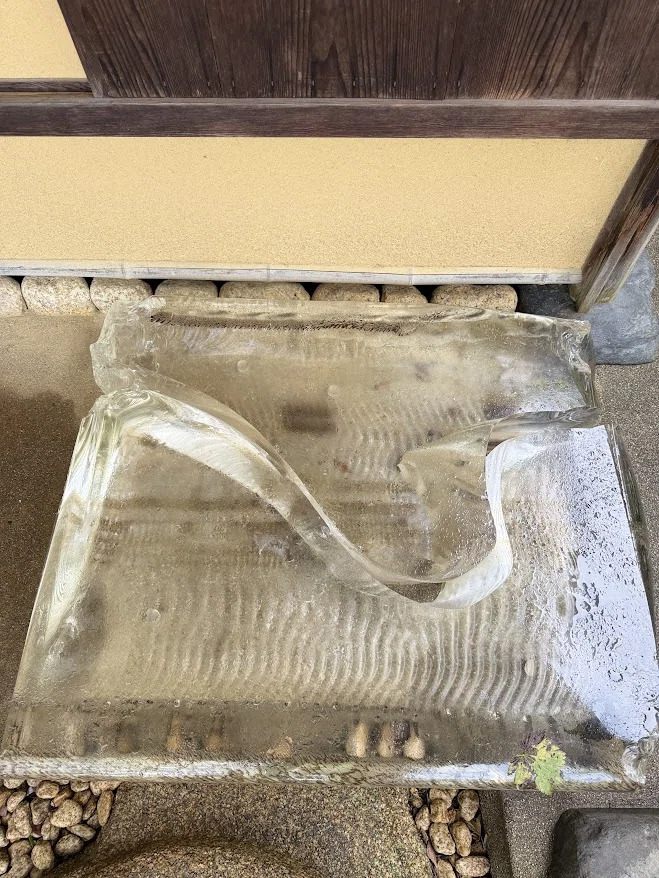
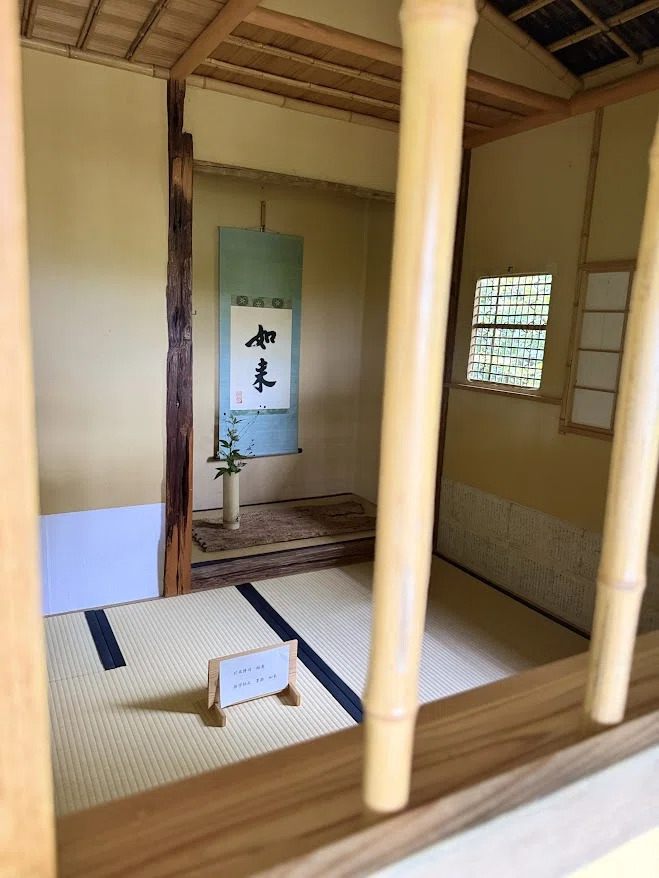
Walk on and you reach a tea house with a deliberately plain beauty,Uchoten. It was reconstructed with reference toTaian, Sen no Rikyu’s tea house and a National Treasure.
The walls of Uchoten are finished so that the materials read as themselves. Coming on a tea house like this right after the modern 100-meter gallery is part of what makes the site interesting.
Stone Pagodas, Lanterns and Torii: Stonework That Settles Into the Landscape
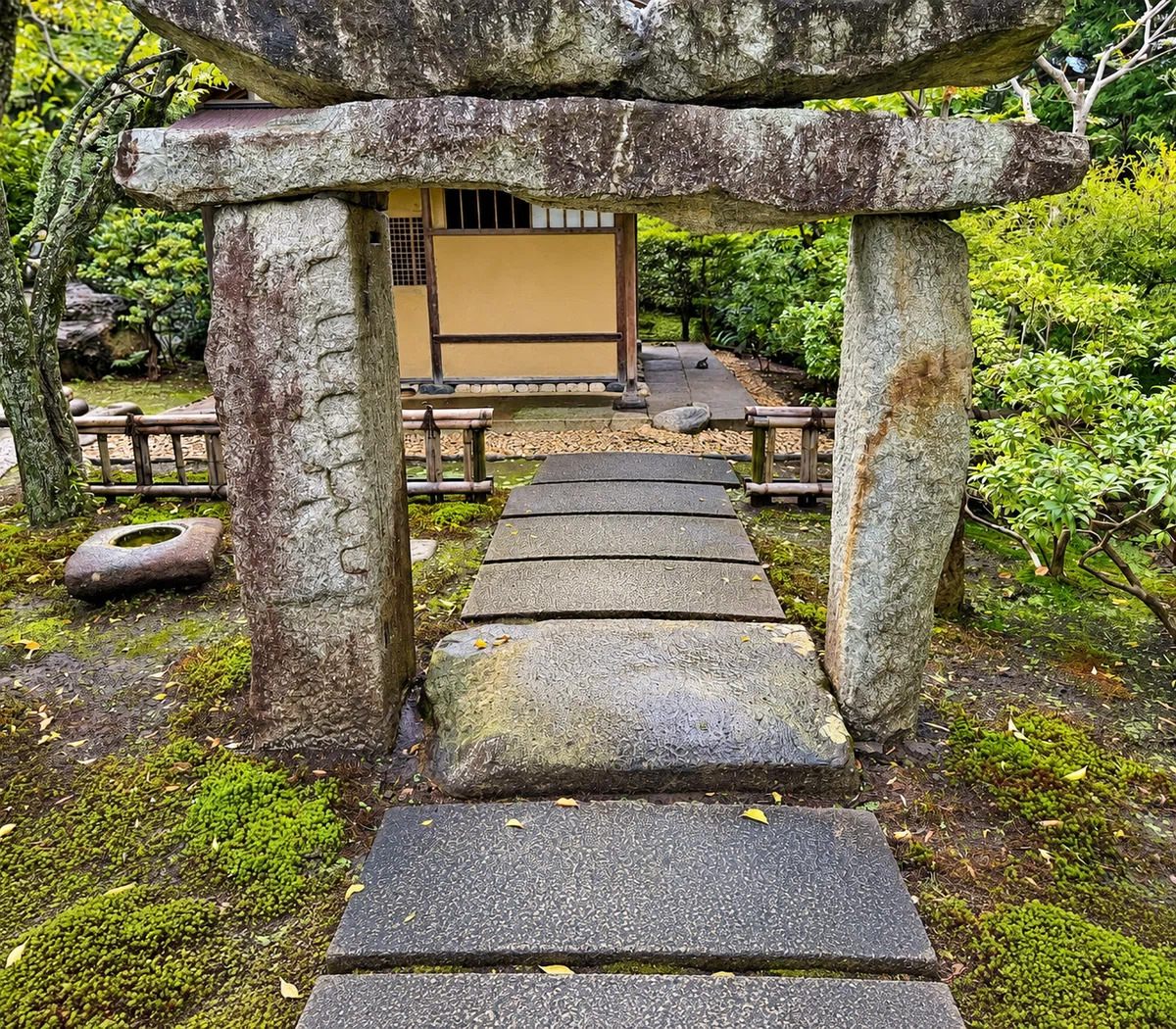
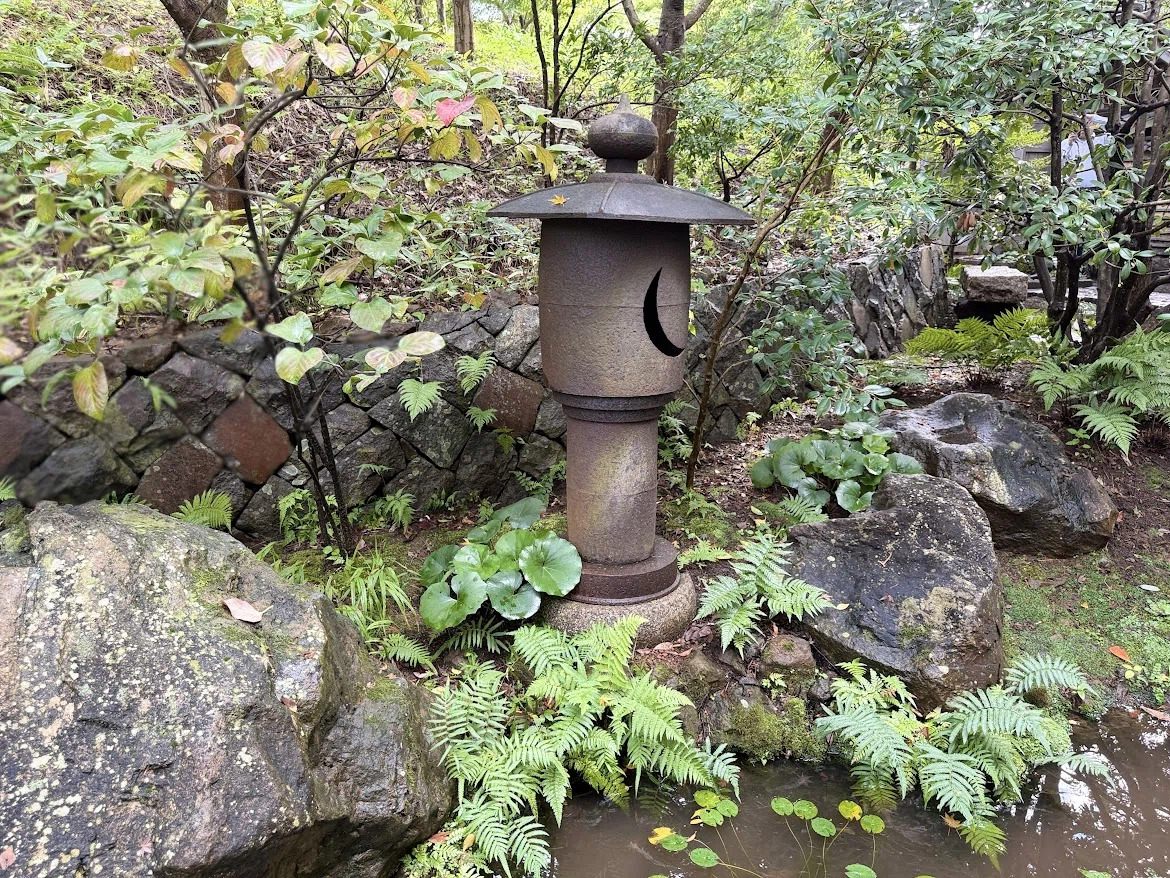
The stone pagodas, lanterns and torii gates near Uchoten all reward a closer look.
An old stone lantern set in the garden has settled into the scene along with the moss and the plants around it. The stone torii is built from old material and stands at a height people can walk through.
A 400-Year-Old Kasuga Cedar
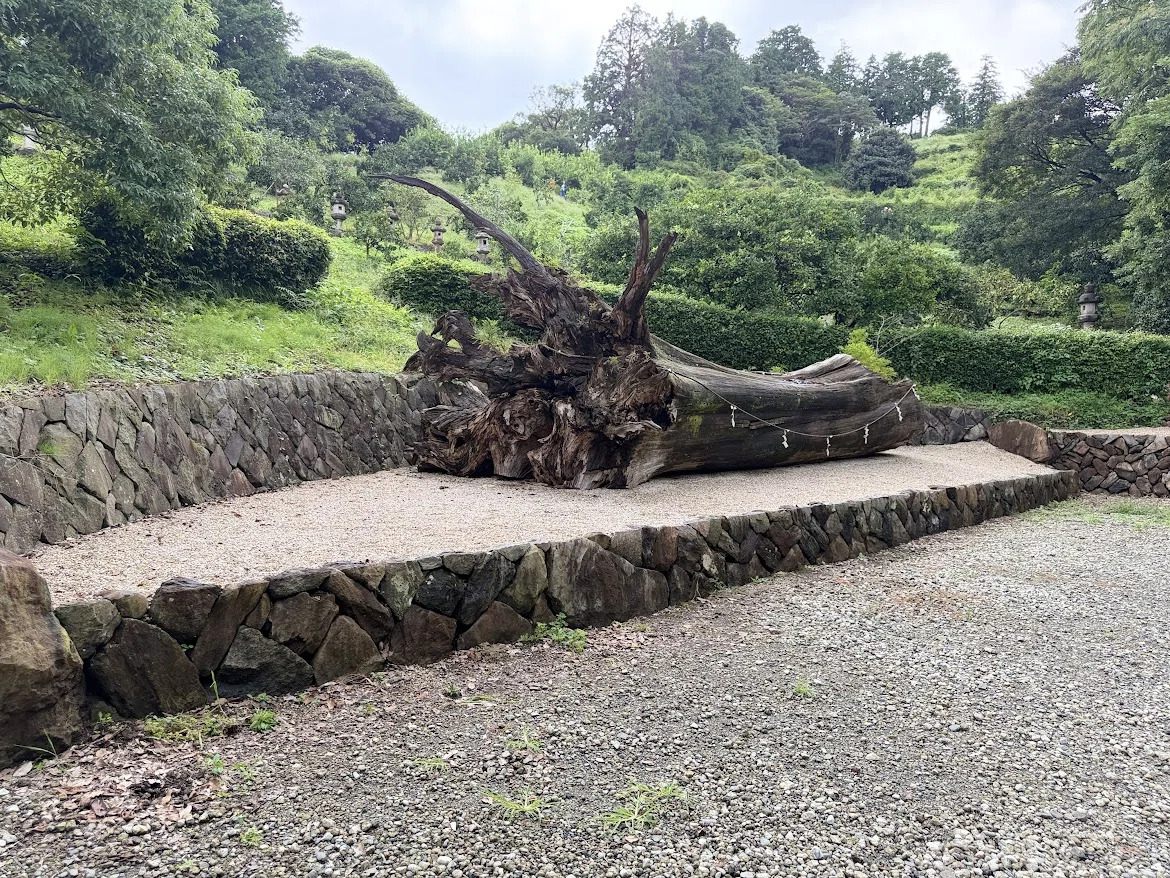
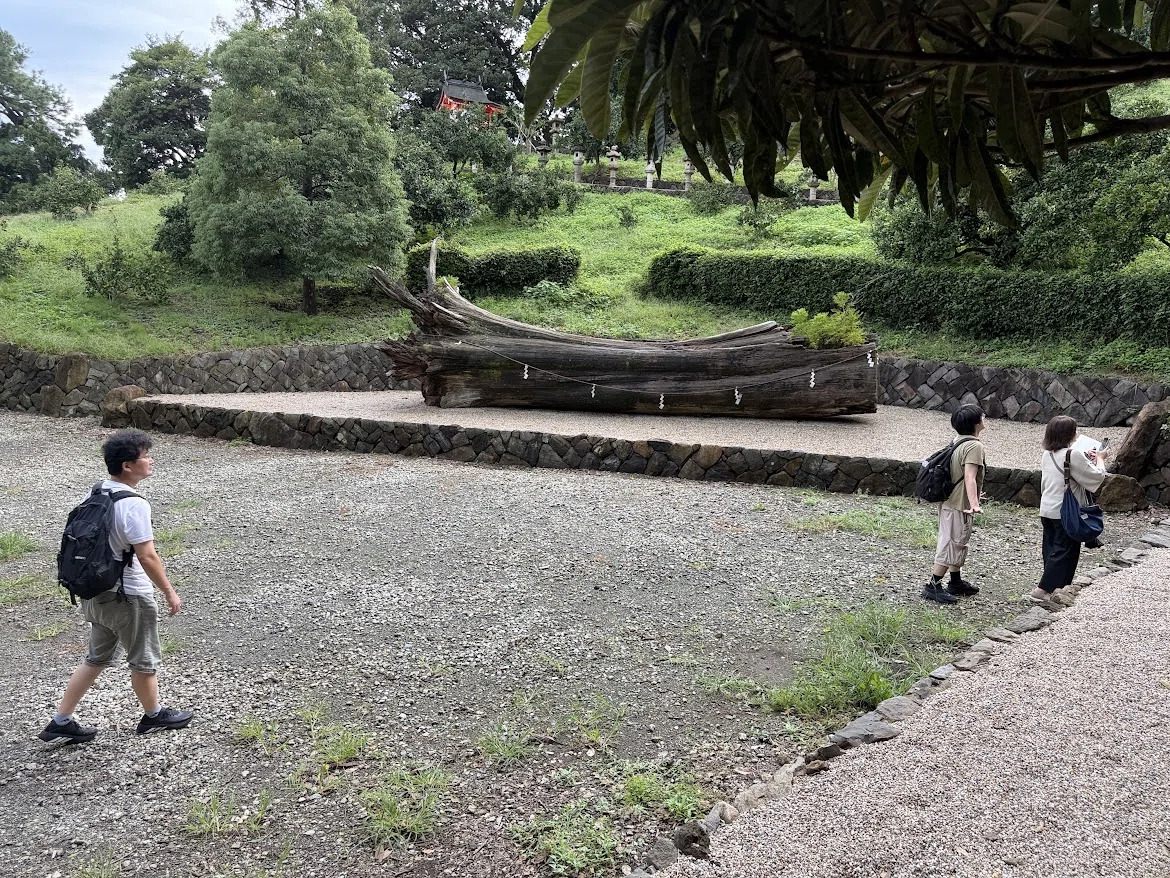
One of the most striking sights is the400-year-old Kasuga cedar. It stood in the sacred precinct of Kasuga Taisha in Nara, fell in a typhoon in 2018, and was moved here in 2024.
Stand next to it and the scale is hard to take in.
Surface of Revolution with Constant Negative Curvature: A Mathematical Model in the Bamboo
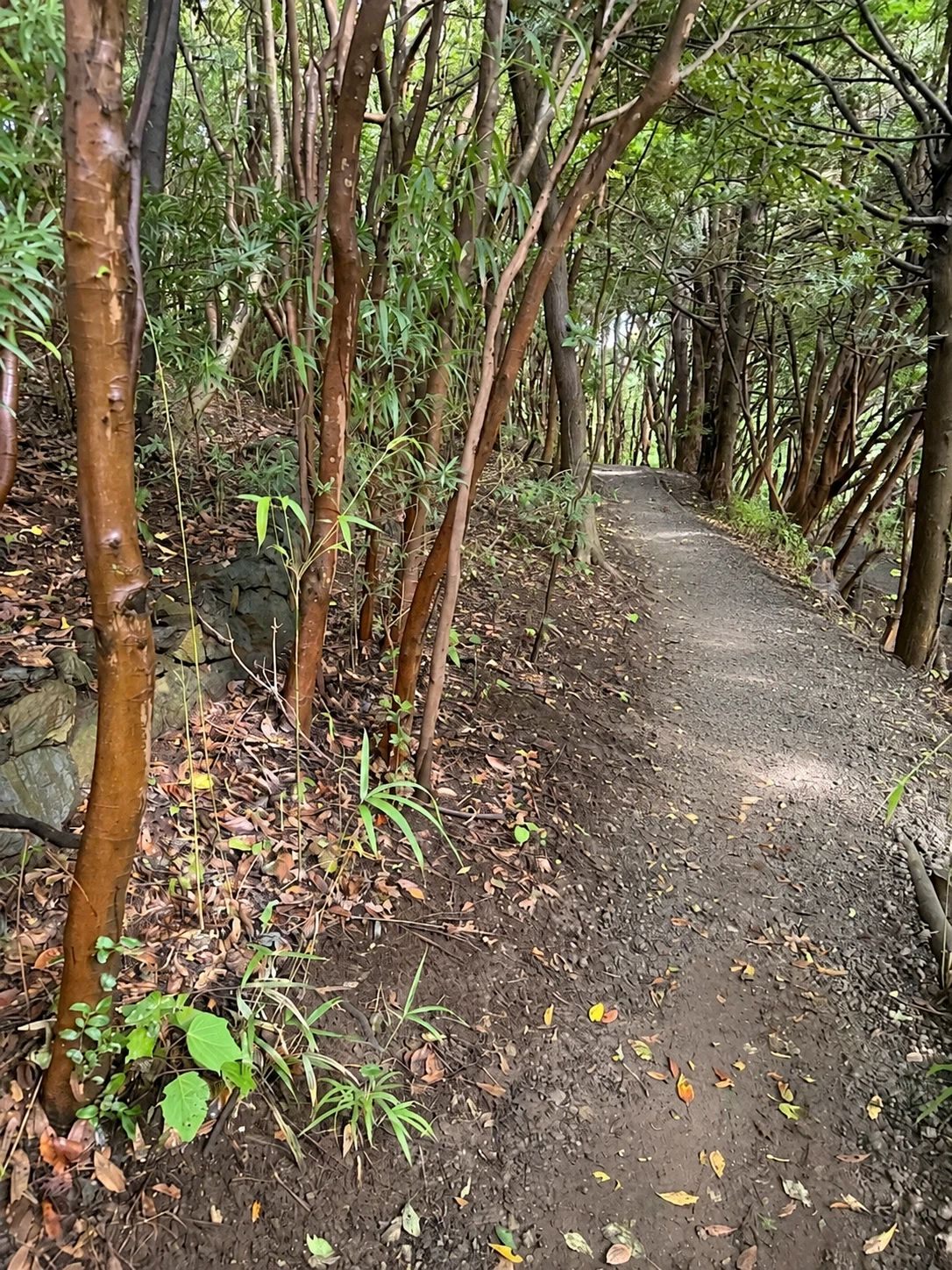
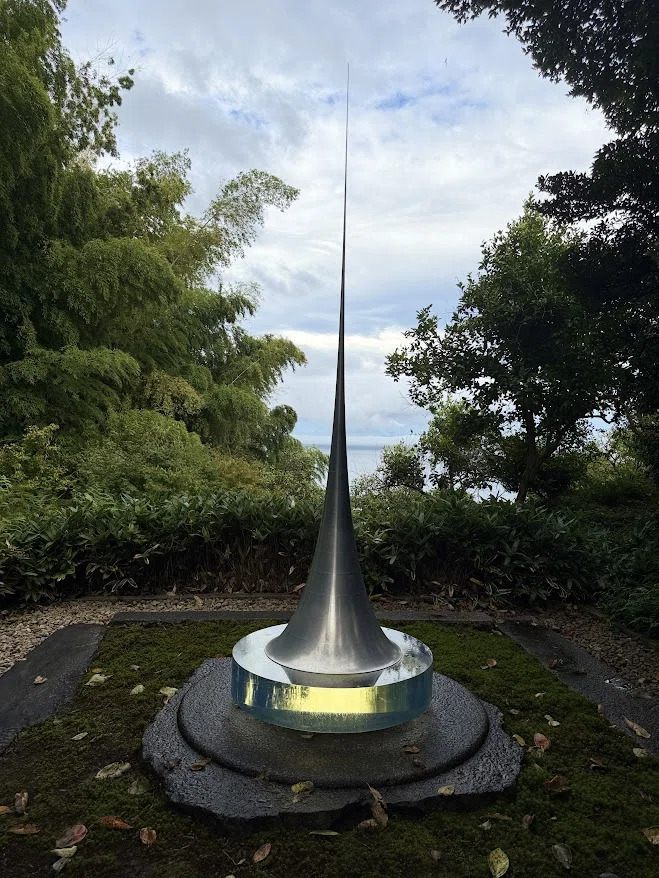
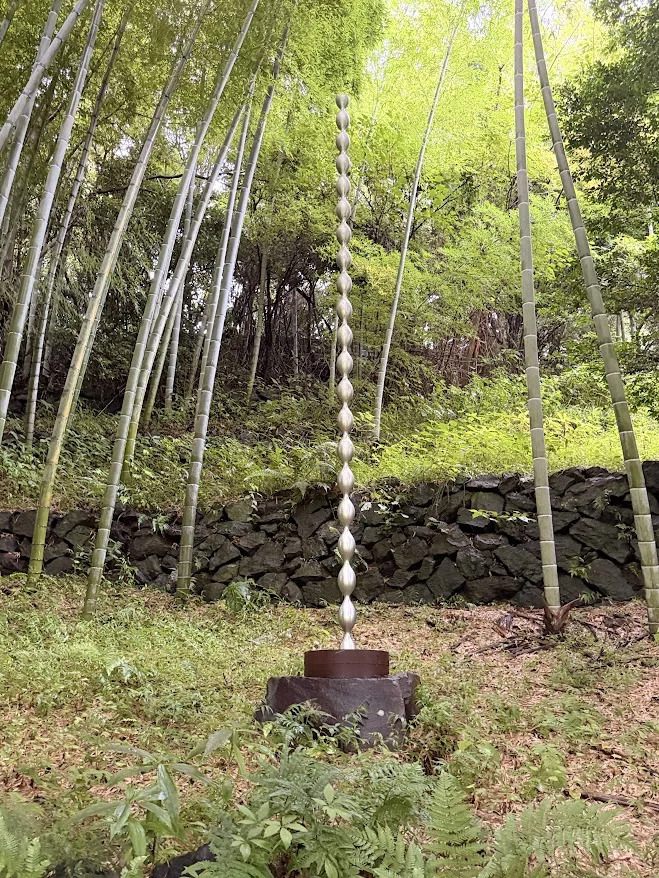
From the cedar the path runs into a bamboo grove, which is also part of the museum grounds. In the middle of it, a metal mathematical model appears.
Mathematical Model 0010: Surface of Revolution with Constant Negative Curvatureis Sugimoto’s rendering of a hyperbolic function as a physical object. Elsewhere on the site there is alsoMathematical Model 0004: Onduloid.
Fossil Display: Back to the Origins of Life
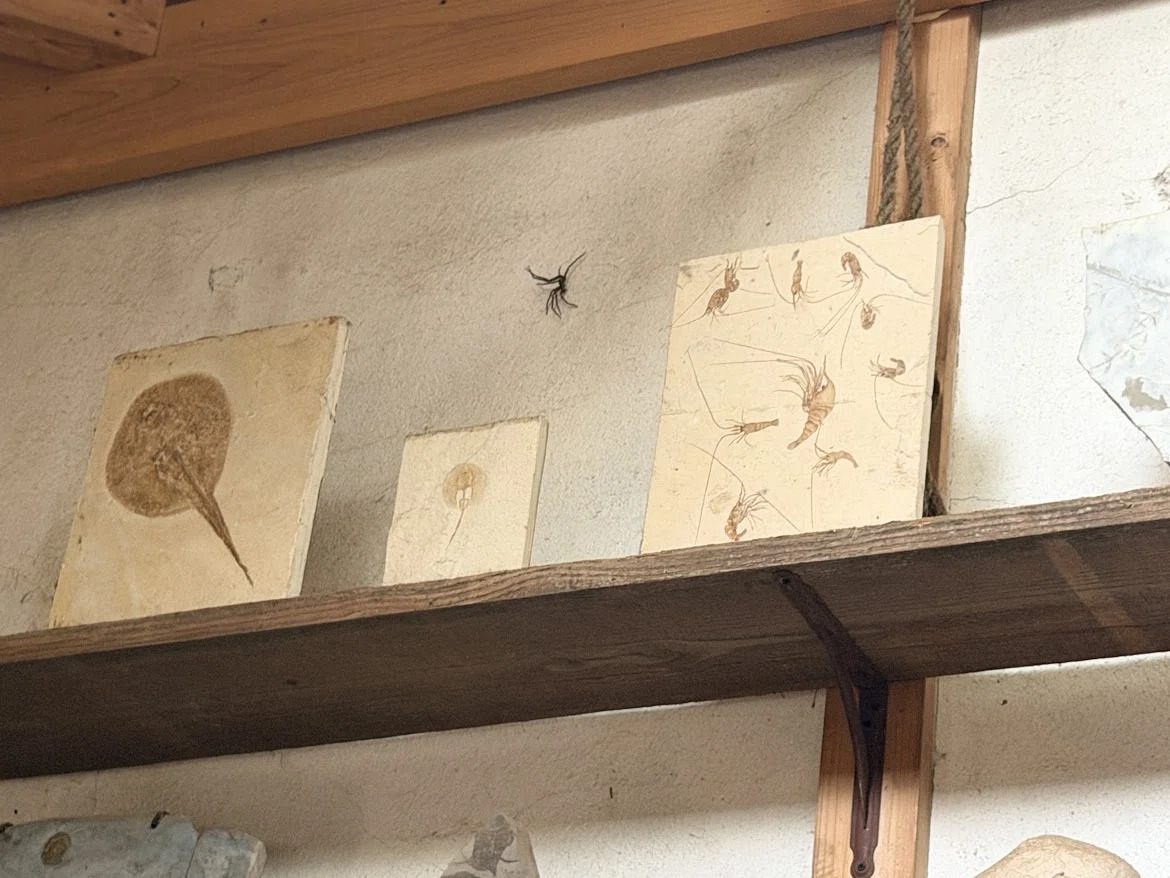
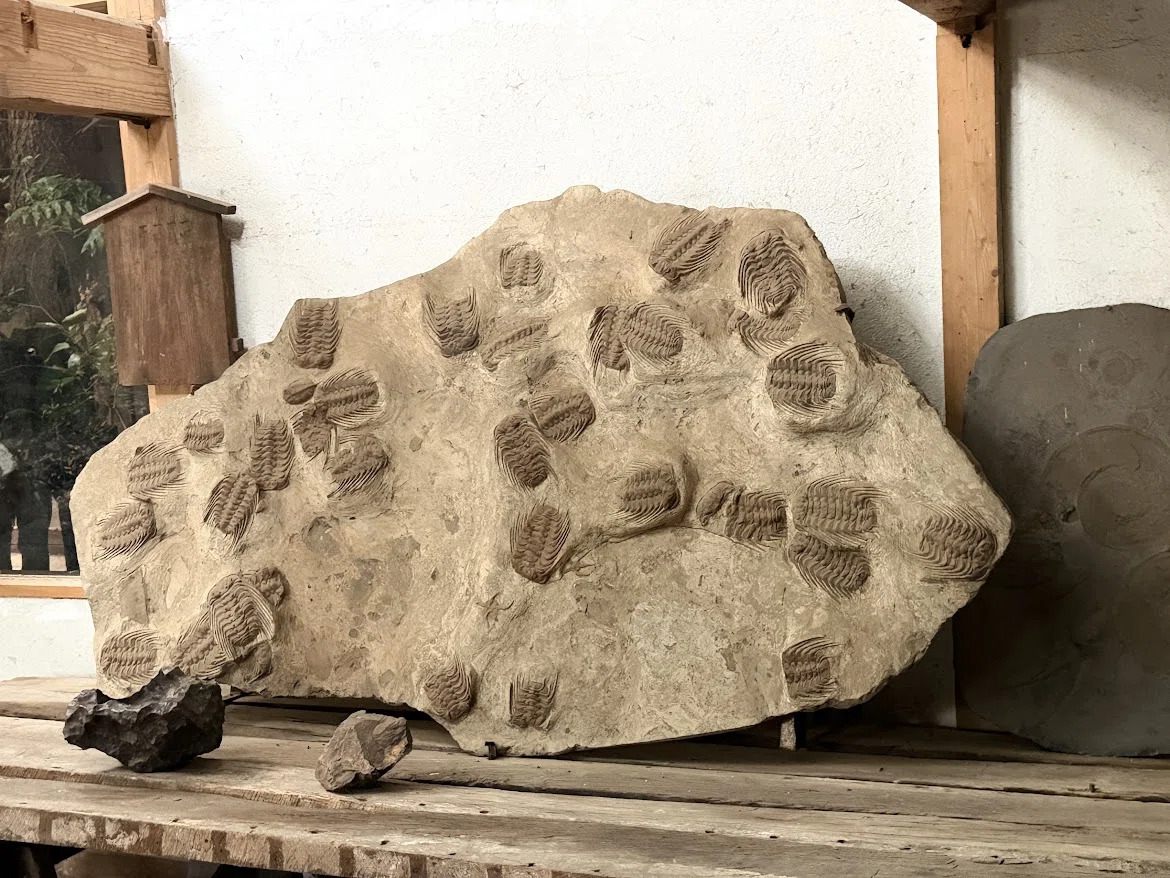
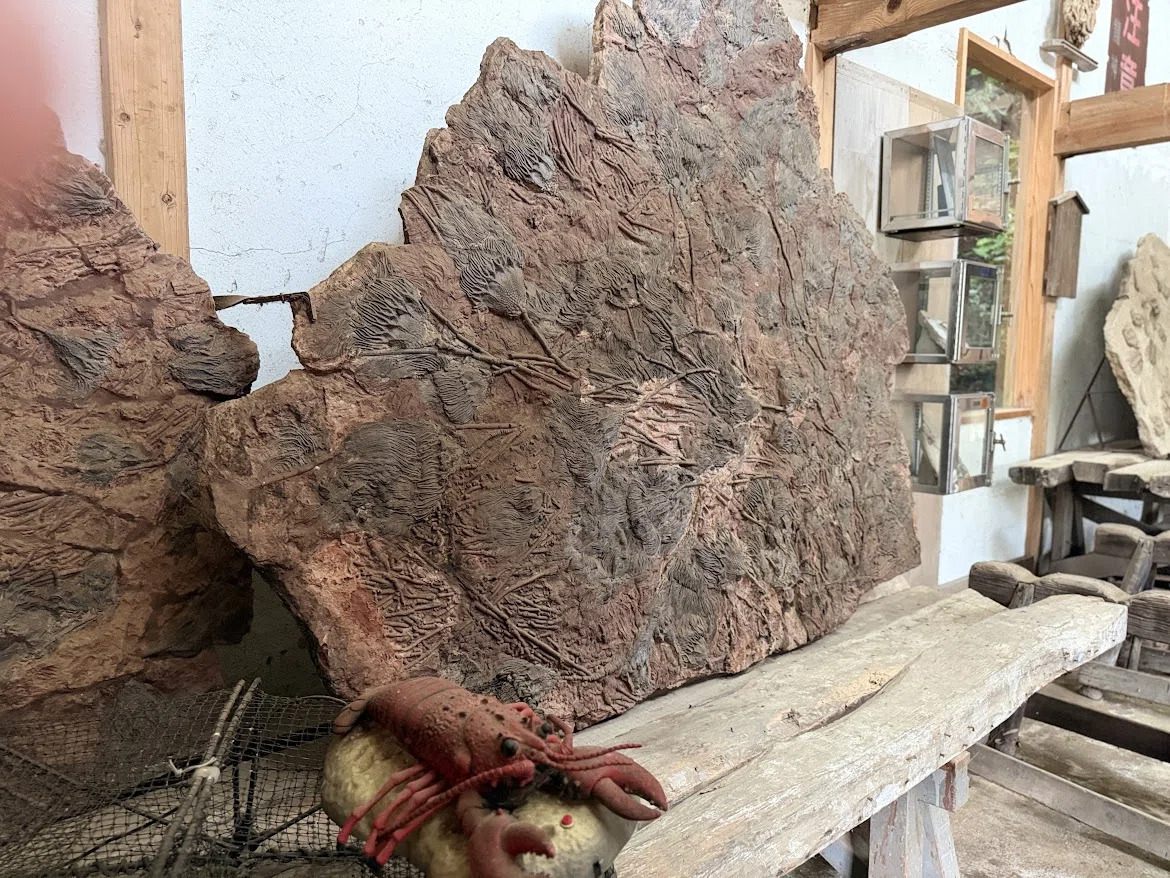
After the metal models comes thefossil display. Trilobites and other ancient organisms are laid out, some of them quite large.
Architecture, historical art, contemporary art and fossils of ancient life in one place — that range is a large part of what makes this site unusual.
Gorinto, Kataura Inari Shrine and the Mikan Path: The Nature of Enoura
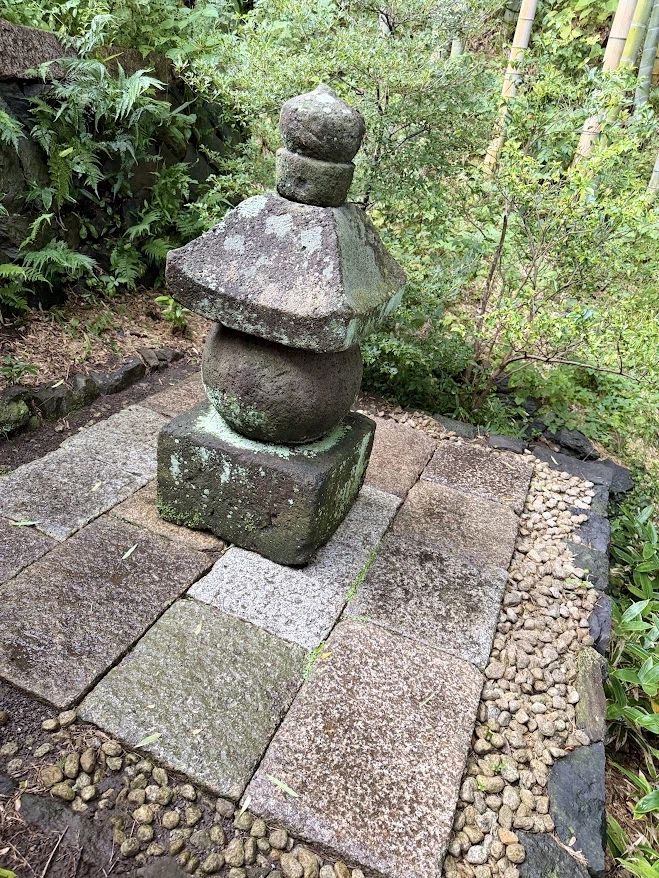
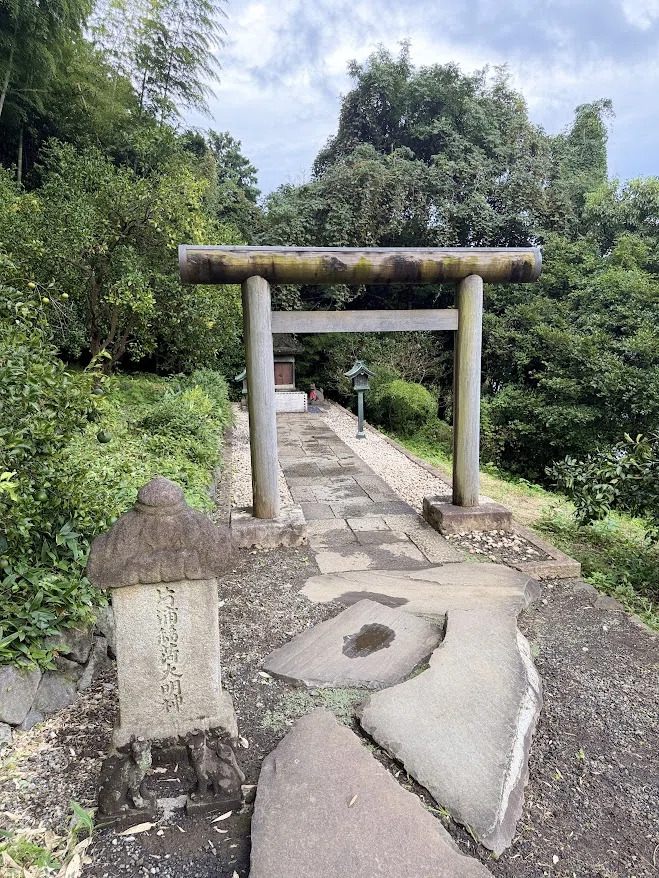
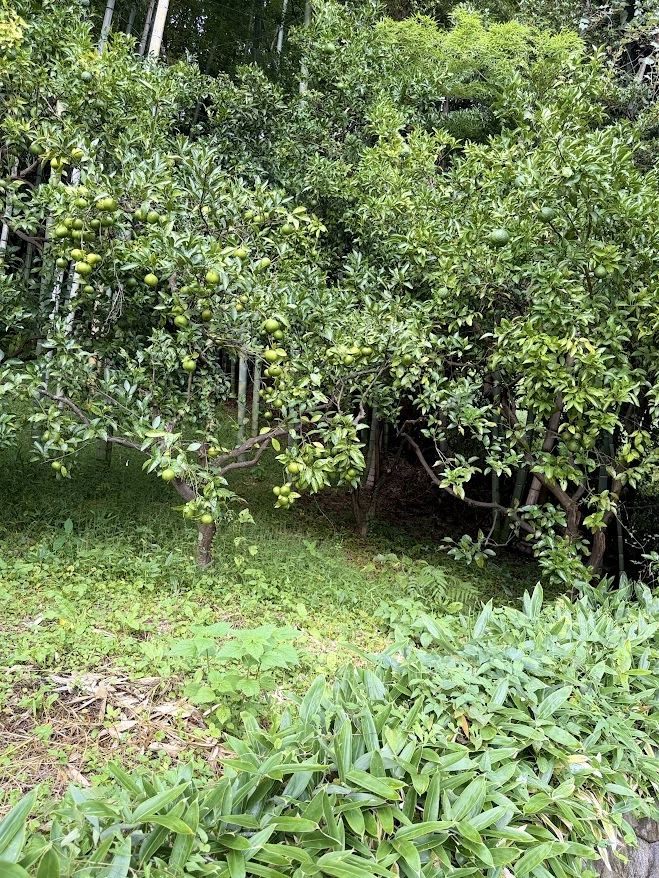
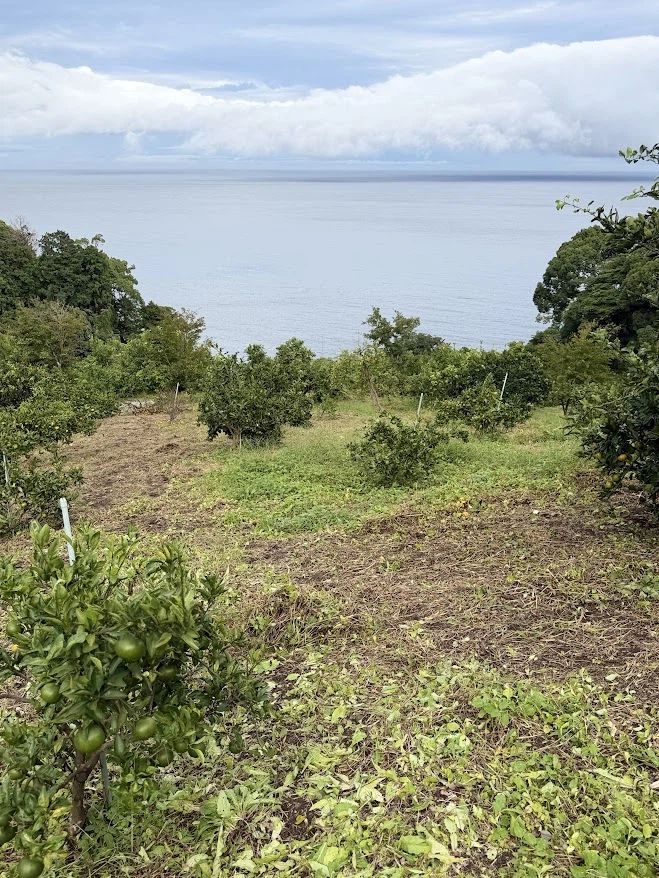
The later part of the route passes stone pagodas and lanterns,Kataura Inari Daimyojin, and themikan path.
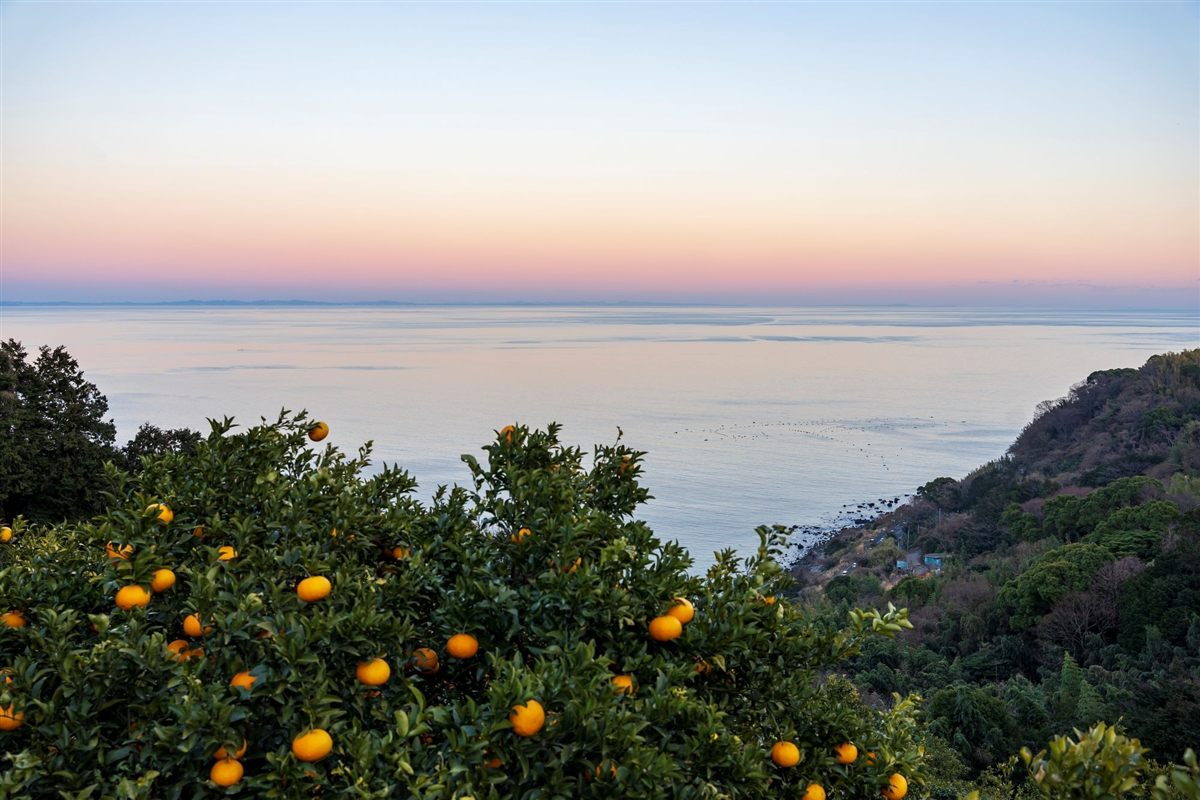
The gorinto pagoda, moss and all, has settled into its surroundings, while the vermilion torii and stone lanterns of Kataura Inari Daimyojin sit among the trees. Enoura is citrus country, and there is a mikan grove on the grounds to match.
Kasuga Shrine Above Sagami Bay: Stone and Sea
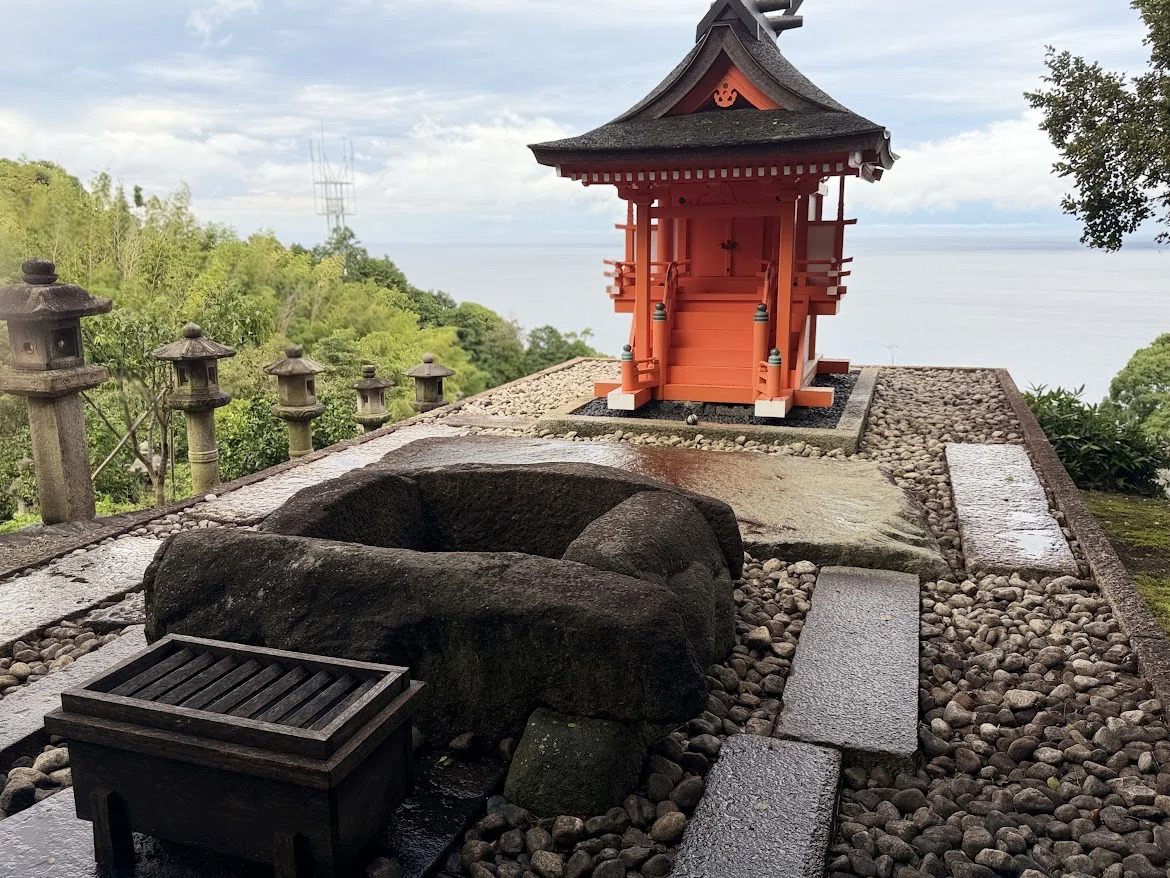
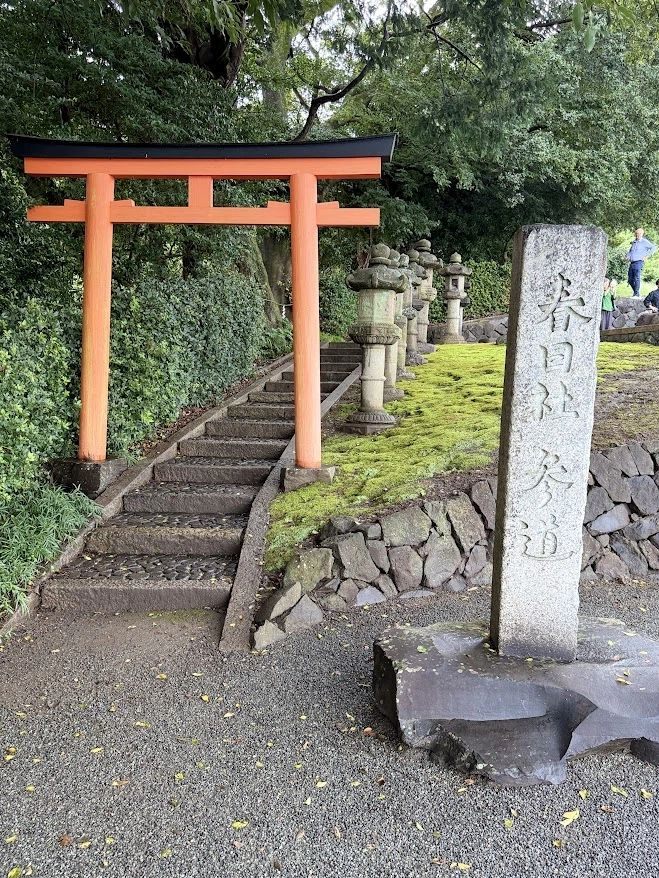
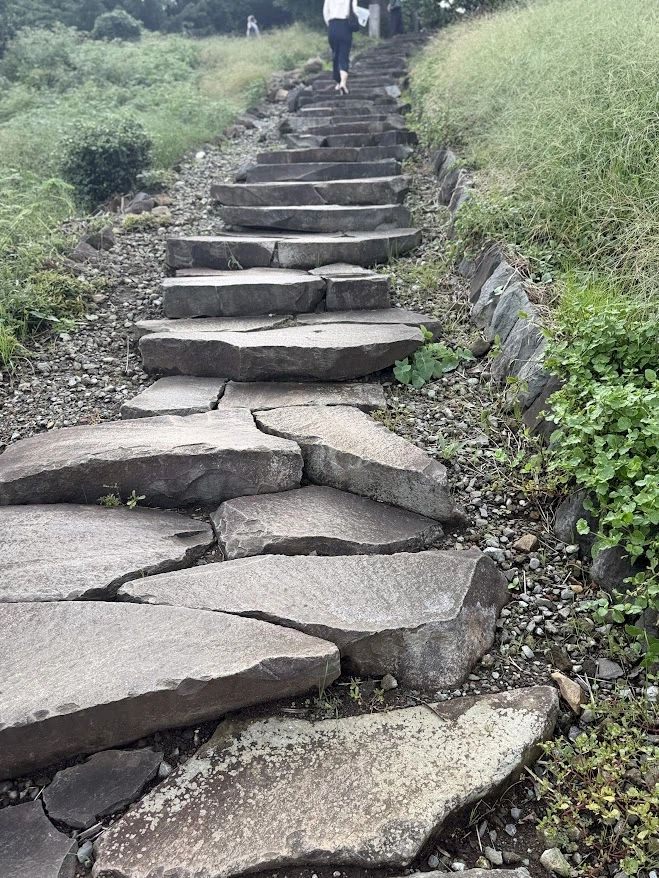
Through the bamboo and up the approach, you reach a Kasuga shrine that looks out over Sagami Bay.
The stone steps are themselves part of the work. The site has considerable changes in elevation and some large steps, so comfortable shoes are essential.
Stone age Cafe
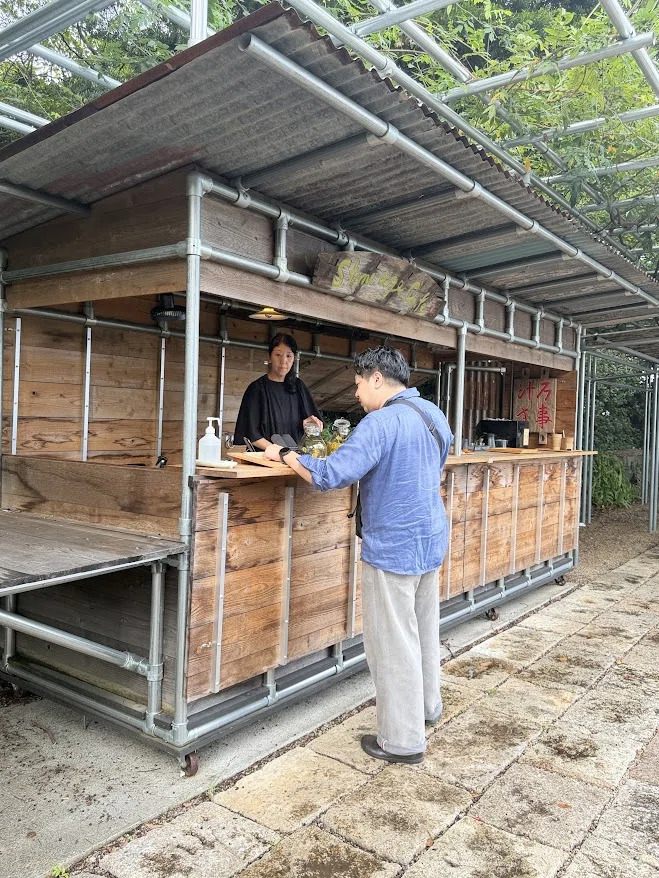
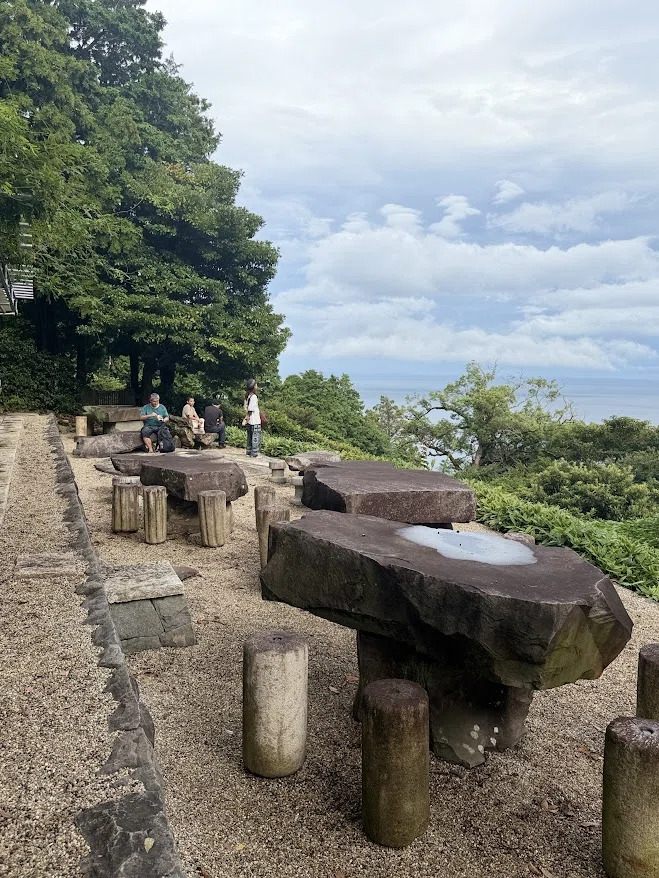
In front of the Meigetsu Gate at the entrance is「Stone age Cafe」, a good place to stop for a moment.
Fresh juice made with citrus grown on Kankitsuzana soup called Banji Jiru suand seasonal sweets are served, with seating where you can look out at the sea.
Optical Glass Stage: The View Over Sagami Bay Is Part of the Site
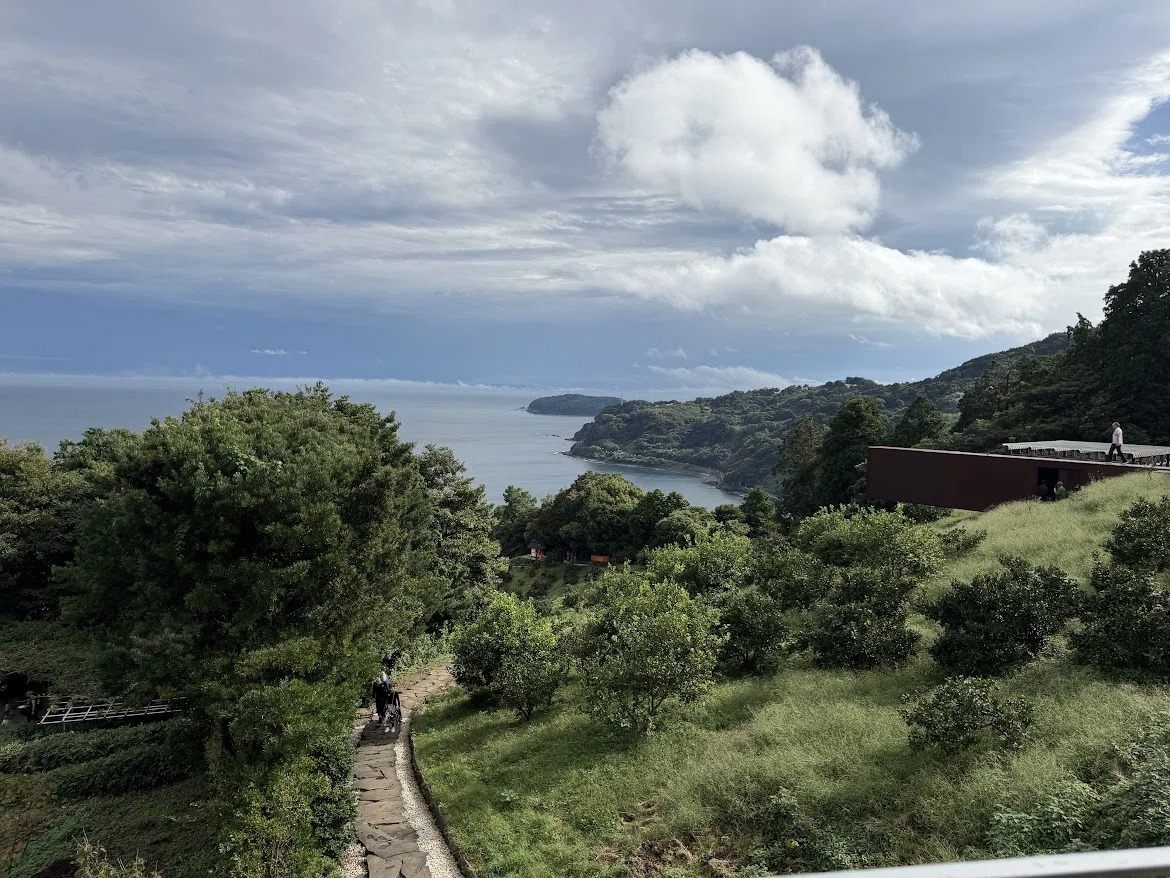
Enoura Observatory sits on high ground, and the view out over Sagami Bay from the grounds is one of its draws.
The Optical Glass Stageis the site’s signature space, used for noh and other performances, and on the morning of the winter solstice it too is lit by the sun.
On clear days the sea holds your attention longer than you expect. This view also shifts with the season and the hour.
Tickets and Entry at Enoura Observatory
Check before you go
– Timed advance reservations, with visitors admitted by session
(credit card payment closes 2 days before, Seven-Eleven payment 3 days before)
– Closed Tuesdays, Wednesdays and over the New Year. Children below junior high school age cannot enter
– Large suitcases cannot be brought in
– There are no convenience stores or coin lockers near the site or at Nebukawa Station
Enoura Observatory limits the number of visitors so that people can experience something closer to pre-modern density, which is why it runs ontimed advance reservations. Visits are split into a morning session(10:00〜13:00)and an afternoon session(13:30〜16:30), and within each you are free to walk the site. Entry closes 45 minutes before each session ends.
Tickets are bought online through the official site and collected at a Seven-Eleven. Even if you pay by credit card, you still need to collect the ticket at a Seven-Eleven counter.
There is no Seven-Eleven near the site or near JR Nebukawa Station, so collect your ticket around Odawara Station before heading out. Same-day tickets are sold if places remain, but not once the session is full.
There are free lockers on site, but only up to 40 cm deep, 50 cm wide and 70 cm high. Large suitcases cannot be brought in, so leaving them in a coin locker at Odawara Station is the safer plan.
Getting to Enoura Observatory
From Odawara Station, take the JR Tokaido Line seven minutes to JR Nebukawa Station. Walking from Nebukawa to the site takes about 40 minutes, so use thefree shuttle bus.
Staying nearby atEnoura Retreat Rimonlets you fit the visit into the trip without rushing. The hotel’s thinking about living alongside nature and about the origins of life runs parallel to the questions Enoura Observatory raises, which tends to make the trip read as a whole.
| Name | Odawara Art Foundation Enoura Observatory |
| Address | 362-1 Enoura, Odawara, Kanagawa |
| Phone | 0465-42-9170 |
| Visiting hours | Morning session 10:00–13:00 / Afternoon session 13:30–16:30 (last entry 45 minutes before each session ends) |
| Closed | Tuesdays and Wednesdays, the New Year period, and occasional closures |
| Admission | 3,300 yen booked online / 3,850 yen on the day |
| Access | Free shuttle bus from JR Nebukawa Station (requested when booking) / about 10 minutes by taxi from JR Manazuru Station |
| Note | Advance reservations, visitors admitted by session. Children below junior high school age cannot enter |
| Official site | Odawara Art Foundation Enoura Observatory |
Where to Stay: Enoura Retreat Rimon
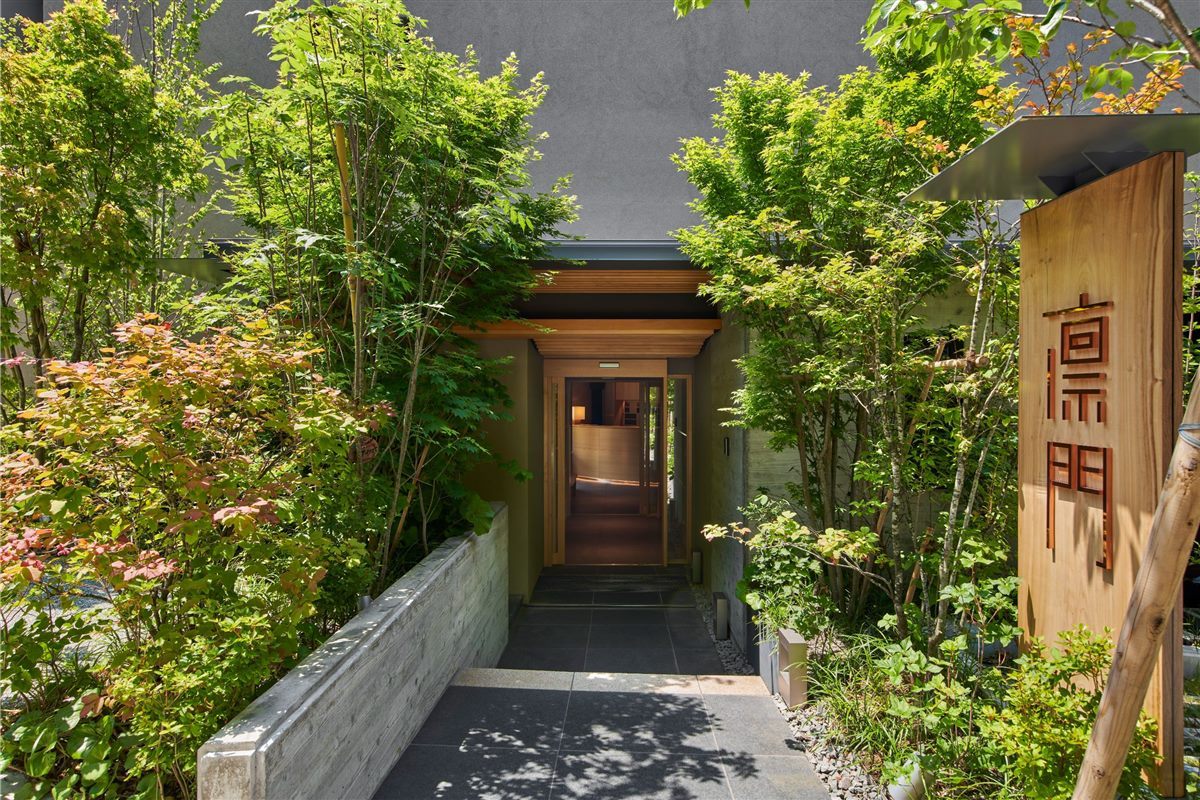
Enoura Retreat Rimon stands on high ground surrounded by citrus groves, a small retreat hotel built around its food.
The sea-view terrace looks out to the horizon over Sagami Bay, with terraced citrus groves below it. The rooms have no television by design, so you can listen to the waves and the birds and let your eyes rest on the view — the kind of luxury that comes from doing nothing at all.
Three parties stay at Enoura Retreat Rimon each day. If you want a weekend, a holiday period, or a date that matches your Enoura Observatory booking, reserve early.
| Name | Enoura Retreat Rimon |
| Address | 218-1 Enoura, Odawara, Kanagawa |
| Phone | 0465-27-3711 (10:00–18:00, closed Tuesdays) |
| Check-in / check-out | 15:00/11:00 |
| Rooms | Eight rooms, with three parties staying each day |
| Age | Guests aged 16 and over |
| Meals | Breakfast included / dinner 24,200 yen (from 18:30, reservation required) |
| Without staying overnight | Lunch with Le Furo 14,520 yen / Le Furo only 6,050 yen / lunch only 8,470 yen / afternoon tea 4,840 yen (all by reservation) |
| Access | About 7 minutes by free shuttle from JR Nebukawa Station (reservation required) |
| Official site | Enoura Retreat Rimon |
Rates are per person and include tax and service charge, as listed on the official site in September 2026. The official site is in Japanese only.
Getting to Odawara and Enoura From Tokyo
About an Hour by Train
Take the Tokaido Shinkansen from Tokyo Stationto Odawara Station, about 33 minutes, then change to the JR Tokaido Linefor Nebukawa Station, about 7 minutes.
Nebukawa is a small unstaffed station above the sea, with no elevator, no coin lockers and no taxis outside. If you are carrying large bags, arrange the hotel shuttle in advance.
Combining With Hakone and Mt. Fuji
Odawara is the gateway to Hakone and Mt. Fuji. From Enoura Retreat Rimon it is about 20 minutes by car to Hakone-Yumoto and about 1 hour 40 minutes to Lake Kawaguchi.
See Mt. Fuji from Lake Kawaguchi or Hakone, spend the last night in Enoura, visit Enoura Observatory and head back to Tokyo— that is one way to put a trip together.
Frequently Asked Questions
About Enoura Observatory
- How far in advance do I need to book?
Online booking through the official site closes 2 days before your visit for credit card payment, and 3 days before for Seven-Eleven payment. Either way, tickets are collected at a Seven-Eleven counter. There is no Seven-Eleven near the site or Nebukawa Station, so collect yours around Odawara Station first.
- Can I visit on the day without a reservation?
Same-day tickets are sold only when places remain. They are handled by phone (0465-42-9170) from 9:00 on the day, and are not sold once a session is full. If your date is fixed, book online in advance.
- How are visiting times organized?
There is a morning session (10:00–13:00) and an afternoon session (13:30–16:30), with visitors admitted by session and free to walk the site within their time. Entry closes 45 minutes before each session ends, so arrive by 12:15 for the morning and 15:45 for the afternoon at the latest.
- Can I visit in the rain?
Yes, unless the weather is severe. When the ground is muddy, access to the bamboo grove area may be restricted. In heavy rain or a typhoon the site may close at short notice.
- Can children enter?
Because of the nature of the site and for safety, children below junior high school age, including infants, cannot enter.
- Can I bring a suitcase or other large luggage?
There are free lockers on site (40 cm deep, 50 cm wide, 70 cm high). Suitcases and tripods that do not fit cannot be brought in. Nebukawa Station has no coin lockers, so leave large bags in a locker at Odawara Station.
- Can I take photos and video?
Yes, for personal use. Flash photography indoors is not allowed, and neither are tripods or selfie sticks. Commercial use of photos and video taken here is also prohibited.
- How do I get there by train?
A free shuttle bus runs from Nebukawa Station on the JR Tokaido Line. You choose your outbound departure time when you book your ticket; no reservation is needed for the return. Taxis are not available at Nebukawa, so if you need one, take it from Manazuru Station instead, about 10 minutes away.
- Is there anywhere to eat on site?
Stone age Cafe, in front of the Meigetsu Gate, serves drinks and seasonal sweets to visitors. There is no restaurant serving meals. Eating and drinking is allowed on the outdoor benches.
Summary
Enoura Observatory brings together the sea, the light of the sun, and the history of Japanese architecture and stone in a way you will not find elsewhere. Paired with a stay at Enoura Retreat Rimon, where the food and the quiet are the point, you can take in Enoura without watching the clock.
Come and walk through this world of art with someone who matters to you.